
Look, I'll be honest with you. This is not my usual territory. I'm the guy who spends his Sunday mornings with George Eliot and argues about Faulkner's semicolons on a podcast that barely qualifies as "public." But Denise left this queued up on the shared Audible account, and I was deep into a Saturday morning lakefront walk with nothing else downloaded, and sometimes you just press play.
So here I am, Marcus Williams, twenty-year veteran of teaching Fitzgerald to teenagers who think Jay Gatsby is "lowkey toxic," reviewing a billionaire romance audiobook. My students would love this. I'm mortified. Let's go.
The Part Where a Lit Teacher Admits He Didn't Hate This
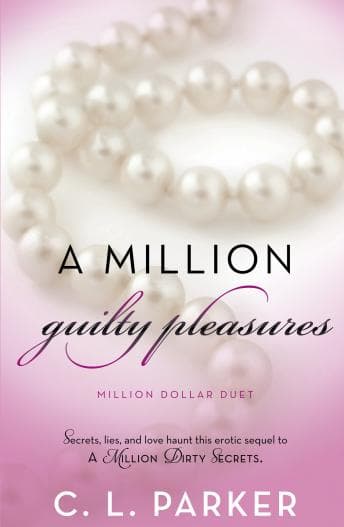
Here's what surprised me: the emotional architecture of this thing actually works. C. L. Parker is writing in a tradition — the captivity romance, the bought-woman narrative — that goes back centuries. Richardson's Pamela, if we're being generous. And while A Million Guilty Pleasures is absolutely not Pamela, it knows what it's doing with power dynamics. Noah Crawford buys Delaine Talbot for two million dollars, and the second book is essentially about dismantling that transaction — about proving the relationship has substance underneath the contract. That's a real theme. Parker doesn't always handle it with the subtlety I'd want, but the bones are there, and the emotional payoff in the back half genuinely surprised me.
The pacing is tight at seven hours and change. No bloat. Parker doesn't linger where she doesn't need to, and the dual POV structure — alternating between Noah and Lanie — keeps things moving. There's a villain subplot that felt a little soap-opera to me, someone trying to destroy Noah's reputation, and a "dark secret" that I saw coming from about hour two. But the central relationship carries real heat, and I don't just mean the sex scenes (though yes, those are... present. Very present. I had to check my surroundings on the lakefront more than once).
Rockwell Davis Gets It. Rubyyy Jones Gets... Complicated.
Rockwell Davis as Noah Crawford? The man understands that pause is punctuation. His read is sophisticated without being stiff — he finds this low, controlled intensity for Noah that makes the character's vulnerability land harder when it finally shows up. There's a moment where Noah realizes he has to let Lanie go, and Davis drops his voice to almost nothing, this quiet devastation that genuinely stopped me mid-stride. He is Noah. That's not hyperbole. The character lives in his delivery.
Rubyyy Jones as Lanie is where this gets tricky, and I want to be fair here. Jones has energy. She has commitment. But her voice sounds young — really young. Like, young enough that during certain scenes (and you know which scenes I mean in this book), I felt genuinely uncomfortable. Not because the character is underage — she's clearly not — but because the voice reads as maybe fifteen, and when you're listening to explicit content performed in that register, your brain starts sending up flags. It was sometimes hard to reconcile what I was hearing with what the story was telling me about this adult woman in an adult relationship.
Some listeners apparently loved the pairing, found it "marvelous" for capturing youthful characters. I get that reading. But for me, the contrast between Davis's polished baritone and Jones's adolescent-sounding delivery created a dynamic that undercut the story's attempt to show these two as equals. When Noah and Lanie are supposed to be meeting each other as partners — emotionally, physically — the audio kept reminding me of an imbalance that the text was trying to resolve.
Who Should Actually Press Play
If you're a romance listener who loves the billionaire-meets-innocent trope and you enjoyed the first book in the Million Dollar Duet, this is a satisfying conclusion. The spice level is high, the emotional stakes are real enough, and at under eight hours it doesn't overstay its welcome. Rockwell Davis alone is worth the listen if you like a male narrator who can sell both authority and tenderness.
But if the voice-age mismatch I described sounds like it would pull you out of the experience — and for some people it absolutely will — maybe try a sample first. That's not a knock on Jones's talent; it's a fit issue. Like casting. Sometimes the performance is good but the role is wrong.
And if you're one of my 47 podcast listeners wondering if I've lost my mind: no. I contain multitudes. Whitman said that. (Whitman would've had opinions about this book, actually. Let's not go there.)
The Annotation Denise Didn't Ask For
I'm not going to pretend this changed my life or belongs on a syllabus. But Parker writes desire with real specificity, and the emotional resolution between Noah and Lanie earns its ending. That sense of earning your resolution — of doing the emotional work to get there — is something I also found in Light We Carry: Overcoming in Uncertain Times, which tackles the idea of navigating uncertain emotional terrain from a completely different angle but with the same kind of specificity. The audiobook experience is split — one narrator excellent, one polarizing — and that keeps me from recommending it without caveats. Worth your time if you're already in the genre. Worth a raised eyebrow if you're a high school English teacher who got ambushed by his wife's reading list on a Saturday morning walk.
Denise, if you're reading this: I finished it. We can talk about it. But I'm picking the next one.