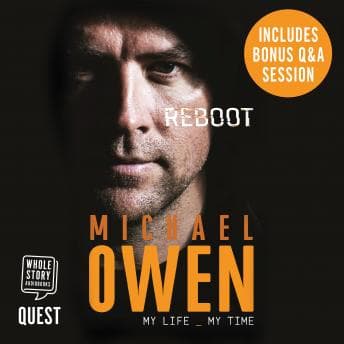

I don't know anything about football. Like, genuinely nothing. The offside rule? A mystery. But I do know about complicated legacies, about being misunderstood, about carrying the weight of other people's expectations until you can't remember who you were before them.
This book found me at 2 AM, unable to sleep, Diego curled on my chest like a furry weighted blanket. I'd grabbed it on a whim because the description promised drama and honesty, and honestly? I wasn't expecting to feel things. I was expecting background noise for insomnia.
I was wrong.
The Weight of Being "The Golden Boy"
Michael Owen broke into professional football at seventeen. Seventeen. I was still figuring out how to use a blending stump at seventeen. And then he scored that goal against Argentina—the one that apparently changed everything—and suddenly an entire country decided he belonged to them.
What hit me wasn't the football stuff (though Robin Morrissey does a solid job making tactical discussions accessible to someone like me who genuinely thought "hat trick" was a magic thing until embarrassingly recently). It was the quiet devastation underneath. Owen talks about injuries with this clinical distance that somehow makes them more heartbreaking. The hamstrings that betrayed him. The body that couldn't keep up with what his mind still wanted. There's a moment where he describes knowing—really knowing—that he'd never be that seventeen-year-old again, and I had to pause the audiobook because Frida was looking at me like "why are you crying about sports, Elena."
Because it's not about sports. It's about losing the thing that made you you.
Newcastle, Manchester United, and the Art of Being Hated
Okay, so apparently moving from Liverpool to Manchester United is like... I don't have a good American equivalent. Imagine if a beloved Austin taco truck suddenly started serving New York pizza? And also the pizza was for your rival? I'm still not totally clear on the dynamics, but Owen doesn't shy away from it.
He's surprisingly blunt about the transfers that made him a villain to multiple fanbases. The Real Madrid move—which sounds glamorous but apparently involved a lot of loneliness and a wife who didn't speak Spanish. The Newcastle years with Alan Shearer, which... there's tension there. Owen doesn't trash anyone directly, but you can feel the edges of relationships that never quite worked. The silences between what he says and what he doesn't say are loud.
Morrissey's narration is steady, professional. Not electric, but reliable. He doesn't try to do dramatic voices or emotional manipulation—he just delivers Owen's words with a kind of BBC-documentary evenness that works for the material. It's not Julia Whelan making me feel feelings through pure vocal magic, but it's competent and clear. For a football memoir, that's probably exactly right.
When the Cheering Stops
The last third of this book is where it got me. Really got me.
Owen talks about retirement like it's a small death. The identity crisis of no longer being Michael Owen, Footballer. Just... Michael Owen, guy with horses and too much time. He's honest about struggling, about not knowing who he was outside the pitch. About the weird grief of losing something you chose to leave.
Abuela would have loved this part. She understood endings—the way they sneak up on you, the way you mourn things while you're still living them. She'd have clicked her tongue at the football drama but leaned in for the human stuff.
I ugly-cried at the part about his dad. Not going to spoil it, but there's a thread about fathers and expectations and never quite being enough that hit somewhere deep and stayed there.
More Than a Victory Lap
Here's what surprised me: Owen isn't here to convince you he was the greatest or that everyone else was wrong. He's reflective in a way that feels earned, not performed. He admits mistakes. He sits with regret. That kind of unflinching accountability reminded me of Extreme Ownership, though Owen's introspection cuts deeper into personal cost than tactical leadership. He doesn't ask for forgiveness exactly, but he asks to be understood.
At nearly eleven hours, it's a commitment. There are stretches that drag—detailed match analyses that lost me, contract negotiations that felt like they could've been trimmed. But when it's good, it's really good.
Who This Is For (And Who Should Pass)
If you're a Liverpool fan who still hasn't forgiven the Manchester United transfer: maybe skip this one. Or maybe don't. Owen addresses it directly, and whether you'll find his explanation satisfying probably depends on whether you're willing to see him as human.
If you love memoirs about identity, about what happens when the thing that defined you is gone, about the loneliness of public life—this is your book. Football knowledge optional.
If you need a narrator who's going to make you feel every word through pure vocal performance, Morrissey is fine but not transcendent. Solid 3.5 on the narration front.
My Heart Needed This at 4 AM
I finished this book as the sun was coming up, cats relocated to the foot of the bed, my chest tight with something I couldn't name. It's not a perfect book. It's not even a book I expected to love. But it's honest in a way that matters, and sometimes that's enough.
The vibes are melancholy Sunday, watching rain through a window, thinking about the person you used to be.







![Steve Jobs [unabridged audiobook] audiobook cover](/_next/image?url=https%3A%2F%2Fcovers.audiobooks.com%2Fimages%2Fcovers%2Ffull%2F9788499923406.jpg&w=1920&q=75)