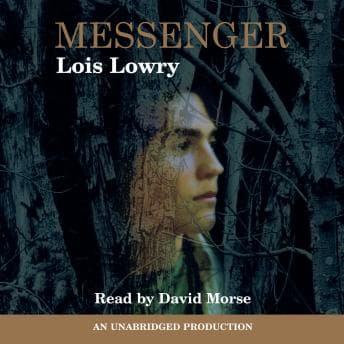

"Trade me," Matty says to Forest, and somewhere around the two-hour mark, I realized this slim little book had traded me something too. My cynicism for genuine unease.
I came to Messenger expecting... honestly, I'm not sure what I expected. The Giver traumatized an entire generation of middle schoolers (myself included, hiding it under my mattress because my parents would've had a fit). Gathering Blue felt like its quieter, sadder sibling. But Messenger? This one's different. This one's horror wearing a children's book costume, and I'm here for it.
The Forest Is Hungry and David Morse Knows It
Let me be upfront about David Morse's narration: it's going to frustrate some of you. His delivery is whispery, almost conspiratorial, like he's telling you a secret he's not entirely sure you should hear. He doesn't do voices. He doesn't add dramatic flair. He reads it calm and steady while describing a forest that literally devours people.
And somehow? That works.
The restraint creates this uncanny valley effect. When Matty's using his gift—this mysterious healing ability that costs him something each time—Morse doesn't amp up the intensity. He keeps that same measured tone, and it's genuinely unsettling. Like watching someone describe a car accident in the same voice they'd use for a grocery list. The disconnect between content and delivery made me lean in harder, not zone out.
But—and this is a real but—he talks fast. Sentences blur into each other. Dialogue tags get swallowed. I caught myself rewinding multiple times because I'd missed who was speaking. Around the one-hour mark, I had to drop my speed to 0.9x just to follow the thread. That's rare for me. Usually I'm pushing 1.25x.
Village as Metaphor, Forest as Monster
Lowry's doing something sneaky here. Village is literally called Village. Forest is called Forest. The simplicity feels almost condescending until you realize she's building a fable framework to talk about xenophobia, isolationism, and the corruption of community. The villagers start wanting to close their borders. They want to keep out the "damaged" newcomers. They're trading away their generosity for... what, exactly? Safety? Purity?
I listened to this at 1 AM, lights off, Shirley curled against my feet, and I kept thinking about how this book was published in 2004. Twenty years ago. And it feels like it was written yesterday.
The horror isn't gore. It's not jump scares. It's the slow realization that good people can become cruel people, and they'll convince themselves they're being reasonable the whole time. Forest responds to the village's moral decay by becoming more dangerous, more twisted. The environment literally reflects the community's soul. Shirley Jackson walked so Lois Lowry could run—right into the dark between the trees. That same patient dread lives in In the Drink, though it trades forests for water and isolation for something even more claustrophobic.
Who Should Brave the Trees (And Who Should Stay Home)
This is not a background listen. Not even close. At under four hours, it demands your attention for the full runtime. Morse's pacing issues mean you can't half-listen while doing dishes. You'll miss crucial beats.
If you're introducing a younger listener to darker themes—death, sacrifice, the cost of doing what's right—this is a surprisingly effective entry point. The language stays accessible while the concepts cut deep.
Skip if: You need distinct character voices to track dialogue. Morse doesn't provide them. Also skip if you're looking for the same vibe as The Giver. This is its own creature.
Seek out if: You appreciate horror that operates on metaphor rather than viscera. If you understand that the scariest thing isn't what's in the forest—it's what the forest reveals about the people who fear it.
The Gift Has a Cost
Messenger ends exactly how it should, which is to say: it ends in a way that hurts. Matty's arc is complete. The sacrifice is real. And Lowry doesn't soften it.
I've listened to hundreds of horror audiobooks. Most of them rely on monsters, murders, mayhem. Lowry gives us a boy who can heal things by touching them, a forest that wants to eat him, and a community that's forgotten how to be kind. It's quieter than most of what I cover on the podcast, but my listeners are going to hear about this one.
The narrator commits to the calm. That's rare. Whether it works for you depends entirely on whether you can sync with his wavelength. I did, eventually. But it took effort.
Some horror announces itself. This one just... waits. In the trees. Patient.