
Look, I need to rant about something before we get into this. Three narrators. THREE. And nobody thought to give us a clear signal when we're switching between them? I spent the first hour genuinely confused about whether Rachel had developed multiple personalities or if my audiobook app was glitching. It wasn't until I paused to check the credits that I realized what was happening. This is why we can't have nice things.
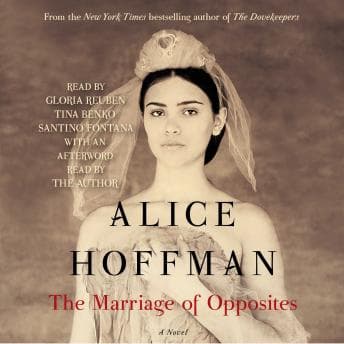
But here's the thing—once I figured out the rhythm, Alice Hoffman's novel about the woman who gave birth to Camille Pissarro (yes, THE Pissarro, the Father of Impressionism) became one of those listens I didn't want to end. Even if getting there required some patience.
The Three Voices Problem (And Why It Eventually Works)
Gloria Reuben has this simmering, husky quality to her voice that feels like someone telling you secrets by candlelight. Tina Benko is more measured, more careful—which some listeners apparently found "phony" and "stilted." I get it. Her delivery in the early sections is very... deliberate. Very conscious of every syllable. My students would call it "extra." They wouldn't be wrong.
But here's what I think is happening: Benko is matching Hoffman's prose style in those early sections. Hoffman writes like she's painting—every word placed with intention, every description layered. It's not casual storytelling. White Oleander has that same deliberate, painterly quality—every sentence doing double duty. It's literary fiction doing literary fiction things. If you're expecting a breezy historical romp, yeah, you're going to struggle. This is Middlemarch pacing, not beach read pacing. (Despite what Slate says about it being "the Platonic ideal of the beach read"—I love Slate, but come on.)
Santino Fontana, when he finally shows up, brings this crisp modernity that pulls you forward in time. The contrast actually works beautifully once you understand what the production is doing. Each narrator represents a different era, a different perspective. It's ambitious. Maybe too ambitious for an audiobook format where you can't see chapter headings.
Where Hoffman's Prose Earns Its Keep
This is a novel about a woman who refuses to be defined by the rules of her time—a Jewish refugee community in St. Thomas in the early 1800s, where women were expected to be silent pillars of propriety. Rachel is... not that. She's difficult. Stubborn. Alive in ways that make everyone around her uncomfortable.
The friendship between Rachel and Jestine—the daughter of their family's maid—spans decades and social barriers. It's one of those relationships that feels true in a way historical fiction often misses. These aren't modern women transplanted into corsets. They're products of their world who still manage to carve out something real between them.
And then there's the love story. Rachel is married off to a widower to save her father's business. When he dies and his young, handsome nephew Frédérick arrives from France... well. Scandal ensues. The kind of scandal that echoes through generations.
Hoffman has this gift for making the forbidden feel inevitable rather than reckless. Rachel doesn't throw away her life on a whim. She claims it. There's a difference.
The Slow Burn That Tests Your Patience
I'm not going to pretend the pacing is perfect. The first few hours drag. Hoffman's descriptions are lush—sometimes too lush. There were moments during faculty meetings (sorry, Principal Martinez) where I caught myself drifting, losing the thread of which generation we were in, which tragedy was unfolding.
But when the narrative clicks into place—when you start seeing how Rachel's choices ripple forward into her son Camille's artistic vision—it's worth the slow build. This is the kind of book that rewards patience. If you bail at hour three, you miss the gut-punch moments in hour ten.
My wife Denise, who listened to parts of this with me on our lakefront walks, got genuinely emotional during the later sections. She's a tougher audience than my podcast listeners. That's saying something.
Who Should Press Play (And Who Should Skip)
If you love Alice Hoffman's style—that magical realism-adjacent, lyrical prose thing she does—this is her in full form. If you appreciate multi-narrator productions that take creative risks, stick with it past the confusing opening. If you're interested in the real woman behind one of art history's most influential painters, this is a beautiful (if fictionalized) tribute.
But if you need clear transitions between narrators, if slow pacing makes you reach for the 2x speed button, if you want plot over prose—maybe read a sample first. Or honestly, maybe read the print version where you can control the pace yourself.
I listened at 1.0x because Hoffman's sentences deserve to breathe. But I understand why others might need to speed through Benko's more measured sections. No judgment. (Okay, a little judgment. But I'm old and set in my ways.)
Class Dismissed
This is one of those audiobooks that's flawed in ways that almost make it more interesting. The production choices are bold. They don't always land. But when they do, you're transported to a Caribbean island in the 1800s, watching a woman refuse to disappear into history. That's worth something.