
People like to say Young Adult fantasy is just for, well, young adults. Or that it's "light reading." These people are wrong. And boring. I'm supposed to be debugging a procedural generation algorithm for my thesis that creates infinite dungeon layouts. The algorithm is basically me trying to recreate the architectural spite of Battle of the Labyrinth, minus the part where it actually works. Instead, I spent the last two days staring at a blinking cursor while listening to seven teenagers try to stop the apocalypse on a flying boat.
(Don't tell Dr. Patel. He thinks I'm deep in the literature review.)
Managing a Split Party
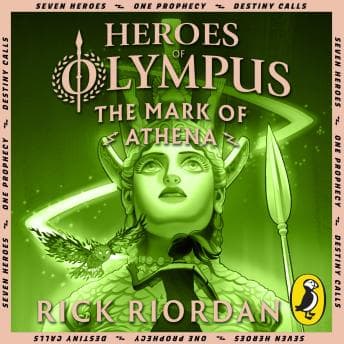
Here's the thing about The Mark of Athena: the party size is out of control. In D&D terms, you've got seven players at the table. Usually, this is where a campaign dies—or where a narrator completely loses the plot trying to make everyone sound distinct.
Joshua Swanson has his work cut out for him. You've got Roman demigods, Greek demigods, a satyr, and a hyperactive ADHD mechanic (Leo is basically me if I had fire powers instead of anxiety). Swanson handles the chaos way better than I expected. He gives the characters distinct energies. Leo sounds manic and fast. Percy sounds... well, like Percy.
Is he Steven Pacey? No. But Pacey is a god, so that's an unfair bar. Swanson brings this frenetic, nervous energy that actually fits the vibe perfectly. These kids are terrified and running on adrenaline. The narration feels like that. Urgent.
The Pronunciation Elephant in the Room
Okay, we need to talk about the pronunciations.
Look, I'm the guy who corrects people when they say "drow" wrong in D&D. (It rhymes with cow, fight me.) So when Swanson mispronounces a name or a location—and he does, a few times—my left eye twitches. It's a thing. Some of the Greek names get a little mangled.
But—and this is a big but—I stopped caring after hour two. Why? Because the emotion is there. I'd rather have a narrator who mispronounces "Gaea" but makes me feel the absolute terror of falling into Tartarus than a linguistically perfect robot who puts me to sleep. Swanson nails the emotional beats. When Annabeth is scared, you feel it in your chest. That's what matters.
Annabeth Finally Takes the Wheel
We finally get Annabeth's POV. Finally. After enduring months of my mom asking "When will you graduate?" (answer: unclear), listening to Annabeth struggle with her own expectations and her mother's impossible standards hit way too close to home.
The "Mark of Athena" quest is essentially a solo dungeon crawl designed by a sadistic DM. Puzzle-heavy, high-stakes, and focused on intelligence rather than just "I hit it with my sword." It is chef's kiss.
And the ending? I was literally walking to the library when the cliffhanger hit. I stopped on the sidewalk. Jaw dropped. A random undergrad asked if I was okay. I was not okay. I am still not okay.
Roll for Initiative (Or Don't)
If you've been following the Heroes of Olympus series, this is mandatory listening—the payoff on Annabeth's arc alone is worth it. Skip if you haven't read the first two books; you'll be lost faster than a level-one character in a high-CR encounter. My tolerance for prerequisite chaos was forged back in Sea of Monsters, where the series first taught me that boats are just plot devices with sails.
I listened to this instead of writing my thesis. And honestly? No regrets. The code will be there tomorrow. The emotional damage from this ending is forever.