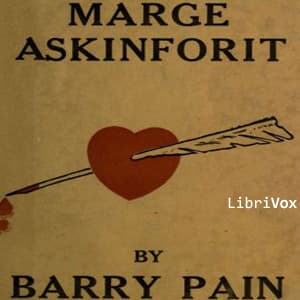

Look, I'm going to be honest. When I saw the title 'Marge Askinforit,' I thought it was a typo. Some kind of autocorrect disaster from a sleep-deprived cataloger. But no—it's a pun. A pun on Margot Asquith. And if you're sitting there going 'who?' then congratulations, you're exactly where I was at 7:47 AM in the school pickup line, googling furiously while Emma asked me for the fourteenth time if she could bring her slime collection to show-and-tell.
Here's the deal: Margot Asquith was this Edwardian socialite who wrote these wildly self-important memoirs that apparently scandalized everyone in 1920. Barry Pain—a satirist from that era—decided to roast her by creating Marge, a fictional woman who is absolutely convinced she's fascinating while being completely insufferable. And you know what? At two hours and twelve minutes, this little gem is basically the length of Sophie's nap plus my sacred car time. Perfect.
The Audacity of Marge
Marge is... a lot. She rambles about her dysfunctional family with the confidence of someone who thinks they're the hero of every story. She name-drops constantly. She remembers conversations wrong and then doubles down on her version. She's that aunt at Thanksgiving who corners you by the stuffing and won't stop talking about her 'exciting private life' even though everyone knows her idea of excitement is a strongly-worded letter to the HOA. That same 'confidently delusional about their own importance' energy is what makes Give Them Lala so entertaining—though Lala's at least self-aware enough to know she's stirring the pot.
The humor is dry. Like, Sahara dry. Pain wrote this in 1920 and the comedy style shows—it's not laugh-out-loud funny so much as 'oh, she really thinks she's something, doesn't she?' funny. The satire works best if you understand that Marge genuinely believes every cringe-worthy anecdote makes her look good. She's an unreliable narrator in the most delicious way possible. Flipped also plays with unreliable narration, though in a completely different way—two kids telling the same story from opposite perspectives, which my brain found way easier to follow than hundred-year-old social satire.
But here's my complaint: I had to work for this. The references are a hundred years old. Some of the social dynamics Pain is mocking don't translate perfectly to someone whose main social dynamic right now is negotiating iPad time with a five-year-old. I caught maybe 60% of what was supposed to be funny, and I'm pretty sure I missed some absolute zingers because I don't know enough about Edwardian high society drama.
Nigel Boydell's Commitment to the Bit
The narrator leans into Marge's delusion completely. He doesn't wink at the audience or telegraph 'isn't she ridiculous?'—he just lets Marge be Marge, and the comedy comes from her complete lack of self-awareness. It's a choice that works, though I'll admit there were moments where I wished for just a touch more vocal variety. When everything is delivered with the same oblivious self-importance, it can blur together during a long nap-time session.
The production is clean—this is a LibriVox recording, so it's free and volunteer-read, which honestly? For a quirky hundred-year-old parody that I would never have paid a credit for, that's exactly what I needed. No regrets.
Anglophiles and Reality TV Fans, Step Right Up
If you're an Anglophile who knows your Edwardian history, this is going to be a treat. If you've actually read Margot Asquith's memoirs (do those people exist? They must), this is probably hilarious. If you just enjoy watching someone be confidently wrong about everything—like watching reality TV but make it literary—Marge delivers.
Skip this if you need context-free humor that hits without homework. I survived it because it's short and I was in a forgiving mood, but I definitely missed layers.
Snort-Laughed Once at Drop-Off, So That's Something
Here's the thing—I finished this in three days. That's huge for me. The short runtime meant I actually got closure instead of forgetting what happened between listening sessions. And Marge's rambling style actually survives interruptions pretty well because she's not exactly following a tight narrative anyway. She's just... talking. About herself. Endlessly.
Not groundbreaking, but sometimes you don't need groundbreaking. Sometimes you need a weird little audiobook that's free, short, and makes you feel slightly superior to a fictional Edwardian socialite. Emma asked what was funny and I said 'a lady being silly' and she accepted that, which is more than I can say for most of my explanations.
Worth the two hours if you're in the right mood and have realistic expectations. Just maybe do a quick Wikipedia read on Margot Asquith first. Future you will thank present you.