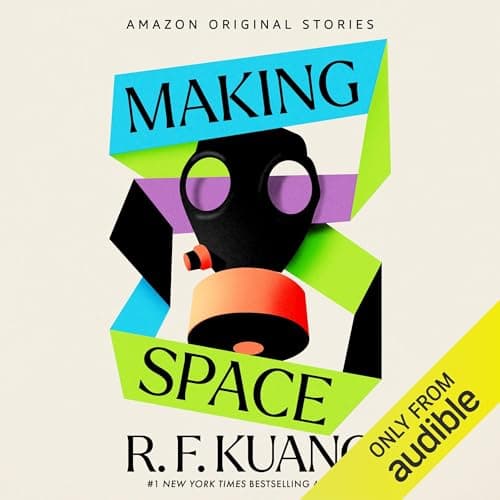

Everyone keeps telling me R. F. Kuang is one of the most important voices in SFF right now, and I keep nodding along because The Poppy War trilogy genuinely slaps. But here's the thing - I went into Making Space expecting Kuang's usual dense, history-soaked worldbuilding and got something completely different. Something smaller. Quieter. And honestly? It rattled me more than most 40-hour epics do.
I listened to this at 2 AM, couldn't sleep, thesis deadline breathing down my neck (Dr. Patel, if you're reading this, I was definitely working on my procedural generation chapter and not browsing Audible). Popped this on because 54 minutes felt like exactly the right commitment level for my guilt-ridden insomnia. And then I just... sat there in the dark afterward, staring at the ceiling, thinking about what it means to want something so badly you'll reshape your entire life around it.
The Creepiest Adoption Story You'll Hear This Year
So the premise: Jess and her husband are childless. She finds a boy in the woods near their home - no name, no history, clearly traumatized. They call him Buddy. Her husband is cautious. Jess is not. She's all in, immediately, with the kind of fierce maternal energy that makes you root for her and worry about her in equal measure.
What Kuang does here that I really respect is she takes the familiar "mysterious child" trope and layers in these pointed observations about neighborhood surveillance culture - the Karens watching from behind curtains, the performativity of being a "good" parent or a "good" neighbor. That same tension between community expectation and private grief is something Tommy Orange dissects from a completely different angle in There There - worth a listen if that social surveillance undercurrent is what's hooking you here. There's this undercurrent of environmental dread running through the whole thing that I didn't expect from what seemed like a domestic drama. The sci-fi elements creep in sideways, and by the time you realize what's actually happening, the story has already sprung its trap.
It's part of John Joseph Adams' The Time Traveler's Passport collection, and the time travel angle here isn't your typical wibbly-wobbly stuff. It's more about consequence. About what the future costs and who pays for it. My D&D group would love this as a one-shot premise, actually - the moral dilemma at the center is the kind of thing that would have my players arguing for three hours.
Kristie Lee Walsh and the Art of Restraint
Here's where I have to be honest: I don't have a ton to say about Walsh's narration specifically, because the research is thin and - look, it's a 54-minute story. There's only so much range a narrator can show in under an hour. What I can say is that nobody's complaining about her, and in a story this emotionally loaded, that's actually significant. The tone needs to walk this razor line between domestic warmth and creeping dread, and the fact that the atmosphere works - that the ominous quality people keep describing actually lands - tells me Walsh is doing her job well. She's not doing Steven Pacey acrobatics (Steven Pacey walked so other narrators could run, but that's a different conversation), but for a quiet horror-adjacent short? Restraint is the right call.
No distracting accents, no weird pacing issues that anyone flagged. Clean, competent, serves the story. I'd have liked a bit more vocal distinction between Jess and her husband to sharpen their disagreement, but that's a minor gripe for a piece this compact.
The Ending Problem (And Why I'm Okay With It)
The biggest complaint I've seen is that the ending feels abrupt. People wanted more. And yeah - I get that. When the story clicks into place and you understand the full scope of what Kuang's doing with the time travel and the sacrifice themes, your first instinct is "wait, that's IT?" It's like when your DM drops a massive plot revelation and then says "and that's where we'll pick up next session" except there IS no next session.
But I've been sitting with it, and I think the abruptness is the point. The story is about making impossible choices under impossible constraints, and giving you a neat resolution would undermine everything it's doing. Kuang packages themes of masking, environmental stewardship, and parental desperation into what amounts to a lunch-break listen, and the compression is part of the horror. You don't get to process. Neither does Jess.
Fair warning though - if you need your stories to land with a definitive thud, this will frustrate you. The 3.68 average rating reflects that tension between people who love the craft and people who wanted a fuller meal.
Who Should Listen (And Who Should Skip)
If you're a Kuang completionist, obviously. But more than that - if you've ever thought about what you'd sacrifice for a child, or what it means to take responsibility for a future you might not see, this 54 minutes will sit with you way longer than it has any right to. It's not The Poppy War. It's not trying to be. It's a scalpel where those books are a broadsword. Skip it if you need definitive endings or if spending a credit on under an hour of audio makes you twitchy - this one's better borrowed than bought.
I listened to this instead of writing my thesis. Worth it? For under an hour of my time, absolutely. As a credit spend? That's where it gets tricky.
The Credit Math Doesn't Work, But the Story Does
54 minutes for a full Audible credit is a rough value proposition, and I can't pretend otherwise. This is a short story that hits hard but hits fast, and unless you're already subscribed to something that includes it, I'd say find it through your library app or wait for a bundle. The writing is sharp, the atmosphere is genuinely unsettling in that quiet Kuang way, and it'll give you something to chew on. But a credit? Nah. Stream it, borrow it, and spend your credit on something that'll last you a few commutes.