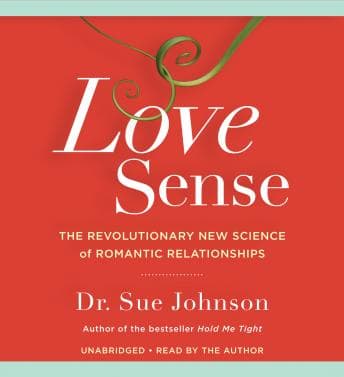

Look, I have a confession. I usually judge a book by its ability to keep up with my brain at 2.0x speed. But Love Sense? I had to crank this thing to 2.5x just to feel a pulse.
Seriously. The reviews weren't lying.
I went into this expecting typical self-help fluff—you know, the kind that tells you to "communicate more" without telling you how—but I stayed for the hard data. The problem is getting to that data requires patience I simply do not have. Sue Johnson narrates this herself, and while she's clearly a genius in her field, she reads like she's trying to talk a jumper off a ledge. Very. Slowly. Calmly.
The Speed Dial Is Your Best Friend
A lot of listeners complained that the narration lacks "verve" or "personality." They're being polite. It's clinical. The audio equivalent of a warm cup of chamomile tea when you asked for a double espresso.
(Jenny, my wife, listened to a snippet and said, "She sounds nice." Jenny is too nice. I need efficiency.)
Here's the thing, though—and this is where I disagree with the people who returned it—you shouldn't skip this just because the delivery is drowsy. The content is actually high-yield. Once I adjusted the playback speed to "caffeinated squirrel" levels, the value proposition became clear. Johnson isn't just throwing platitudes around; she's breaking down love as a survival mechanism.
Love as a Survival Algorithm
This is the part that actually got my attention. Johnson argues that monogamy and emotional attachment aren't just romantic constructs—they're evolutionary necessities.
Growing up, I watched my parents run a dry cleaning business in Koreatown. 14-hour days. They didn't have "date nights." They didn't gaze into each other's eyes over candlelight. They had a partnership forged in the fires of survival. Johnson's theory—that we are hardwired to depend on each other for safety—actually explains their marriage better than any romance novel ever could.
She frames love as an attachment bond. It's logical. It's structured. Basically a merger where both parties need the other to remain solvent emotionally. Finally, a definition of love that makes sense to a guy who lives in Excel spreadsheets.
The Consultant's Take on "Feelings"
Most relationship books are garbage. (I've read enough of them to know.) They focus on symptoms. First 90 Days applies that same diagnostic rigor to career transitions—it's all about identifying the real problem before you start solving. Johnson does the same here. She talks about the "dance" of disconnection—where one partner pursues and the other withdraws.
I've seen this dynamic in boardrooms, let alone bedrooms.
The actionable advice here is solid. She gives you the tools to recognize when you're in a "demon dialogue" (her term, not mine) and how to pivot. Basically conflict resolution training for the person you sleep next to.
Who Gets Value Here (And Who Doesn't)
If you want entertainment or a soothing voice to fall asleep to, go elsewhere. If you're looking for a framework to understand why your relationship is failing—or how to optimize a good one—this is worth the credit. Analytical types who can stomach slow pacing will find the ROI. Just do yourself a favor and don't listen at 1.0x. Life is too short.
The production is clean, but the pacing is a slog. High-yield content, low-energy delivery. Adjust your speed settings accordingly.