
Denise and I were doing our Sunday lakefront walk — late October, that sharp Chicago wind coming off the water — and I needed something short enough to finish before my fingers went numb. Seventy minutes. Perfect. What I didn't expect was to spend most of that walk laughing at a fourteen-year-old girl who wrote better satire in 1790 than most of my juniors can manage in their college application essays.
A Teenager With a Knife
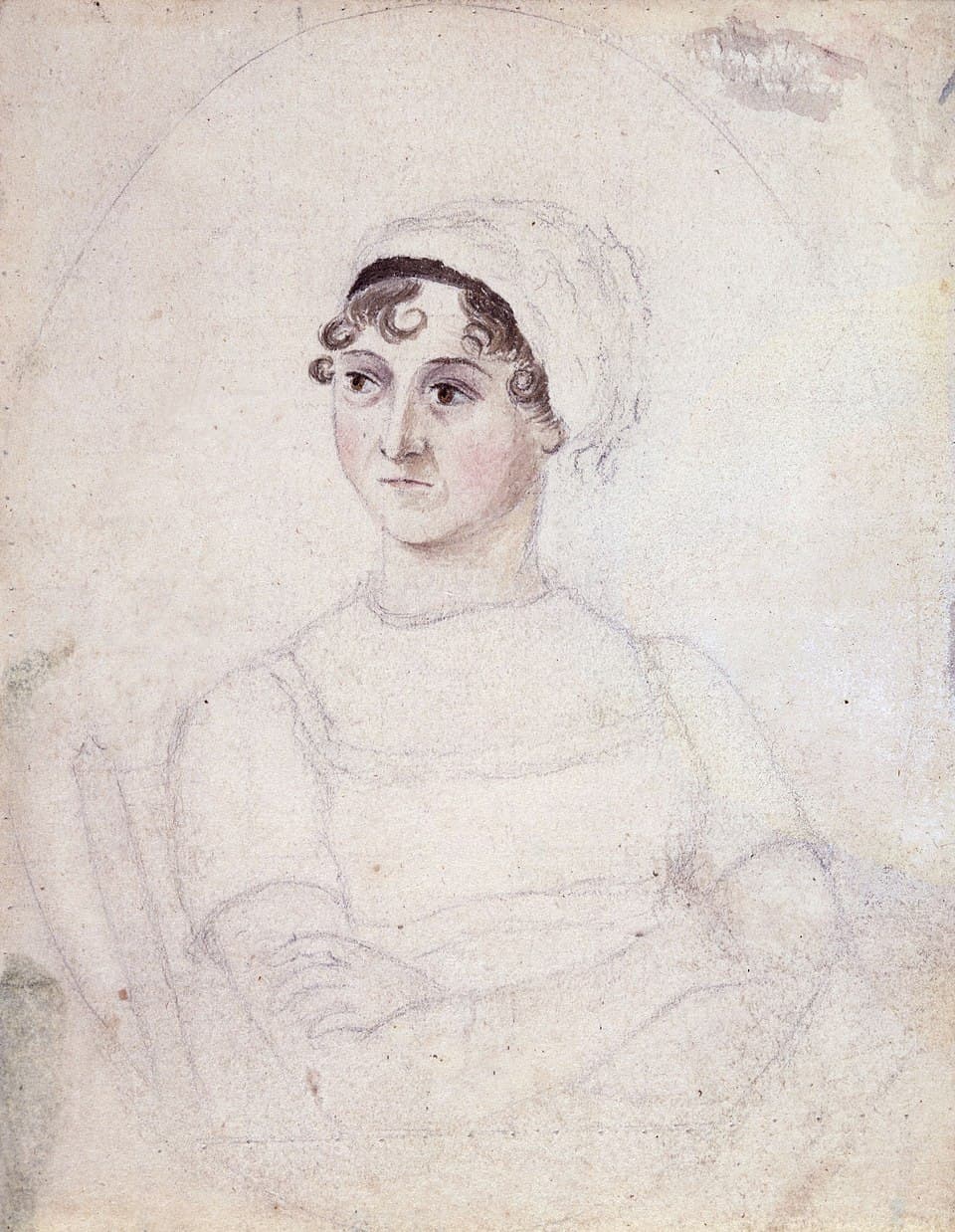
Let's talk about what Jane Austen is really saying here, because the setup is deceptive. Love and Freindship — and yes, the misspelling is deliberate, one of many sprinkled throughout like a kid leaving breadcrumbs of mischief — is written as a series of letters from a woman named Laura to a friend's daughter. Laura recounts her youth with the breathless sincerity of someone who genuinely believes that fainting at every dramatic turn is the mark of true sensibility. And Austen, at fourteen, is already standing behind her narrator with a straight face and a scalpel.
The fainting scenes are what got me. Every time Laura and her friend Sophia encounter bad news — a husband's arrest, a carriage accident, financial ruin — they collapse into performative swooning. And every single time, it goes terribly for them. Sophia literally catches a fever from fainting too often in damp grass and dies. That's the joke. That's a fourteen-year-old telling the entire sentimental novel tradition: your heroines are ridiculous, and their passivity will kill them. If you've read Sense and Sensibility, you can feel the DNA here. Marianne Dashwood's near-death illness after wandering in the rain? This is the rough sketch, the first draft of that idea, except played for pure comedy instead of mixed with genuine sympathy.
The coincidences pile up with gleeful absurdity — long-lost relatives appear every few pages, characters discover they're related to people they just met, fortunes are gained and lost in single sentences. It reads like a fairy tale written by someone who finds fairy tales personally offensive. That gleeful absurdity-as-critique reminded me of Alice's Adventures in Wonderland, another book where the chaos isn't random — it's a very specific argument being made through nonsense. This is why we still read the classics, even the minor ones. You can watch a great writer figuring out what bothers her about the world.
Cori Samuel and the Art of the Straight Face
Cori Samuel's narration is clean and understated, which is exactly what this material needs. The humor in Love and Freindship works because Laura tells her story with absolute earnestness — she never winks at the audience. Samuel gets that. She reads Laura's increasingly absurd declarations of feeling with a composed, almost prim delivery, and the comedy lands precisely because nobody's trying to be funny. The narrator understands that pause is punctuation — there's a beat before some of the most ridiculous revelations that lets you register what's about to happen.
I will say this: with a piece this short and this dependent on the epistolary voice, you're essentially listening to a one-woman show. Samuel doesn't do wildly different character voices, and honestly, she doesn't need to. The letters are all filtered through Laura's perspective anyway. It's a monologue performance, and she keeps it engaging for the full seventy minutes without ever mugging or overplaying. Solid, professional work. Not the kind of narration that makes you forget you're listening to an audiobook, but the kind that respects the text enough to let Austen be the star.
The Schubert music bookending the recording is a nice touch — period-appropriate without being intrusive.
Who Gets the Most Out of This
If you've only read Pride and Prejudice and maybe Emma, this is a fascinating look at where all that wit started. It's like finding a sketch in a painter's notebook — rough, a little messy, but you can see the hand. My students would hate this. Too short to feel like a "real" assignment, too old-fashioned to grab them on the first page. I love it.
But I want to be honest: this is juvenilia. It's brilliant juvenilia, but it's still a teenager's work. The satire is broad, the characters are intentionally flat (that's the point), and if you're looking for the depth of Austen's mature novels, you won't find it here. This is her warming up. If you loved Northanger Abbey — her most overtly satirical novel — this is its spiritual successor. Or rather, its spiritual predecessor. The seed before the flower.
Not worth spending a credit on at seventy minutes, but absolutely worth streaming on a cold walk, a short commute, or while pretending to organize your desk during planning period.
The Assignment: Extra Credit Only
A delightful curiosity. A teenage genius sharpening her blade on the sentimental novels of her era, producing something that's still funny two hundred and thirty years later. The prose deserves to be savored, even — especially — when it's this playfully absurd. Worth pausing the faculty meeting for. (Sorry again, Principal Martinez.)