
"They are not alone."
That line hit somewhere around the two-hour mark, and I was shelving returns in the library's back room — the one with the flickering fluorescent that maintenance has been "getting to" for three months. Bad timing. Or perfect timing, depending on how you feel about your heart rate spiking while holding a copy of Goodnight Moon.
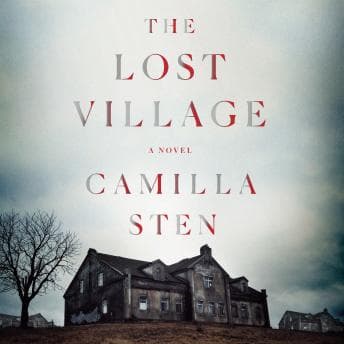
Here's the thing about The Lost Village: it understands that horror isn't about gore — it's about dread. Camilla Sten builds her story around an absence, not a presence. An entire Swedish mining town empties out in 1959 — 900 people, gone — except for one woman stoned to death in the town square and a screaming newborn left behind. That's not a mystery setup. That's a wound that never closed. And when Alice Lindstedt drags her documentary crew back to this dead village decades later, Sten toggles between 1959 and present day with the patience of someone who knows the waiting is worse than the reveal.
The Ghost Town as Character
Sten does something clever with structure that the audiobook format actually amplifies. The 1959 chapters are told through Alice's grandmother's perspective — slow, domestic, creeping with the kind of wrongness that starts as a whisper in a church pew. The present-day chapters are faster, dialogue-heavy, crew-dynamics stuff that feels very Blair Witch in its interpersonal friction. Angela Dawe handles the tonal shift between these timelines like she's switching radio frequencies. Her voice in the 1959 sections drops into something almost reverent, hushed — like she's telling you a story she's not sure she should be telling. The present-day Alice gets a different energy entirely: clipped, driven, a little brittle. You can hear the obsession in her cadence before the text spells it out.
And look — Dawe's not perfect here. Some of the supporting crew members blur together. Emmy and Robert in particular felt like they were sharing the same voice with slightly different inflections, which is a problem when the story needs you to care about who's disappearing and in what order. A couple of the lighter character moments came across as weirdly chirpy for people camping in an abandoned village where everyone died, which yanked me out of the atmosphere Dawe had been so carefully building. But when she's locked in on Alice's internal monologue — that quiet, spiraling anxiety of someone who's staked her identity on solving a family trauma — the narrator commits. That's rare.
Midsommar's Quieter, Bookish Cousin
The Blair Witch meets Midsommar comparisons in the marketing aren't wrong, but they oversell the action. This is closer to Midsommar's unsettling daylight horror than Blair Witch's shaky-cam panic. Sten's Swedish sensibility keeps things restrained — almost too restrained at points. The first third is setup, and it asks for your patience. I'll be honest: around hour three, I was wondering if the story was going to earn all the atmosphere it was banking. It does. Mostly. The 1959 revelations about the village pastor and what religious fervor can do to an isolated community — that landed hard for me. (Growing up in a household where horror was literally forbidden because it was "inviting evil"? Yeah. I have feelings about charismatic spiritual leaders and the people who follow them off cliffs.)
Where it stumbles is the ending. Without spoiling it: the resolution leans into a twist that felt more convenient than earned. After nine-plus hours of dread and ambiguity, I wanted something that matched the slow-burn intensity of the setup. What I got was... tidy. Too tidy. Shirley Jackson walked so this author could run, but Sten trips a little at the finish line. The psychological horror of the 1959 timeline deserved a payoff with more teeth.
There's also a handling of mental health in the plot that I imagine will bother some listeners. It bothered me, though I think Sten was reaching for something about how communities pathologize what they don't understand. The execution just doesn't quite get there.
Who Needs This in Their Ears
If you scare easily, skip. If you don't — well, you still might want the lights on. Bad Place gave me a similar feeling — that low-grade wrongness that follows you out of the listening session and into your actual evening. Best consumed in a single weekend, ideally while it's gray and raining outside (Oregon residents: you're in luck roughly 300 days a year). Fans of The Ritual by Adam Nevill or Ruth Ware's locked-room thrillers will find familiar ground here. If you need constant action or jump scares to stay engaged, this isn't your book. This is horror that asks you to sit in the silence and wonder what filled it.
At 1.0x speed, the pacing in the first third felt deliberate but occasionally draggy. I bumped to 1.15x for the early present-day chapters and it hit just right without losing Dawe's atmosphere work.
Shelving This One Under "Almost Great"
I listened in the dark. Mistake? Maybe. Worth it? Absolutely — at least for the 1959 sections, which genuinely unsettled me in a way that had me checking the library's back room corners the next morning. The present-day storyline and its ending keep this from the top shelf, but Dawe's performance elevates material that could've felt like a standard Euro-thriller into something with real atmospheric weight. My podcast listeners are going to love arguing about this one. Shirley (my cat) was unimpressed. I was unsettled enough to leave one lamp on. Take that for what it's worth.