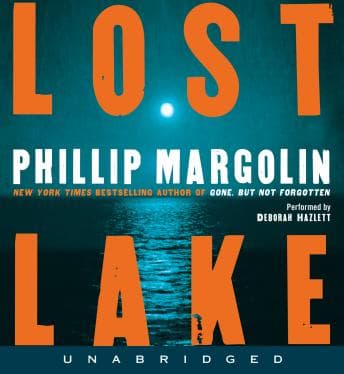

Phillip Margolin knows courtrooms the way I know teenagers who haven't done the reading — intimately, wearily, and with a kind of grudging affection for the chaos.
I picked up Lost Lake on a Wednesday night, one of those 11 PM grading sessions where I'm halfway through a stack of essays on The Great Gatsby and every single one of them calls the green light "a symbol of hope" like they're reading from the same forbidden cheat sheet. I needed something to keep me awake, something with teeth. And look — this book has teeth. They're just not all sharp, and a couple might be loose.
A Former Defense Attorney Writes What He Knows (And It Shows)
Margolin was a criminal defense attorney for decades before he started writing thrillers, and you can feel it in the bones of this thing. The courtroom scenes in Lost Lake have that specific, procedural weight that you only get from someone who's actually stood in front of a judge and argued for a client's freedom. When Ami Vergano — young attorney, single mother, woman who just watched her tenant beat someone half to death at a Little League game — has to decide whether to take on Dan Morelli's defense, the ethical wrestling feels real. Not Hollywood real. Real real. The kind of moral ambiguity where there's no background music swelling to tell you who the good guy is.
But here's where Margolin's ambition outpaces his execution. The conspiracy thread — a secret military unit, a presidential candidate with blood on his hands, a former mental patient tabloid reporter named Vanessa Kohler who's been screaming the truth into a void for years — it's a lot. This reminds me of what Hemingway said about writing: you have to know what to leave out. Margolin stuffs in government cover-ups, torture, mass murder confessions, and alien abduction tabloids, and by the time you're seven hours deep, you're juggling so many plot threads that some of them just... slip. The ending, in particular, comes together too fast, like Margolin realized he was running out of pages and started stapling loose ends together.
The prose deserves to be savored in the courtroom chapters. In the conspiracy chapters, you're just trying to keep up.
Deborah Hazlett Does the Heavy Lifting
Hazlett is a polished narrator — and I mean that in the best sense. She doesn't grandstand. She uses inflection the way a good actor uses silence: to tell you what a character is feeling without announcing it. When Ami's certainty starts cracking, Hazlett doesn't suddenly shift into melodrama. She lets doubt creep into the voice like fog rolling off the lake. It's subtle work, and I appreciated it.
That said, she's working alone here — single narrator, no sound effects, no production tricks — and with this many characters and this much paranoia flying around, there are moments where you have to rewind and figure out who's speaking. The character differentiation is done through tone shifts rather than distinct voices, which works most of the time but falters when you've got three government operatives in the same scene.
And yes — she mispronounces "Willamette." I'm a Chicago guy, so I have no personal stake in this, but I've heard from enough Portland listeners that it's like nails on a chalkboard. For a book set in Oregon, that's a miss. It's small, but it's the kind of thing that pulls you out of the story every time.
The narrator understands that pause is punctuation, though. Hazlett's pacing keeps the lively scenes lively and gives the quieter moments room to breathe. At 10 hours, the performance never drags even when the plot occasionally does.
Who's Going to Love This (And Who Won't)
If you loved Margolin's Gone, But Not Forgotten, this is its spiritual successor — same DNA, slightly messier genetics. Legal thriller fans who want courtroom drama mixed with political conspiracy will find plenty to chew on. Though if you want something that leans harder into the moral labyrinth without the conspiracy sprawl, Book of Two Ways scratches a similar itch — big ethical questions, cleaner execution. Listeners who need every thread tied up neatly at the end will be frustrated. And if you're someone who cares deeply about Pacific Northwest geography and pronunciation, maybe read the print version.
My students would hate this. I love it. Well — I mostly love it. I love the ambition of asking whether truth sounds crazy because it IS crazy, or because we've been trained not to believe it. Vanessa Kohler, the former mental patient journalist, is the kind of character who sticks with you: Is she a prophet or a paranoiac? Margolin never quite lets you settle on an answer, and that discomfort is the best thing about the book.
Worth pausing the faculty meeting for? The first seven hours, absolutely. The last three, I'd keep one ear on the budget presentation. Just in case.