
"The most powerful story she will ever possess is her own."
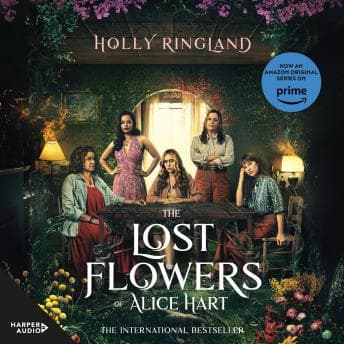
I was grading a stack of sophomore essays on The Great Gatsby - the same tired observations about green lights and American dreams that I've read for two decades - when Alice Hart's story pulled me completely out of my red-pen cynicism. Somewhere around hour three, I stopped marking papers entirely. My students would be horrified to know their teacher was neglecting his duties. I regret nothing.
Holly Ringland understands something that I try desperately to teach my students every semester: language is inadequate for our deepest truths. So we find other vocabularies. For Alice, it's the language of Australian native flowers - flannel flowers for grief, waratah for survival, everlasting daisies for memories that won't let go. This reminds me of what Hemingway said about the iceberg theory, except Ringland builds her subtext through petals and stems rather than omission. Each chapter opens with a flower and its meaning, and by hour eight, you're reading the blooms like a second language. Beneath This Man also uses symbolism to navigate difficult emotional territory, though in a completely different context.
But let's be clear about what this book actually is: a multi-generational examination of how abuse patterns replicate themselves, how silence becomes complicity, and how women learn to speak around the unspeakable. It's not comfortable. Ringland doesn't let you look away.
Prose That Earns Its Literary Label
The writing here is genuinely literary in the best sense - not showy, but precise. Ringland moves us across twenty years and three distinct Australian landscapes: sugar cane fields by the sea, a native flower farm, and a celestial crater in the central desert. Each setting functions as more than backdrop. The crater, in particular, becomes this extraordinary metaphor for impact - how violence leaves permanent marks on the landscape of a life.
What struck me most, though, is how Ringland handles the inheritance of stories. Alice's grandmother June runs this flower farm that's also a kind of sanctuary for damaged women, and the secrets layered there go back generations. The novel asks: which stories do we choose to tell ourselves? Which do we bury? And what happens when the buried ones push through anyway, like weeds through concrete?
My students would hate this. I love it. There's no redemption arc that ties everything up with a bow. The ending - and I'll get to this - leaves you wanting more in a way that feels intentional but also frustrating.
Crawford's Voice (Mostly) Carries the Weight
Louise Crawford's narration is good. Not flawless, but good. Her emotional delivery during the heavier scenes genuinely moved me - there were moments where I found myself gripping my coffee mug tighter, holding my breath. She understands that pause is punctuation, and she uses silence effectively.
Here's my issue, though: the transition from child Alice to adult Alice doesn't always land. Crawford's adult Alice sometimes carries this whiny quality that feels more adolescent than mature, which undercuts scenes where we need to see Alice's growth. It's not constant - maybe a handful of moments across thirteen hours - but it pulled me out of the story when it happened.
Some of the secondary character voices also felt a bit duplicated. When you're populating a flower farm full of women, each with her own trauma and backstory, they need to sound distinct. Crawford manages this about seventy percent of the time. Worth pausing the faculty meeting for? Absolutely. Perfect? Not quite.
That Ending, Though
I need to talk about the wrap-up. Or rather, the lack of one.
Look, I teach literature. I appreciate ambiguity. I've spent entire class periods defending the ending of The Giver to skeptical teenagers. But there's a difference between deliberate openness and a story that simply... stops. Ringland builds so much emotional momentum, layers so many secrets and revelations, and then the conclusion feels rushed. Like she had more to say but ran out of pages.
Does this ruin the experience? No. But it left me sitting in my car in the school parking lot for an extra ten minutes, waiting for something more that never came. Denise texted asking if I was okay. I wasn't sure how to answer.
Who Should Listen (And Who Should Skip)
If you loved The Nightingale or The Great Alone - books where women survive impossible circumstances and find their own strength - this is their spiritual successor. If you're drawn to stories about breaking generational patterns, about finding voice after silence, about the landscapes (literal and emotional) that shape us, you'll find something here.
Skip this if you need clean resolutions. Skip it if domestic violence as a central theme is too heavy for your current headspace - there's no shame in that. And maybe skip it if you're listening casually while doing something else. This one demands your attention.
The Final Grade
I finished this at 11 PM on a Tuesday, papers still ungraded, thinking about my own mother and the stories she never told me. About the flowers she planted in our Chicago backyard that I never asked the names of.
That's what good literature does. It makes you think about your own life through someone else's story.
Crawford's narration has its rough edges, and that ending will leave you hungry for more closure than you'll get. But the prose rewards careful listening, the flower language is genuinely beautiful, and Alice's journey - messy and painful and ultimately hopeful - is worth your time.
Just maybe wait for a sale. It's good. It's not quite great.