
Everyone told me Tom Sellwood was the weak link in this series. They weren't entirely wrong, but they weren't entirely right either.
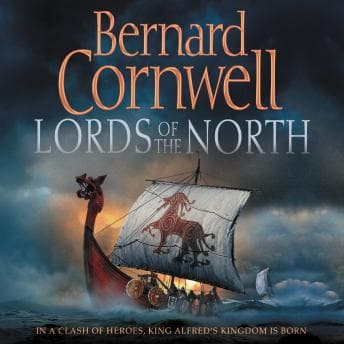
I'd been putting off *Lords of the North* for months because of the narrator warnings. Finally tackled it during a security assessment drive to Houston—four hours of Texas highway, just me, Ranger in the back seat, and Uhtred's return to Northumbria. By the time I hit Brenham, I'd made my peace with Sellwood. By Katy, I was genuinely invested.
The Narrator Situation (It's Complicated)
Here's the thing about Sellwood that nobody seems to mention: he's actually quite good at the technical stuff. Medieval British names that would make most narrators stumble? He handles them like he's been speaking Old English his whole life. Bebbanburg, Guthred, Eoferwic—all clean, all confident. The man did his homework.
But then he opens his mouth for a Viking character, and suddenly we're in some kind of Finnish comedy sketch. I've worked with Scandinavian military advisors. They don't sound like that. Nobody sounds like that. It's distracting in a way that pulls you right out of ninth-century Britain and drops you into a bad SNL sketch.
The frustrating part? When Sellwood just tells the story—when he's not trying to do voices—his narration has real weight. There's a gravity to his delivery that suits Cornwell's prose. But he keeps overcorrecting, pushing too hard on the character work, and it shows. You can hear him trying. That's never a good sign.
Cornwell Delivers What Cornwell Always Delivers
Now for the good news: the story itself is vintage Cornwell. The man knows how to write a siege. The midnight assault on a supposedly impregnable city—I won't spoil which one—had me checking my mirrors more than the actual traffic. Cornwell understands something most thriller writers don't: tension comes from stakes, not from speed. He takes his time building to that climax, and it pays off.
Uhtred's journey from freed warrior to reluctant kingmaker hits different when you've seen how quickly allegiances shift in actual conflict zones. One day you're allies, next day you're not. Cornwell captures that moral ambiguity without getting preachy about it. Uhtred does terrible things for understandable reasons. That's not excusing it—that's just how war works.
The political maneuvering between Saxons and Danes feels authentic in a way that most historical fiction doesn't earn. You believe these people are building something, even when they're trying to kill each other. The slow fusion of cultures, the adoption of each other's customs—it's not heavy-handed. It just happens, the way it actually did.
Where It Lost Me (Briefly)
About six hours in, there's a stretch where Uhtred's enslavement feels more like summary than story. The narration doesn't help here—Sellwood's delivery goes flat when the material requires more emotional range. I found myself checking the chapter progress more than I should have. But Cornwell pulls it back together for the final third, and the siege sequence alone makes up for the middle-book sag.
The violence and sexual content are present but not gratuitous. If you've read Cornwell before, you know what you're getting. Nothing here that would surprise a grown adult.
Who Should Deploy—And Who Should Stand Down
If you're already invested in the Saxon Stories, push through the narrator adjustment period. The story's too good to abandon over voice work. If you're starting the series fresh, consider beginning with the earlier audiobooks and their different narrator—then decide if you can handle the switch.
History buffs who can forgive some theatrical voice choices will find a lot to appreciate here. The period detail is solid, the military tactics make sense, and Cornwell doesn't commit the cardinal sin of putting modern sensibilities in medieval mouths. That same attention to historical authenticity—without the modern moralizing—is what drew me to Sailing Alone Around the World, though Slocum's solo voyage trades swords for sails.
If you need your Vikings to sound actually menacing? This might not be your version. Sellwood doesn't ruin it, but he doesn't enhance those moments either. Skip this one if you're allergic to uneven narration or need a standalone entry point to the series.
End of Patrol
Ranger slept through most of this one, which I'm choosing to interpret as peaceful approval rather than boredom. *Lords of the North* is a solid entry in a series I've come to respect. The narrator's a mixed bag—competent foundation, questionable flourishes—but Cornwell's storytelling muscle carries the load.
Not the best audiobook experience I've had this year, but far from the worst. The siege alone earned my credit. Sometimes you just need to push through the rough terrain to get to the objective.