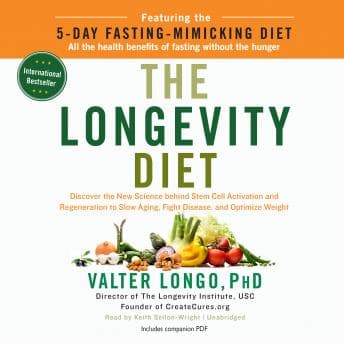

My parents ate the same thing for fifty years. Rice, vegetables, fish, maybe some tofu. No fasting protocols, no stem cell activation theories, no five pillars of anything. They just... ate like their parents ate. And they're both in their eighties, still sharp, still moving.
So when I picked up Valter Longo's book on a red-eye to Chicago—couldn't sleep, might as well learn something—I had one question: Is this actually science, or is this my parents' Korean diet with a USC research grant attached?
The Science Actually Holds Up (Mostly)
Here's what surprised me. Longo isn't selling supplements or a branded meal delivery service. The guy runs the Longevity Institute at USC and has been studying this for twenty-five years. The core argument is straightforward: periodic fasting-mimicking diets (five days, three to four times a year) combined with a pescatarian daily eating plan can activate cellular regeneration and reduce disease risk.
The research he cites is legit—mice studies that translated to human trials, peer-reviewed work on diabetes reversal, cancer risk reduction. At 2.0x speed, I got through the scientific foundation in about ninety minutes, and it's the strongest part of the book. He explains IGF-1 pathways and autophagy without making you feel like you need a biochemistry degree. The fasting-mimicking protocol is specific: 800-1,100 calories for five days, low protein, low sugar, high healthy fats. Not starving yourself. Not juice cleanses. Actual clinical parameters.
But—and this is where my McKinsey brain kicks in—the leap from "this worked in controlled studies" to "this will extend your healthy lifespan" is still a leap. Longo is careful about this, but the book's marketing isn't. That's not his fault, but it's worth noting.
Where the Padding Lives
The book is six hours and twelve minutes. The core content is maybe three hours. The rest? Recipes, meal plans, testimonials, and repetition of the same five pillars from different angles. Skip to the fasting-mimicking chapters after the initial science dump. You'll get the same value in half the time.
Keith Sellon-Wright's narration is clean, professional, exactly what you want for science-heavy nonfiction. No dramatic pauses, no weird emphasis on words like "regeneration" like it's a magic spell. Just steady, clear delivery that gets out of the way of the content. I appreciated that. Some health book narrators treat every sentence like they're revealing the secret to immortality. This guy just reads the material and trusts you to follow along.
The Real Value Proposition
Here's what I actually implemented: I tried the five-day fasting-mimicking protocol last month. Not Longo's branded ProLon kit (which costs about $250—I have thoughts about that), but a DIY version based on his macros. Day one was fine. Day two I wanted to fight everyone in my Zoom meetings. Day three I had bizarre mental clarity. Days four and five I felt... lighter? Not just physically.
Jenny said I was "less David" for a week after. I think she meant it as a compliment. That kind of relationship observation—the small comments that reveal everything—is what 5 Love Languages tries to systematize, though I'm skeptical you can framework your way into understanding your partner.
The pescatarian daily diet is basically Mediterranean eating with more specific protein restrictions. If you're already eating reasonably well, the adjustments are minor. If you're living on protein shakes and steaks, this is a bigger shift.
Who This Is (and Isn't) For
This is for people who want the science behind intermittent fasting trends, not just the Instagram version. It's for anyone who's skeptical of diet books but willing to engage with actual research. Skip it if you want a quick fix or hate fish—the pescatarian foundation is non-negotiable here.
If you're already eating like my parents—lots of vegetables, moderate fish, minimal processed food, occasional unintentional fasting because you were too busy working—you might just feel validated rather than transformed. Which, honestly, is fine.
Net-Net
Longo built a framework backed by decades of research. The execution in book form is bloated, but the core intellectual property is solid. At 1.5x or 2.0x speed, you can extract the key protocols in one commute. The narrator doesn't get in your way. The science is real enough to take seriously.
Would my parents read this? No. They'd say "just eat vegetables" and go back to their lives. But for those of us who need the research to believe something our grandparents knew instinctively—this delivers. Just skip the recipe chapters unless you actually plan to cook.