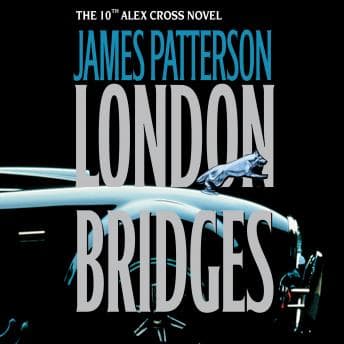

Look, I need to talk about the psychological absurdity of making your villain so cartoonishly evil that he literally calls himself 'the Wolf' and has a sidekick named 'the Weasel.' James Patterson, sir, we need to discuss character motivation.
I listened to this during my morning jogs through Cambridge, and I'll admit—the pacing kept my feet moving even when my brain was screaming 'that doesn't track psychologically.' The Wolf is supposed to be this mastermind criminal threatening to blow up major cities, and yet his behavior reads like a case study in narcissistic personality disorder written by someone who skimmed the DSM-5 on a lunch break. The grandiosity is there. The manipulation is there. But the internal logic? Meh.
When Two Voices Compete for Your Attention
Denis O'Hare and Peter J. Fernandez handle the dual narration, and here's where it gets interesting from a listener psychology perspective. Research shows that multiple narrators can either enhance immersion or fragment it—there's no middle ground. This falls somewhere in the 'effective but not transcendent' category.
O'Hare brings this stark, almost theatrical quality to the villain sections that genuinely works. When the Wolf is making his threats, you feel the menace. Fernandez handles Alex Cross with steady professionalism. Together, they keep pace with Patterson's relentless chapter breaks (the man writes chapters like text messages—short, punchy, often ending mid-thought).
But—and this is a significant but—neither narrator quite nails the emotional depth these characters deserve. Cross is supposed to be on vacation with his girlfriend when catastrophe strikes. That's a fascinating psychological setup: intimacy interrupted by trauma, personal life colliding with professional identity. The narration delivers the facts of this conflict without the feeling of it. I found myself asking: why does Cross really keep doing this to himself? The audiobook doesn't help me understand.
The Production Choices That Made Me Wince
Okay, so someone in the production room decided that each chapter needed dramatic sound effects. Percussive hits. Echoing voices. It's like they watched too many movie trailers and thought 'yes, this is what books need.'
(My therapist would have thoughts about whoever made this decision.)
I'm not usually sensitive to production quirks, but during a 5 AM jog when you're half-awake and trying to follow a complex international terrorism plot, the last thing you need is BOOM-BOOM sound effects yanking you out of the narrative. It's distracting. It's unnecessary. It treats the listener like they can't maintain tension without audio cues.
The Psychological Mess of It All
Here's what makes this a fascinating case study in thriller construction: Patterson understands pacing better than almost anyone. The book moves. Towns explode, deadlines loom, Cross races across continents. You're never bored.
But the character motivations? They don't track. The Wolf's endgame remains murky in ways that feel less like intentional mystery and more like the author hadn't fully decided what he wanted. The Weasel shows up because apparently one villain with an animal nickname wasn't enough. And Cross himself—a trained psychologist, mind you—makes decisions that any first-year psych student would question.
The ending, which Patterson apparently considers 'unforgettable,' left me more confused than satisfied. Several listeners I've read about felt the same way. Plot gaps. Convenient coincidences. A revelation about the Wolf's identity that's supposed to be shocking but lands with a thud if you've been paying attention to character patterns.
Who This Works For (And Who Should Skip)
If you're deep into the Alex Cross series and need to know what happens next—this delivers on that basic promise. The narrators are competent. The pacing is excellent for commutes or workouts (I knocked out the whole thing in about a week of morning runs). Patterson knows how to end chapters on hooks that make you think 'just one more.' But if you're looking for psychological depth, for villains whose motivations make sense, for emotional weight in the narration—skip this one. Popcorn thriller territory. Fun while it lasts, forgettable by the next morning.
My Clinical Assessment
I wanted to love it more than I did. Patterson has written better Cross novels, and this one feels like he was racing toward a deadline almost as aggressively as his protagonist races toward the Wolf. 20th Victim suffers from similar pacing-over-depth issues, though at least that one commits to its chaos. The dual narration is a nice touch that doesn't quite elevate the material. The production choices actively hurt it in places.
Would I listen again? Probably not. Did it make my jogs fly by? Absolutely. Sometimes that's enough. Sometimes it isn't.