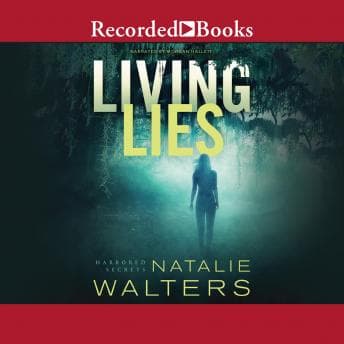

What does it mean to come home when home knows exactly who you used to be?
I've been teaching Southern Gothic literature for two decades, so when a debut novel sets itself in small-town Georgia and promises secrets, I'm already mentally cataloging the Flannery O'Connor comparisons. Living Lies isn't quite that—it's lighter, more hopeful, firmly in the inspirational suspense lane—but Natalie Walters understands something fundamental about small towns that a lot of writers miss. The suffocation isn't malicious. It's just... thorough.
Lane Kent returns to Walton, Georgia with her five-year-old son and a grief so heavy it's become dangerous. Depression after losing her husband. A secret she's desperately protecting. And then—because small-town fiction demands it—she stumbles onto a dead body. Look, the setup isn't reinventing the wheel here. But the execution? Walters knows how to make familiar tropes feel lived-in.
When the Mystery Becomes Secondary
Here's what surprised me about this one. The murder mystery is competent—solid clues, reasonable pacing, a twist that I saw coming about forty minutes before the reveal (my students would say I'm insufferable about this, and they'd be right). But that's not really what the book is about.
This is a story about depression. Real, clinical, dangerous depression. And Walters doesn't flinch from it. Lane isn't just "sad about her husband." She's struggling to function. She's making decisions that scare her. The faith elements weave through this—it's inspirational fiction, so expect that—but they don't feel like a magic solution. I've encountered that same thoughtful approach to spiritual struggle in Heavenly Life, though Walters grounds it more firmly in the thriller framework. More like... a rope someone's throwing while you're still underwater.
I listened to most of this while grading sophomore essays on To Kill a Mockingbird at 11 PM, which is maybe not the ideal context for a book about small-town secrets and moral complexity. But honestly? It helped. There's something grounding about fiction that takes seriously the weight people carry while still believing they can set it down.
Morgan Hallett Finds the Quiet Moments
Morgan Hallett's narration is smooth—genuinely easy to listen to, which matters at nearly eleven hours. She differentiates the characters well enough that I never lost track of who was speaking, and her pacing has this soothing quality that works for the material.
But here's where I'll be honest: the feedback I found on Hallett's performance was a bit mixed. Some listeners felt her accent work was slightly heavy-handed, pulling focus from the story. I didn't have that experience—maybe because I was half-distracted by comma splice corrections—but it's worth noting if you're particularly sensitive to Southern accent performances. (And look, as someone who's listened to dozens of audiobooks set in the South, the bar for "not distracting" is pretty high.)
What Hallett does exceptionally well is the quiet moments. Lane's internal struggle, her conversations with her son, the scenes where she's trying to hold herself together in public. The narrator understands that pause is punctuation. She lets the silences breathe.
The Predictability Question
I'm not going to pretend this is unpredictable. It's not. If you've read inspirational romantic suspense before, you'll recognize the beats. The handsome deputy with his own wounds. The town gossip who knows more than she should. The faith journey that parallels the mystery's resolution.
But here's the thing—and this is something I try to teach my students about genre fiction—predictability isn't always a flaw. Sometimes we come to a story knowing roughly where it's going, and the pleasure is in how it gets there. Walters writes clean, propulsive prose. The romance develops at a pace that feels earned rather than forced. And the ending ties up its threads with care.
My students would probably find this too earnest. I kind of loved that about it.
Who This Works For (And Who Should Skip)
If you're looking for gritty, morally ambiguous crime fiction, this isn't it. If you want your faith elements subtle to the point of invisible, look elsewhere. But if you appreciate small-town mysteries with genuine emotional stakes, if you've ever dealt with depression and want to see it portrayed with both honesty and hope, if you like your suspense with a side of romance and redemption—this is solid.
Walters has apparently written more books in this series, and I get it. Walton, Georgia feels like a place you could return to. Not because it's perfect, but because its imperfections are the kind that make communities real.
Class Dismissed
Worth pausing the faculty meeting for. (Principal Martinez, I was definitely paying attention to your budget presentation. I wasn't. I was in Georgia.)