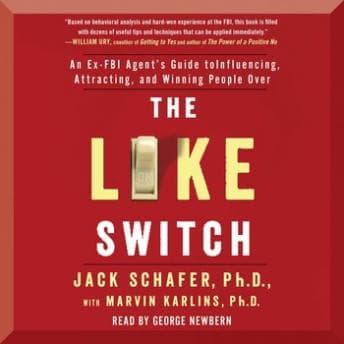

So here's the thing about FBI behavioral analysis books - they're usually either fascinating or just repackaged Dale Carnegie with a badge. I went into The Like Switch expecting the latter, and honestly? I was pleasantly surprised. This isn't groundbreaking, but it's way more practical than I expected for a 7-hour commute listen.
Dr. Jack Schafer spent years recruiting spies and analyzing terrorists for the FBI. Now he's teaching you how to make friends at networking events. The jump sounds ridiculous when you say it out loud, but the underlying psychology actually tracks. The "Friendship Formula" he introduces early on - proximity + frequency + duration + intensity = friendship - is basically a systems approach to human connection. As someone who debugs distributed systems all day, I appreciate when someone treats social dynamics like an algorithm you can optimize.
The FBI Stuff That Actually Applies
Look, I was skeptical about how spy recruitment techniques translate to, like, getting your coworker to like you. But Schafer does a solid job breaking down nonverbal cues - the eyebrow flash, the head tilt, the "friend signals" we send unconsciously. Some of this I knew intuitively (don't cross your arms, make eye contact), but he goes deeper into the why behind each behavior. The sections on mirroring and how to read whether someone's genuinely interested or just being polite? Super useful for those of us who sometimes miss social cues because we're still mentally debugging that production issue from earlier.
The deception detection chapters are interesting but - I'll be honest - probably less applicable unless you're regularly interviewing suspects. Still made for entertaining listening on the morning train. I found myself people-watching differently during my commute after this.
George Newbern's Calm Authority
I couldn't find much about Newbern's other work, but based on this performance, the guy knows how to deliver instructional content without putting you to sleep. His voice has this calm, almost paternal quality that makes the psychological concepts feel accessible rather than academic. Someone in the reviews called it "the voice of God's own angel" and - okay, that's a bit much, but I get it. He's got that reassuring NPR energy.
The pacing works well for audiobook format. Schafer's writing is already pretty digestible, and Newbern doesn't rush through the examples or drag on the theory sections. I listened at 1.5x and it held up perfectly. Could probably push to 1.75x if you're already familiar with behavioral psychology basics.
The ROI Calculation
Here's where I land: The Like Switch is basically How to Win Friends and Influence People, but with FBI case studies and more focus on nonverbal communication. I had a similar "this is just repackaged self-help" reaction to Bulletproof Diet, though that one leaned way harder into pseudoscience. If you've read Carnegie, maybe 40% of this will feel familiar. But the FBI framing keeps it interesting, and the specific techniques around reading body language and detecting lies add genuine value.
Perfect for: commute, gym, chores. Skip for: deep work sessions where you need to concentrate on something else.
The book could've been tighter - there's some repetition, and a few chapters feel like they're padding the runtime. But at under 8 hours, it doesn't overstay its welcome. I finished it in about 5 commutes and came away with a handful of techniques I've actually started using. (The eyebrow flash thing? Weirdly effective. My PM definitely noticed something was different in our last 1:1.)
Who's This For?
If you're in tech and occasionally wonder why some people seem to navigate social situations effortlessly while you're still mentally rehearsing small talk - this is a decent primer. It won't turn you into a master manipulator, but it might help you understand the invisible signals everyone else seems to already know. Skip it if you've already read a bunch of body language books or find the FBI angle gimmicky rather than interesting.