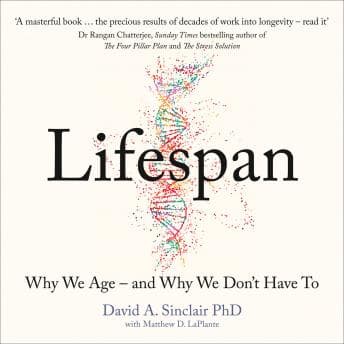
What if aging isn't inevitable? What if it's just... a bug in our code?
Look, I've sat through enough business books promising to revolutionize my thinking that I've developed a pretty solid BS detector. So when Dr. David Sinclair starts making claims about treating aging like a disease we can cure, my McKinsey-trained skepticism kicked into overdrive. But here's the thing - twelve hours later, I'm genuinely reconsidering my supplement stack and my relationship with the hotel gym.
The Science That Actually Sticks
Sinclair's core argument is elegant: aging isn't the result of a thousand different things going wrong. It's one thing - the breakdown of our epigenome, the system that tells our genes what to do. Think of it like a scratched DVD. The data's still there, but the player can't read it properly anymore. And if that's the case, maybe we can polish the disc.
Now, I've advised biotech startups. I've seen the gap between lab results and real-world application swallow entire companies. Sinclair doesn't pretend that gap doesn't exist, but he does get a little... evangelical about the possibilities. The first half of the book? Solid science, clearly explained, respects your intelligence. The back half veers into speculation about what society looks like when we're all living to 120. Interesting thought experiment, but my 2.0x speed couldn't save some of those tangents.
The actionable stuff - intermittent fasting, cold exposure, specific exercise protocols, limiting sugar and excessive protein - this is what my parents did instinctively. Now it has a TED talk. And actual research backing it up, which is more than most wellness books can claim.
When The Harvard Professor Reads His Own Work
Sinclair narrates this himself, and honestly? It works better than it should. He's got that Australian-American hybrid accent that's easy on the ears, and he clearly knows this material cold. You can hear when he's genuinely excited about a finding versus when he's trudging through necessary context.
The pacing is... uneven. Some chapters fly by. Others feel like sitting through a faculty meeting where someone's really proud of their PowerPoint. I caught myself zoning out during a few stretches in the middle - something about NAD+ precursors that could've been tightened up considerably. But when he's telling stories about his lab discoveries or the implications for his own family, the guy comes alive.
There's bonus Q&A content at the end that feels somewhat tacked on. Not terrible, but if you're running low on your monthly credit, you're not missing much by skipping it.
The ROI Calculation
Executive Summary: the core insight is worth the listen. The other 7 hours? Diminishing returns.
Here's my honest assessment. If you're a founder, an executive, anyone whose productivity depends on not dying or declining prematurely - this is useful information. The lifestyle interventions Sinclair recommends cost nothing. The supplements he mentions (NMN, resveratrol) cost something, but he's transparent about the fact that he takes them himself and has financial interests in the space. I respect that disclosure. I've seen this kind of conflict of interest buried at three different companies. That kind of self-awareness about influence - even well-intentioned influence - is something Art of Seduction explores from a completely different angle, though Greene's less interested in your longevity than your leverage.
What I struggle with is the length. This could've been a tight five-hour book. Sinclair clearly loves his subject, and sometimes that love manifests as... thoroughness that tests your patience. Jenny would say I'm being harsh. Jenny is right. But I'm also right that there's padding here.
The science is solid. The practical advice is actionable. The speculation about future society is skippable unless you're into that sort of thing. And Sinclair reading his own work adds a layer of authenticity that a professional narrator couldn't replicate - you're getting the ideas straight from the source, complete with his genuine enthusiasm and occasional academic meandering.
Who Should Listen (And Who Should Skip)
If you're optimizing for longevity as a competitive advantage - founders, executives, anyone treating their body like company infrastructure - this delivers. Skip it if you want tight, no-filler science writing or if speculation about 2050's healthcare system makes you impatient.
Skip to chapter 5 if you just want the practical protocols. Thank me later. But honestly, the earlier chapters explaining why these interventions work made me more likely to actually follow through. Understanding the mechanism matters.
Would I listen again? Probably not cover to cover. But I've already bookmarked the sections on lifestyle interventions, and I'm reconsidering my morning routine. For a business book - and yes, this is a business book about the business of staying alive - that's a pretty solid ROI.









