Finally, horror that respects the genre.
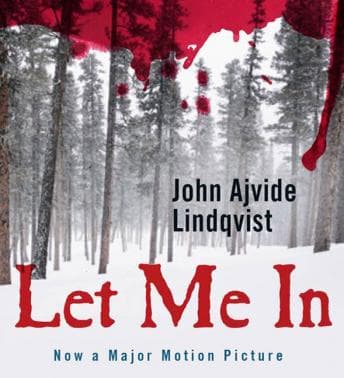
I've been telling my podcast listeners for years that Scandinavian horror operates on a different frequency than American horror. There's a bleakness, a quietness to it that gets under your skin in ways that jump scares never could. John Ajvide Lindqvist's Let Me In is basically the thesis statement for everything I've been preaching.
I listened to most of this during my late shifts at the library, alone in the stacks after closing. Yes, I'm aware this was a choice. Yes, Shirley (my cat, not Jackson) judged me when I came home at 11 PM looking like I'd seen a ghost. Worth it? Absolutely.
The Slow Dread of Blackeberg, 1981
Look, here's the thing about vampire fiction—most of it is romance wearing a monster mask. Lindqvist doesn't play that game. This is a book about loneliness first, vampirism second. Oskar is twelve, bullied relentlessly, fantasizing about violence as an escape from his own powerlessness. Eli is... something else. Something wrong. And their connection isn't romantic in any traditional sense—it's two broken things recognizing each other.
The Sweden of 1981 that Lindqvist builds feels genuinely cold. Not just temperature cold (though that too), but socially cold. The apartment blocks of Blackeberg, the adults who fail their children in a thousand small ways, the casual cruelty of kids who've learned violence from somewhere. This understands that horror isn't about gore—it's about dread. The dread of being twelve and invisible. The dread of needing something you can't name.
At almost seventeen hours, this is a commitment. And honestly? It drags in places. Lindqvist spends a lot of time with secondary characters—the alcoholics, the neighbors, the people orbiting the central horror without understanding it. Some of these threads pay off beautifully. Others felt like detours. I found myself zoning out during a few of the adult storylines, then snapping back when we returned to Oskar and Eli.
Steve Pacey Gets It
The narrator commits. That's rare.
Steve Pacey approaches this material with exactly the right restraint. He doesn't oversell the horror moments—he lets them land quietly, which makes them hit harder. His Oskar sounds genuinely young without being cartoonish, and there's this fragile quality to his voice work that captures the character's desperate need for connection.
The character differentiation is solid throughout. With a cast this size—bullies, parents, drunks, police officers—it would be easy to lose track of who's speaking. Pacey keeps everyone distinct without resorting to vocal gymnastics. His accent stays neutral, which works for the translation. You're not constantly reminded you're listening to a Swedish story filtered through an English voice.
I will say—and this is minor—there are moments where the pacing feels almost too measured. During some of the slower domestic scenes, I caught myself wishing he'd pick up the tempo slightly. But for the horror sequences? Perfect. The scenes in the basement. The swimming pool. You know the ones if you've seen either film adaptation. Pacey lets those moments breathe, and the silence between words does half the work.
Where the Source Material Shines (And Where It Gets Uncomfortable)
My podcast listeners are going to have opinions about this one. Because Lindqvist doesn't shy away from the genuinely disturbing elements that both film adaptations softened. There's a subplot involving a character named Håkan that is... a lot. It's supposed to be uncomfortable. It's supposed to make you question who the real monsters are. But some listeners might find it too much.
I appreciated that the audiobook doesn't sanitize any of this. Horror should make you uncomfortable. If you need your vampires sexy and your violence consequence-free, skip this one. If you want horror that actually unsettles you, that treats its monsters like monsters while still making you ache for them—you need this. That same unflinching commitment to discomfort is what makes Poisoned Pen work so well—it earns its horror.
What Lindqvist does better than almost any vampire writer I've encountered is make the vampire mythology feel physical and consequential. The rules matter. The invitation matters—hence the title. There's a scene where Eli enters without being invited that I'm still thinking about days later. Shirley Jackson walked so this author could run, honestly.
2 AM in the Dark with Shirley
I finished this at 2 AM on a Tuesday, in my apartment that looks like a Halloween store exploded, with my black cat staring at me like I'd lost my mind. And I just sat there for a while, in the dark, thinking about what it means to be monstrous. What it means to be lonely enough to accept monstrousness in exchange for connection.
That's what good horror does. It doesn't just scare you—it makes you examine something uncomfortable about being human. Wolves of the Calla does something similar with its exploration of sacrifice and community—King's always been good at using monsters to interrogate what we're willing to become.
Is this a perfect audiobook experience? No. It's long. It meanders. Some of the secondary plots feel like they belong in a different book. But the core story—Oskar and Eli, two damaged creatures finding each other in the Swedish winter—is as good as vampire fiction gets.
If you've only seen the films (either one), the book goes places they couldn't. Darker places. Stranger places. Steve Pacey guides you through them with a steady hand.
I listened in the dark. Mistake? Maybe. Worth it? Absolutely.