
What happens to the people we stop talking to?
I don't mean the casual drift - the college roommate you lose touch with, the neighbor who moves away. I mean the deliberate silence. The family member you cut off, or who cut you off, and the years that calcify around that wound until nobody remembers who stopped calling first. Francine Rivers builds an entire novel around that question, and at eighteen hours, she gives it the slow, aching space it deserves.
An Eighty-Four-Year-Old Woman and a Ruined Garden Walk Into a Novel
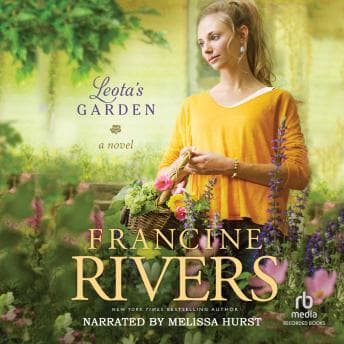
Leota Reinhardt is eighty-four, alone, and her garden - once her sanctuary, her prayer space, her one beautiful thing - has gone to ruin. Her adult children have their own bitter narratives about who she was as a mother, narratives shaped by wartime sacrifices they never understood because she never explained them. Rivers does something I genuinely respect here: she doesn't let Leota off the hook entirely. Yes, the children are selfish and small in their grievances. But Leota kept secrets. She chose silence over vulnerability, and silence, it turns out, is its own kind of violence in a family.
This reminds me of what Hemingway said about the dignity of movement of an iceberg - what's beneath the surface matters more than what shows. Except Rivers isn't Hemingway. She's not interested in spare prose and letting you fill in the gaps. She's going to walk you through every emotional corridor of this family's dysfunction, and at times that means you're sitting with Leota's loneliness for stretches that feel almost uncomfortably real. I was grading a stack of junior essays on The Great Gatsby - most of them arguing that Gatsby was "just a simp," God help me - and I had to stop. Not because the essays demanded my full attention (they didn't), but because there's a section where Leota is sitting in her kitchen, talking to God like He's the only person left in her phone contacts, and I needed to just... be in that moment.
The prose deserves to be savored. Rivers isn't doing anything flashy with language, but she understands pacing within a scene - the way a conversation between Leota and her granddaughter Annie can shift from awkward small talk to something raw and confessional in the space of a paragraph.
When the Narrator Is the Most Polarizing Character
Here's the thing about Melissa Hurst's performance: I understand both camps completely. Her emotional delivery is genuine - you can hear grief in Leota's voice, you can hear Annie's tentative hope. When Leota prays, Hurst drops into this quiet, almost whispered register that feels appropriately intimate, like you've accidentally overheard something private.
But - and I say this as someone who listened to the full eighteen hours - there are stretches where the narration sits at one emotional pitch for too long. The younger characters, particularly Corban (the college student who thinks his volunteer hours with Leota are just a class requirement), sometimes sound more flat than I think Rivers intended. Corban's supposed to be arrogant and gradually humbled, but Hurst reads him as mostly neutral, which undercuts the arc. It's not bad narration. It's uneven narration, which is almost more frustrating because the highs are legitimately moving.
One listener I came across said something like "If I didn't love Francine Rivers so much, I would not have listened" - and honestly, that's harsh but not entirely unfair. At 1.0x speed (because the author chose those words and I choose to hear them properly), eighteen hours with a narrator who doesn't always match the material can test your patience. I'd actually recommend this as one of the rare cases where 1.25x might smooth out some of the slower stretches without losing the emotional beats.
Who This Garden Was Planted For
If you loved Rivers' Redeeming Love or her Mark of the Lion trilogy, this is its spiritual successor in a completely different setting - contemporary, domestic, quiet. There are no epic biblical parallels here, just a family that broke itself through pride and silence and the slow, painful work of trying to grow something new in wrecked soil. The garden metaphor isn't subtle, but Rivers earns it.
Fair warning: this book deals with aging, euthanasia, and the specific loneliness of being old and forgotten by your own children. My students would hate this. I love it. But I'm also a fifty-something man whose mom falls asleep during my Faulkner episodes, so maybe I'm the target audience for stories about parents and children failing each other.
Skip this if you want plot-driven tension or anything resembling a fast pace. This is a character study wearing the clothes of a family drama, and it moves like a Sunday afternoon. The closest thing I've read to that same Sunday-afternoon emotional weight is Live in Love: Growing Together Through Life's Changes, though it approaches the same territory of long-term relationships and change from a much sunnier angle — which, depending on where you are emotionally, might be exactly what you need instead. Come to it if you want to sit with hard questions about forgiveness and whether it's ever too late to rebuild what you destroyed through good intentions and terrible communication.
Worth Pausing the Faculty Meeting For
Leota's Garden isn't Rivers at her most ambitious, but it might be her most honest. The audiobook experience is uneven - Hurst delivers when it counts but doesn't always sustain it across eighteen hours. Still, there's a scene near the end involving the garden that hit me the way good fiction is supposed to: not like a truck, but like a memory you forgot you had. That's enough.