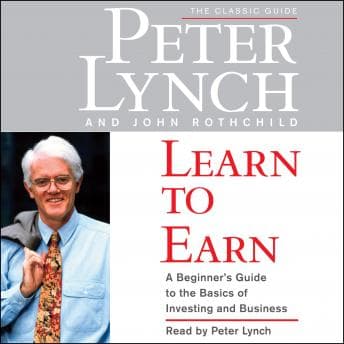

"The basics of investing aren't taught in school." Peter Lynch says this early on, and I literally paused the audiobook while chopping onions for chana masala to think about it. He's right. I have a PhD-level understanding of cognitive biases and attachment theory, but when I opened my first 401(k), I stared at the fund options like they were written in Aramaic. Nobody taught me this stuff. My parents - immigrants who built everything from scratch - understood saving instinctively but treated the stock market like a casino. This book is basically the financial literacy class that should exist but doesn't.
So here's the thing: at 1 hour and 39 minutes, this is barely longer than a therapy session. And that's actually a feature, not a bug.
The History Lesson You Didn't Know You Needed
What surprised me most is that roughly the first half of this audiobook isn't about stock picks or P/E ratios at all. Lynch traces the history of capitalism itself - from European colonists funded by public companies in England and Holland to the rise of American industry. He draws a direct line from the Dutch East India Company to your ability to buy shares of Nike today. The research actually shows that people learn abstract concepts better when anchored to narrative, and Lynch seems to understand this instinctively. He's not an academic, but he thinks like one here.
Lynch connects the dots between historical economic patterns and modern investing in a way that made me - someone who reads about cognitive frameworks for a living - genuinely reconsider how I think about financial systems. He talks about companies teenagers already know (Coke, Pepsi, McDonald's, the Gap) and reframes them as investment opportunities hiding in plain sight. It's a fascinating case study in how proximity breeds familiarity but not understanding. We consume products daily without ever thinking about the businesses behind them. Psychologically, this tracks perfectly - we're pattern-recognition machines, but only when someone teaches us what patterns to look for.
Lynch Reading Lynch: The Author-Narrator Question
Peter Lynch narrates this himself, and his delivery is... exactly what you'd expect from a retired fund manager, not a voice actor. It's conversational and clear, the kind of tone your favorite uncle uses when he's explaining something at Thanksgiving dinner and actually knows what he's talking about. There's no dramatic flair. No character voices (there are no characters to voice). He sounds like a guy who managed one of the most successful mutual funds in history and is now patiently explaining to you why that matters for your savings account.
Is it a riveting performance? No. But would a polished narrator have undercut the accessibility? Probably. Lynch's credibility IS the performance. When he talks about reading annual reports or understanding stock tables in the newspaper (yes, this book is old enough that newspapers are still the reference point), you believe him because he's the guy who turned the Magellan Fund into a legend from 1977 to 1990.
Compared to Lynch's other books - One Up on Wall Street, Beating the Street - this is the training wheels version. And I mean that as a compliment. Those books assume you already speak the language. Learn to Earn teaches you the alphabet first.
Who This Is Actually For (And Who Should Skip It)
If you already know what a mutual fund is, how to read a balance sheet, and why compound interest matters, this will feel elementary. Skip it. Go listen to One Up on Wall Street instead.
But if you're the person I was five years ago - educated, capable, and weirdly intimidated by financial terminology - this is genuinely useful. It's pitched at high schoolers, but I found myself asking: why does financial education carry so much shame for adults? We don't feel embarrassed about not knowing organic chemistry. But admitting you don't understand investing? That triggers something. Lynch and Rothchild write without condescension, which is harder than it sounds.
The 99-minute runtime means you can absorb this during a single long cooking session or a weekend jog. I'd actually recommend focused listening rather than background play - there are concepts worth pausing on, even if the delivery is casual.
One caveat: the book's examples are dated. The Gap and The Body Shop as hot investments tell you exactly when this was written. The principles haven't aged, but the specifics have. You'll need to do the mental translation yourself.
My Prescription
I don't usually review finance books. But this one is really about psychology - the psychology of why smart people avoid learning about money, why we consume brands without understanding businesses, why financial literacy gets treated as optional when it shouldn't be. Lynch doesn't frame it that way, but I do. My therapist would have thoughts about my tendency to psychologize everything, including Peter Lynch. Simon Sinek gets at something adjacent in Leaders Eat Last - the idea that the systems we operate inside shape our behavior in ways we rarely stop to examine. But she'd also agree: understanding why you avoid something is the first step to engaging with it. This little audiobook is that first step.