
"The future belongs to those who prepare for it today."
Somewhere around the two-hour mark, I actually said that out loud to myself while walking the dog. My neighbor definitely thinks I'm losing it. But here's the thing—that's the best compliment I can give a business audiobook. It made me stop and think instead of just nodding along at 2.0x speed.
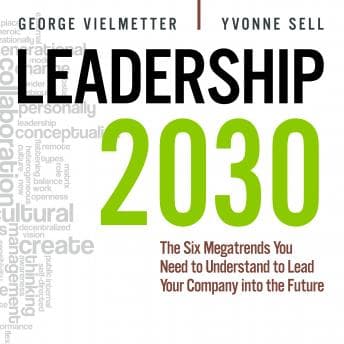
Bottom line: Leadership 2030 is about 60% genuinely useful strategic foresight and 40% consulting-speak padding. The core framework—six megatrends reshaping how we'll need to lead—is solid. The execution? Mixed bag.
The Framework That Actually Works
Look, I've sat through enough McKinsey presentations to recognize when consultants are selling frameworks versus when they're delivering insight. Vielmetter and Sell land somewhere in between. The six megatrends they identify—Globalization 2.0, climate change, individualism, digitization, demographic shifts, and converging technologies—aren't exactly revolutionary. My parents could've told you about demographic changes affecting the labor market back in 1995. They just called it "hard to find good help."
But here's where the book earns its keep: the intersections between these trends. When they talk about how individualism meets digitization meets demographic change, and what that means for talent retention? That's the stuff I'm actually using with clients. The insight about loyalty erosion isn't just "young people job-hop"—it's a systemic analysis of why traditional leadership models are fundamentally broken.
I've seen this play out at three different companies I've consulted for. The ones who treated these as separate HR problems? They're still bleeding talent. The ones who understood the systemic nature? They're actually building something sustainable.
Menasche Does the Heavy Lifting
The narration is calm, authoritative, and—this is key for dense business content—clear enough that I didn't have to rewind constantly. Menasche has that consultant-briefing-the-board energy. Professional without being robotic. He doesn't try to make dry research findings sound exciting, which I actually appreciate. Nothing worse than a narrator overselling mediocre content.
That said, the pacing drags in spots. There are sections in the middle where I bumped up to 2.25x just to get through the case study padding. (Jenny would say I'm being harsh. Jenny is right. But also, time is money.)
Production quality is solid—clean audio, no weird artifacts. No bonus content though, which feels like a missed opportunity. An updated interview about which predictions have come true would've been gold.
Where It Falls Short
Here's my issue: for all the megatrend analysis, the "what to do about it" sections feel thin. It's a lot of "leaders must be adaptable" and "collaboration is essential" without the operational specifics. This is what my parents did instinctively. Now it has a TED talk. Talk Like TED at least gives you the mechanics of selling these ideas once you've figured them out.
Compared to something like The Leadership Challenge by Kouzes and Posner, which gives you concrete practices, this feels more like a strategic briefing than a leadership development tool. That's not necessarily bad—different books for different purposes. But if you're looking for "tell me exactly what to do Monday morning," skip to the summary chapters and save yourself four hours.
Who Gets ROI Here (And Who Doesn't)
C-suite executives who need to think 5-10 years out? Yes. HR leaders trying to understand workforce shifts? Definitely. Mid-level managers looking for immediate tactical advice? Skip this one—you'll be frustrated by the lack of actionable steps.
I listened during a series of early morning runs (the only time I could focus without client calls interrupting), and it worked well for that strategic thinking headspace. Not a commute listen—too dense for stop-and-go attention. Not a workout listen unless you're doing steady-state cardio.
The Bottom Line on Your Time Investment
Would I recommend it? With caveats. If you're the kind of person who reads the executive summary and moves on, the first and last chapters give you 80% of the value. If you want the full research backing and case studies, commit to the whole thing. Just maybe at 1.5x minimum.
The future of leadership is definitely changing. Whether this book prepares you for it depends entirely on what you're looking for. Strategic perspective? It delivers. Tactical playbook? Look elsewhere.