
"We're a family here."
Usually, those are the three scariest words you can hear in a corporate all-hands meeting. In my experience, that phrase is almost always followed by a "restructuring" slide or a reduction in free snacks. So, honestly? I was ready to hate-listen to this on the 6:15 AM bullet train to Mountain View. I expected eight hours of HR fluff about "synergy" and "empowerment" while I debugged a race condition.
I was wrong. Mostly.
When "Family" Isn't a Red Flag
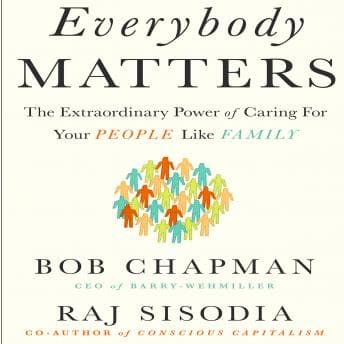
Bob Chapman isn't running a hip startup with nap pods; he runs Barry-Wehmiller, a massive manufacturing company. That's what makes this hit different. It's easy to talk about "caring for people" when you're flush with VC cash, but these guys manufacture heavy machinery.
The core story that got me—and actually made me pause my code review—was how they handled the 2008 recession. Instead of the standard playbook (lay off 20% of the workforce to save the bottom line), they implemented a furlough program where everyone, from the CEO down, took unpaid time off. The logic? "A family wouldn't fire one of the kids to save money."
(Okay, that metaphor is a bit heavy-handed, but the math checks out.)
It's a stark contrast to the "rank and yank" performance reviews we see in big tech. Chapman and Sisodia argue that stress at work is literally killing people—heart disease, broken marriages, the works. And as someone who has definitely stress-eaten a bag of pretzels at 2 AM over a server outage, I felt that.
The Volume Knob Workout
Here's the technical debt of this audiobook: the audio engineering is buggy.
Steven Menasche narrates, and his actual performance is solid. He's got this warm, dramatic delivery that fits the "benevolent patriarch" vibe of the book. He sounds like the mentor you wish you had.
But the mixing? Yikes.
Menasche has a habit of starting sentences with a boom and ending them in a whisper. On a quiet evening with a glass of wine, it's probably fine. On the Caltrain with track noise and people shouting on their phones? It's a nightmare. I spent half the commute riding the volume buttons on my phone. Turn it up to hear the end of the sentence, get your eardrums blown out by the start of the next one.
If you're listening in a noisy environment (gym, commute, doing dishes), this dynamic range is going to annoy you. Just a heads up.
The "Could Have Been a Blog Post" Factor
Look, I love the message. Treating employees like humans shouldn't be a revolutionary concept, yet here we are. But does it need to be almost 9 hours?
Not really.
There's a lot of repetition. We get it, Bob. You bought a company, the culture was toxic, you fixed it with love, now everyone is happy. By the fifth example of this, I was zoning out. It starts to feel a bit promotional, like a very long brochure for Barry-Wehmiller.
I cranked this up to 1.75x speed around hour four. The content is valuable—super valuable, actually—but the signal-to-noise ratio dips in the middle. You can get the core philosophy without needing every single anecdote.
Worth the Debug Session?
Despite the audio issues and the length, this stuck with me. I found myself looking at my own team differently during stand-up the next day. We're so obsessed with optimization and velocity that we forget the human element. Give and Take explores a similar tension between ruthless efficiency and actually giving a damn about people, though from a more academic angle.
Listen if: You manage people—whether it's two interns or a 50-person engineering org. The ROI on the empathy lessons is worth the hassle.
Skip if: You need quiet-environment listening or have zero patience for repetitive case studies. The core message lands in the first few hours; the rest is supporting documentation.
Just maybe keep your finger near the volume rocker. And don't be afraid to skip a chapter when it feels like you're reading the same commit message twice.