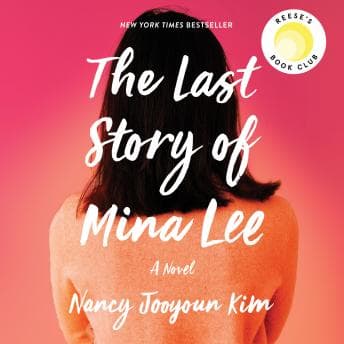

This is a book about the enormous distance between a mother and daughter who share a one-bedroom apartment.
I need to sit with that for a second, because Nancy Jooyoun Kim gets something exactly right here that I've been trying to explain to my students for years when we talk about Faulkner's Absalom, Absalom! — the idea that the people closest to us are often the people we understand least. Kim structures the novel in alternating timelines: Margot in the present, discovering her mother's death and excavating a life she never bothered to ask about, and Mina thirty years earlier, stepping off a plane into a Los Angeles that promised everything and delivered something much more complicated.
The Gap Between Two Languages Is Also the Gap Between Two Lives
What Kim is really saying — and let's talk about what the author is really saying — is that immigration doesn't just displace a person geographically. It creates fractures in identity that get passed down like heirlooms nobody wants. Mina's sections are devastating precisely because we see her capacity for love, for hope, for stubbornness, and we know her daughter Margot has access to almost none of this knowledge. The grocery store where Mina works becomes this claustrophobic little universe, and the love story that unfolds there is tender and doomed in that specific way where you can feel the author setting up dominos.
This reminds me of what Hemingway said about writing — that the dignity of movement of an iceberg is due to only one-eighth of it being above water. Kim's novel operates that way. The mystery of Mina's death is the surface plot, but underneath it's about how undocumented life forces a person into perpetual silence. The secrets Mina keeps aren't melodramatic — they're survival strategies that calcified into walls. I found something of that same quiet devastation in Secret Lives of Church Ladies — women carrying secrets that were never really secrets, just truths nobody had permission to say out loud.
My students would hate this. I love it. It's slow and patient and trusts you to care about interior lives rather than plot twists.
Greta Jung's Narration — Where I Got Stuck
Here's where I have to be honest, because this audiobook has a narration problem that I can't fully get past. Greta Jung's performance is polarizing, and I understand both sides. There are moments where her reading captures something genuinely arresting — Mina's attempts at Spanish, for instance, land with this beautiful awkwardness that feels completely authentic to a Korean immigrant navigating a multilingual Los Angeles. That specific detail stuck with me. She also projects a confidence in young Margot's voice that works well for the present-day timeline.
But. And this is a significant but.
Jung's delivery trends toward the mechanical. The pacing is slow — which I'd normally defend, since I'm the 1.0x dinosaur who believes the prose deserves to be savored — except here the slowness isn't contemplative. It's flat. There's an over-articulation that makes some passages feel like they're being read rather than performed. The narrator understands that pause is punctuation, but Jung's pauses don't always feel earned. They feel metronomic. And the male voices? They don't land. In a book where several male characters carry real emotional weight, that's a problem.
I was listening on a Saturday morning, Denise still asleep, coffee getting cold on the counter — which is my ideal focused-listening setup — and I caught my attention drifting during scenes that should've gutted me. That's not the writing's fault. Kim's prose is precise and emotionally loaded. The narration just doesn't always rise to meet it.
For an Audies Finalist, I expected more dynamic range. I think bumping the speed to 1.15x or 1.25x might help listeners who find the pacing tedious without losing the emotional texture.
Who Needs This Story (and Who Should Read It Instead)
If you loved Pachinko by Min Jin Lee, this is its spiritual successor in miniature — tighter scope, same immigrant ache, same generational silence. Anyone interested in Korean-American identity, mother-daughter fractures, or literary mystery will find real substance here. The content warnings are worth noting: there's abuse, sexual content, and violence that serves the story but doesn't soften itself.
If you're someone who needs vocal differentiation between characters to track dialogue — and I don't blame you — this might frustrate you in audio form. The print version might actually serve you better. That's a weird thing for me to say on an audiobook review site, but I'd rather be honest than polite.
Worth Pausing the Faculty Meeting For?
The novel? Absolutely. Kim's debut earns every bit of its NYT bestseller status. The prose is sharp, the structure works, and the emotional payoff in the final hours is real. But the audio experience is uneven enough that I can't give it a full-throated endorsement. The story deserves a narration that burns. This one mostly smolders — and not always in the good way.