
What happens when the furniture we inherit carries more than scratches and wood stain?
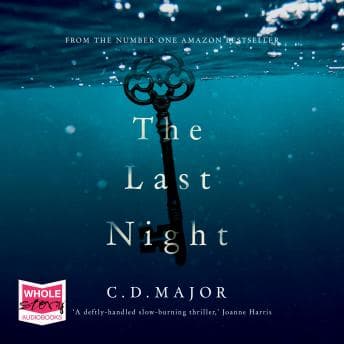
I was listening to this one during a Saturday morning walk along the lakefront with Denise - one of those late autumn mornings where the fog hasn't burned off yet and the water looks like pewter. And I'll tell you, the atmosphere of Last Night matched that morning so perfectly that I almost walked past our turnaround point by a full mile. Denise had to physically steer me back.
The Bureau That Won't Let You Go
Cesca Major builds this story around two timelines connected by an antique bureau, and I know that sounds like the setup for a dozen other dual-timeline novels. But here's what Major does differently: Irina, our present-day protagonist, is a furniture restorer. She doesn't just find a letter tucked inside a drawer. She reads the wood. The scratches, the repairs, the warping from moisture that shouldn't have been there. Major writes about restoration with the kind of specificity that tells me she did her homework - or she's spent serious time in a workshop. Irina's isolation isn't just emotional wallpaper; it's physical, tactile. She hides inside her craft the way some of my students hide inside their headphones.
And then there's Abigail, decades earlier, living through one of those golden summers that you already know is going to shatter. This reminds me of what Hemingway said about prose being an iceberg - Major gives you the sun-soaked surface, the falling in love, the dreaming about the future, but underneath it all there's this terrible weight pressing upward. That same iceberg dread - where you're watching something beautiful and already grieving it - is part of what made Losing Hope stick with me too, though Major handles the slow unraveling with considerably more restraint. You feel the catastrophe coming long before it arrives. The slow burn here is genuinely slow. Eleven hours. Major is not in a rush, and she shouldn't be. The prose deserves to be savored.
Two Narrators, Two Worlds (Mostly)
Jennifer Ness and Sophie Roberts split the timeline duties, which is the obvious structural choice for a dual-timeline novel - but it works. Having two distinct voices means you're never confused about when you are, even when the thematic echoes between Irina and Abigail start to blur. I'll be honest: the research cupboard is pretty bare on specific narrator details here, and I can't point to a moment where either voice made me physically stop walking. Neither narrator broke the spell, either. They're steady, controlled, professional. The narrator understands that pause is punctuation - and both Ness and Roberts use silence well in the quieter moments, particularly during Irina's workshop scenes where you can almost hear the sandpaper.
What I will say is this: the book is atmospheric enough that it doesn't need vocal pyrotechnics. The narration serves the text rather than competing with it. For a story this layered and measured, that's the right call. But I would've loved one truly electric moment - a scene where the performance elevated the material beyond what I could get from the page. It didn't quite happen.
Who Should Clear Their Schedule
If you loved The Forgotten Garden by Kate Morton or The Miniaturist by Jessie Burton, this is its spiritual successor - that same intersection of secrets, craftsmanship, and women whose lives get buried by history. My students would hate this. Too slow, too quiet, too much attention to objects and atmosphere and not enough to plot velocity. I love it. But I'll also say: if you need a twist every forty-five minutes, this isn't your book. Major trusts the reader (listener?) to sit with discomfort, to let the dread accumulate like dust on an old bureau.
The family secret at the center is handled with real restraint. Major doesn't sensationalize it. She lets it unfold the way family secrets actually unfold - in half-sentences, in things not said at dinner, in the way someone flinches when you mention a name. That felt true to me. Twenty years of teaching teenagers has taught me that the biggest secrets are the ones that live in the pauses.
The Assignment I'd Actually Give
This is a good audiobook. Not a great one - the narration is capable but not transcendent, and the pacing in the middle third could've been tightened by maybe an hour without losing anything essential. But the writing is sharp and specific where it matters, the dual timeline actually earns its structure (which is rarer than you'd think), and Major's eye for physical detail - the wood, the coastal village, the quality of summer light decades ago - gives the whole thing a texture that rewards patient listening.
Worth pausing the faculty meeting for? Pretty much. Just maybe not during the budget presentation. (Sorry again, Principal Martinez.)