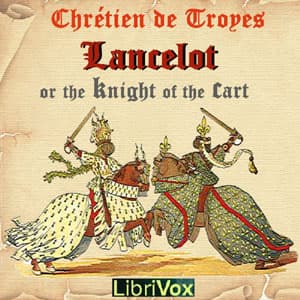

I was up at 2 AM finishing a logo revision I'd been procrastinating on for three days - just me, Diego curled on my keyboard like a furry paperweight, and a cup of chamomile that had gone cold an hour ago. I needed something to keep me company that wasn't another true crime podcast. So I pulled up Lancelot, or The Knight of the Cart, because honestly? I've been on a medieval romance kick ever since I found out that Chrétien de Troyes basically invented the Lancelot-and-Guinevere love story. Like, this 12th-century French poet is the reason we have the whole forbidden-love-knight-and-queen trope. That's wild. And at four hours and twenty-one minutes, it felt like the right size for a late-night design session.
I didn't expect it to wreck me. But here we are.
The Original Simp and Why He Made Me Cry at 3 AM
Okay so here's the thing about Lancelot in this story - he is unhinged for Guinevere. There's a moment early on where he's told to ride in a cart, which in medieval times was basically the equivalent of being publicly shamed, a total disgrace for a knight. And he hesitates for like two steps. TWO STEPS. And later, Guinevere is furious at him for those two steps of hesitation. She wanted total, zero-doubt, ride-or-die devotion. And Lancelot? He just... accepts it. He doesn't argue. He just tries to be worthy again.
My heart. MY HEART.
I know it reads as toxic if you squint - and yeah, by modern standards, it's a lot. But the raw emotional logic of it? That feeling of loving someone so completely that any hesitation feels like betrayal? Abuela would have loved this one. She would've been yelling at the screen like it was her telenovela, "¡Dos pasos! ¡Solo dos pasos y mira el drama!"
There's also this scene where Lancelot finds a comb with strands of Guinevere's hair and practically has a religious experience over it. He presses the hair to his chest, his eyes, his mouth. It's excessive and ridiculous and somehow the most romantic thing I've listened to this month. The poetry of obsession in this text is so specific to its era - it's courtly love cranked up to eleven, where suffering IS the love language. That obsessive, self-destructive devotion showed up in a very different context when I reviewed Destined for an Early Grave — modern paranormal packaging, but the same bone-deep logic of loving someone at serious cost to yourself.
Libby Gohn and the Challenge of Making Medieval Verse Feel Alive
Here's where I have to be honest - I don't have a ton of reference points for Libby Gohn's other work, and the research out there on her narration of this particular text is pretty thin. What I can tell you is this: she's working with translated verse that is dense and repetitive in the way medieval literature just IS. There are long passages of combat description, lists of knights, formal exchanges that follow very rigid structures. It's not easy material to keep warm.
Gohn reads it clean and steady. Her pacing is measured, which works for the formality of the text, but I'll admit there were stretches - particularly during the tournament sequences - where I wished for more variation in energy. The emotional peaks, like the cart scene and the hair scene, land more because of the words themselves than because of vocal fireworks. She's not doing Julia Whelan-level emotional excavation here. But she's also not flat. It's more like... a museum guide who genuinely loves the exhibit but keeps a professional distance. For a 4-hour listen at 1.0x, that steadiness actually kept me anchored during the denser passages.
At this length, it's basically a long afternoon or one intense late-night session. Which felt right. This isn't a book you want to stretch over weeks - the narrative momentum is episodic and you need to ride it through.
Who This Is Actually For (and Who Should Run)
If you're coming to this expecting a modern romance structure - buildup, tension, payoff, HEA - you will be confused and possibly annoyed. This is a medieval romance, which means the structure is almost dreamlike. Events happen in sequence but the emotional logic operates differently. Lancelot crosses a bridge made of a giant sword blade. He fights enchanted knights. He gets imprisoned in a tower. It's half fairy tale, half love fever dream.
This book felt like holding a love letter that's 900 years old and still warm.
If you're a romance reader who wants to understand where the genre's DNA comes from? Get in here. If you love literary history and want to feel something ancient and strange in your chest? This is your rainy Sunday book. If you need snappy dialogue and a third-act grovel that hits specific modern beats? Skip this one, no shade.
The Comb, The Cart, and Me at 3 AM
I finished this right as the sun was starting to lighten my apartment windows. Diego had migrated to the couch. My logo was done. And I was sitting there thinking about how Chrétien de Troyes wrote a story about love as complete surrender almost a thousand years ago, and people are still arguing about whether two steps of hesitation is forgivable.
The vibes are immaculate - if your vibe is candlelight and longing and the kind of devotion that borders on madness. It's not perfect as an audiobook experience. The narration is serviceable rather than transcendent, and the text itself has stretches that test your patience. But the emotional core? That desperate, illogical, all-consuming love? It hit me somewhere I wasn't expecting at 3 AM on a Tuesday.
I cried once. Just once. But it was the good kind - the kind where you feel connected to something much older and bigger than yourself.