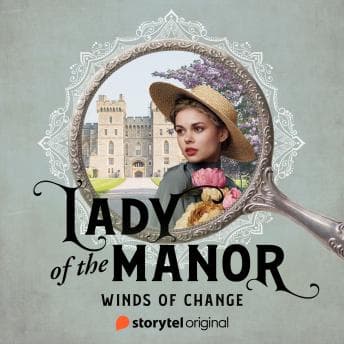

Look, I'm going to be honest with you - I picked this up expecting a fairly standard historical romance. Swedish aristocracy, forbidden love with the coachman, you know the drill. What I wasn't expecting was to spend eighteen hours completely invested in whether Lovisa Broman would survive her own family's machinations. And I mean that literally. Eighteen hours. This thing is a commitment.
But here's the thing about long audiobooks - they either drag you through mud or sweep you along. This one swept.
Stockholm to the Countryside (And Why That Matters)
Veronica Almer does something clever here that took me a while to appreciate. The shift from Stockholm's salons to the rural Swedish countryside isn't just a setting change - it's Lovisa's entire world collapsing and rebuilding. Her father educated her to succeed him in government. (Yes, I know. In historical Sweden. The book addresses this as unusual, so at least Almer is aware.) When he dies, all that preparation becomes worthless overnight. She goes from being groomed for power to being a bargaining chip in her mother's remarriage plans.
I was grading sophomore essays on The Scarlet Letter while listening to the first few chapters - probably not the best pairing, honestly - but something about Lovisa's situation kept pulling me back. She's not just a damsel. She's a woman who was raised to think, suddenly trapped in a world that doesn't want her to. That same tension between a woman's agency and society's constraints drives Once and Future Witches, though Harrow sets it in a world where magic becomes the battleground.
The Coachman Problem (And Why It Works)
Okay, forbidden romance with the coachman. I can already hear my students groaning. "Mr. Williams, that's so predictable." And yes, the class difference romance is a well-worn path. But Almer commits to it. The tension isn't just "oh no, he's poor" - it's layered with the genuine danger of Lovisa's position, the villains circling her new household, and consequences that feel real rather than manufactured.
Some listeners have noted that modern idioms slip into the dialogue occasionally, and I did catch a few phrases that felt anachronistic. It's not constant, but if you're the type who gets thrown out of a story by a character saying something too 21st century, fair warning. For me, it was a minor distraction in an otherwise engaging narrative.
Catrin Walker Booth Gets It
I couldn't find much about Catrin Walker Booth's other work, but based on this performance, she understands something fundamental about historical romance narration: warmth without melodrama. Her pacing matches the story's rhythm - slower during the political maneuvering, more urgent during the romantic tension. She doesn't oversell the emotional beats, which I appreciated. Nothing worse than a narrator who treats every revelation like a soap opera cliff-hanger.
The Swedish names and locations flow naturally, which matters more than you'd think over eighteen hours. Her voice for Lovisa strikes that balance between educated and vulnerable that the character requires - someone who could have held her own in her father's world, but is now navigating completely foreign territory.
Who Should Listen (And Who Should Run)
If you love historical romance with actual stakes - not just "will they or won't they" but genuine danger and consequence - this delivers. The villains are properly villainous (sometimes almost too much, but that's the saga tradition). Skip it if you need your historical fiction to be historically rigorous; the occasional modern phrasing might bother you more than it bothered me. And if you're looking for something light? This isn't it. The storyline puts Lovisa through the wringer.
I listened to most of this during my lakefront walks with Denise. She asked me twice why I looked so stressed staring at the water. "Swedish aristocracy drama," I told her. She nodded like that explained everything. Twenty years of marriage - she knows better than to ask follow-up questions about my audiobooks.
The Final Grade
Worth the eighteen hours? Yeah. It's the kind of saga that rewards patience, and Booth's narration makes the journey feel earned rather than endured.