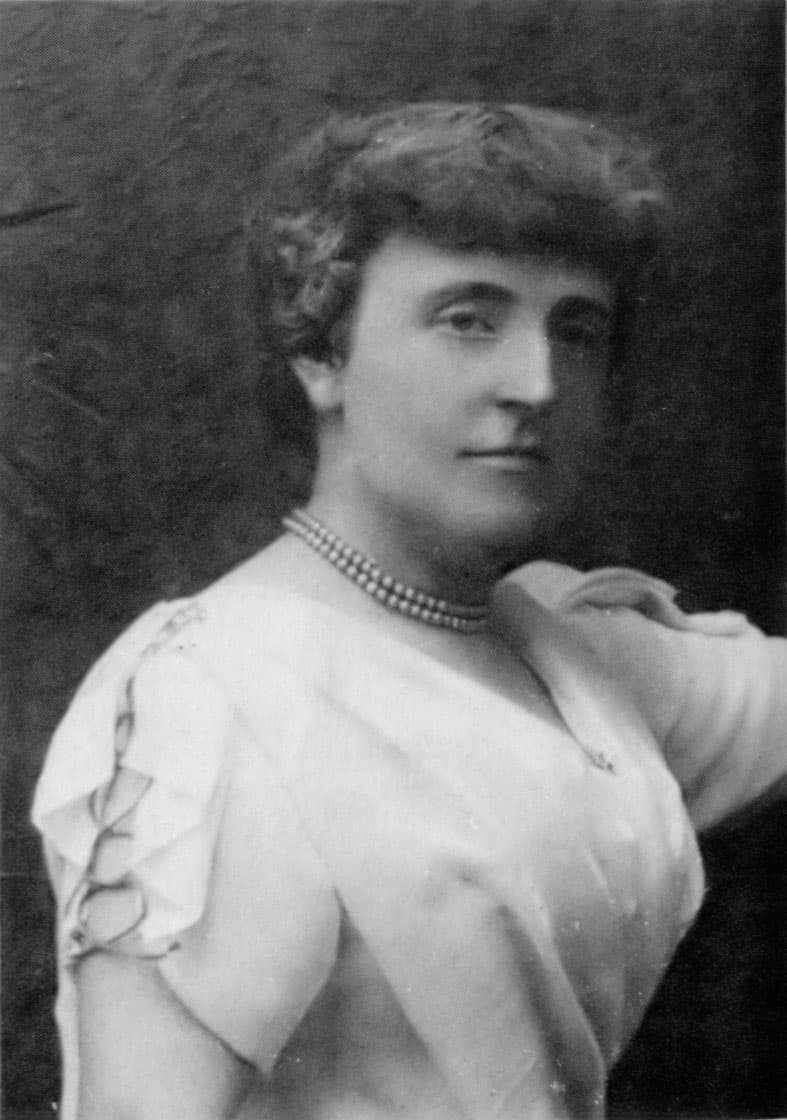
I was half-asleep on the couch last Saturday night, Denise already in bed, grading a stack of junior essays on The Scarlet Letter that were slowly draining my will to live. I needed something to keep me company — something with the texture of old English prose but without the responsibility of teaching it. So I queued up Frances Hodgson Burnett's Lady of Quality and let Linda Andrus carry me through late 1600s England while I circled comma splices in red ink.
Here's the thing about Burnett: most people know her as the woman who wrote The Secret Garden and A Little Princess. Children's literature. Wholesome, gentle, morally instructive. What they don't know — what I didn't fully appreciate until this listen — is that she wrote adult fiction with real teeth. Lady of Quality is Burnett working in a register that's closer to the Brontës than to Mary Lennox tending her roses.
Burnett Without the Garden Gate
The novel follows a woman in Restoration-era England who refuses to live by the rules that period demanded of women. And Burnett doesn't soften it. This isn't a modern feminist retelling slapped onto a historical frame — it's Burnett writing within the conventions of Victorian historical fiction and still managing to make her protagonist feel genuinely defiant. The loves, the losses, the social maneuvering — they're all filtered through a character who keeps making choices that would've scandalized Burnett's own readers, let alone the 17th-century world she's inhabiting.
But I'll be honest: the pacing asks for patience. At nine and a half hours, there are stretches — particularly in the middle third — where the domestic politics and social visits start to blur together. Burnett's prose is ornate in the way that late Victorian writers loved, all those layered subordinate clauses and formal dialogue constructions. If you loved Middlemarch (which, yes, I was listening to during Principal Martinez's budget meeting — I regret nothing), you'll recognize the rhythm. I've been chasing that same immersive, slow-burn quality in other long listens lately — most recently with Master and Commander, which demands the same kind of patient attention and rewards it in similar ways, even if O'Brian's world is considerably saltier than Burnett's drawing rooms. But where Eliot keeps the intellectual tension coiled tight even in her quietest passages, Burnett occasionally lets the line go slack. There are scenes that exist more for period atmosphere than for narrative propulsion.
My students would hate this. I love it. Mostly.
Linda Andrus and the Art of Period Diction
The narrator understands that pause is punctuation. Andrus has a clear, measured delivery and her British accent feels appropriate for the setting — not a cartoon Masterpiece Theatre impression, but grounded enough to sell the period. Where she excels is in the formal dialogue exchanges, where Burnett's characters speak with that elaborate Restoration courtesy that can read as stiff on the page but comes alive when someone gives it the right cadence.
That said, there are moments where Andrus's pace runs a touch quick, particularly during passages dense with interior reflection. Burnett's sentences in those sections are long, architecturally complex things — the kind of prose that deserves to be savored — and when the narration clips along without giving them room to breathe, you lose the weight of what's being said. I found myself rewinding a few times during hour five, not because I'd zoned out but because the meaning arrived a beat after the words had already passed. At 1.0x speed (yes, I'm that person), I still wished for a slightly more deliberate tempo in the contemplative stretches.
Character differentiation is present but modest. Andrus shifts her register between male and female characters, between classes, but this isn't a performance with wildly distinct voices for every player. It's more of a controlled modulation — appropriate for the material, if not particularly showy.
Who This Is Really For
If you're someone who reads Georgette Heyer or Trollope for pleasure — if you genuinely enjoy the sentence-level craft of Victorian prose and don't need a murder or a dragon every thirty pages to stay engaged — this is worth your time. If you loved The Small House at Allington or even Gaskell's Wives and Daughters, Lady of Quality is their spiritual successor in certain ways: domestic stakes rendered with genuine emotional intelligence.
But if you're coming to this expecting the warmth and accessibility of The Secret Garden, recalibrate. This is Burnett writing for adults, in a denser register, about a woman navigating a world that wanted to crush her independence. It's quieter than it sounds. The drama is in what's unsaid, in the social consequences of small acts of rebellion.
The Annotation in the Margin
I finished the last hour on a Sunday morning walk along the lakefront with Denise, who asked me what I was listening to and then — lovingly — told me I have the recreational habits of a 19th-century spinster. She's not wrong. But there's something about hearing Burnett's formal, careful prose against the sound of Lake Michigan that felt right. This is a book about a woman insisting on her own terms in a world that offered her none. The prose is the vehicle, not the destination. And Andrus, for all the minor pacing quibbles, understood the assignment.
This is why we still read the classics — even the ones nobody assigns anymore.