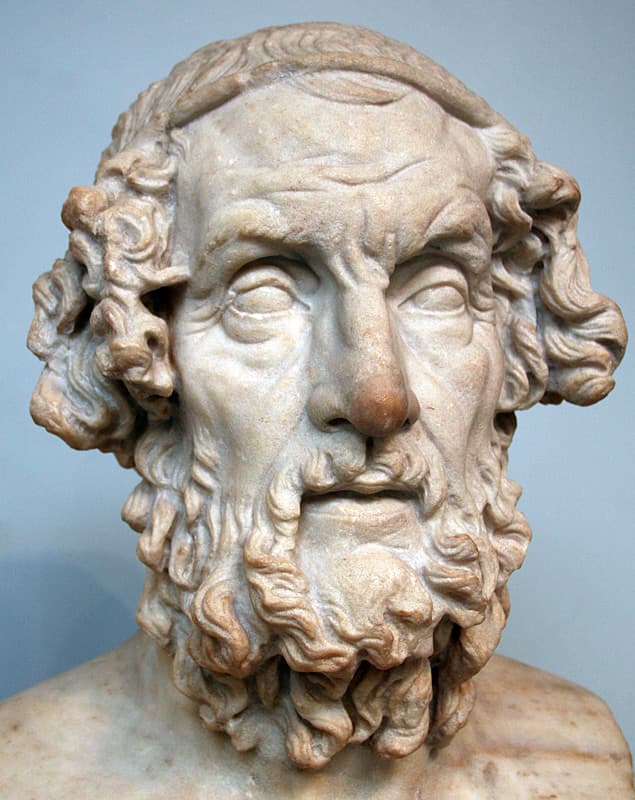

Look, I have a bone to pick with Odysseus. Twenty years. Twenty years this man is away from home, and when he finally gets back, his grand plan is to disguise himself as a beggar and shoot arrows at people in his own dining room. I've been teaching this poem for two decades and I still want to grab him by his wine-dark collar and say, brother, just TALK to your wife. But that's Homer for you - 2,800 years old and still writing characters who'd rather commit elaborate violence than have an honest conversation. My students would hate this. I love it.
I listened to this Spanish-language version narrated by Victor Villarraza during a stretch of Saturday morning walks along the lakefront with Denise, who kept asking why I was muttering about suitors and pig herders. Fourteen hours of ancient Greek epic in Spanish, which is - and I say this as someone who teaches English literature for a living - actually a beautiful way to encounter the poem again. There's something about hearing "la aurora de rosados dedos" instead of "rosy-fingered dawn" that makes a phrase I've read four hundred times feel strange and new again. Like meeting an old friend who changed their haircut.
The Voice Behind Three Thousand Years of Story
Villarraza reads this clean and steady. No theatrical fireworks, no attempting different voices for Athena versus Calypso versus Circe. It's a single-narrator, straight-read approach, and honestly? For Homer, that might be the right call. The Odyssey was originally performed by rhapsodes - solo performers who carried the whole thing on the strength of their voice and rhythm. Villarraza's Spanish is clear, his pacing unhurried, and he treats the catalogs of ships and genealogies with the same measured respect as the big dramatic moments. He doesn't rush through Telemachus's early cantos to get to the "good stuff" with Polyphemus and the Sirens, which I respect.
But - and here's where I have to be honest - there's a flatness that creeps in during the middle cantos, particularly during Odysseus's extended narration to the Phaeacians. Books 9 through 12 are essentially a story-within-a-story, Odysseus as unreliable narrator spinning tales at a feast, and the performance doesn't quite shift register to mark that framing. You should feel the difference between Homer telling us about Odysseus and Odysseus telling the Phaeacians about himself. That distinction gets lost. The narrator understands that pause is punctuation - he uses silence well between cantos - but within the longer speeches, the emotional temperature stays pretty constant.
This is a LibriVox recording, which means it's a volunteer production. No sound effects, no music, no production flourishes. Just a man and a microphone and Homer. For a free audiobook, the audio quality is solid enough, though you'll catch the occasional room-tone shift that reminds you this wasn't recorded in a professional studio.
Why Homer Still Works at 1.0x (Fight Me)
Here's what I keep coming back to, and what I tell my third-period juniors every single fall: The Odyssey is not really about a guy trying to get home. It's about what home even means after you've been changed by twenty years of war and wandering. Penélope unweaving her tapestry every night isn't just a clever trick to delay the suitors - it's a woman actively refusing to let time move forward, holding the household in suspension until the world makes sense again. And Telémaco's journey in the first four cantos - the Telemachy, as we nerds call it - is about a young man learning to become someone worth being his father's son, even without a father present.
Listening in Spanish stripped away my English-teacher autopilot. I wasn't grading the translation against Fagles or Lattimore or Wilson. I was just... hearing a story. An old one. The kind that was designed to be heard, not read, and certainly not annotated to death by people like me assigning five-paragraph essays about it.
This is why we still read the classics. Not because some curriculum committee decided we should, but because a poem about a man who just wants to see his dog again before he dies still lands after nearly three millennia. (Argos on the dung heap. Every single time. I'm a grown man and I can't handle it.)
Who Gets the Most From This Version
If you're a Spanish speaker wanting to experience the Odyssey in audio form, or a student looking for a free way to absorb the text, this is a worthy option. Villarraza is dependable. He won't blow you away, but he won't get in the way of the poem either. I had a similar experience with At the Water's Edge - a book that works precisely because it doesn't oversell itself, just lets the weight of what's happening accumulate quietly. If you're after a dramatic, full-cast, scored production - this isn't that. This is Homer served plain, and sometimes plain is exactly right.
If you loved the Emily Wilson translation and want to hear the epic from a different linguistic angle, this is its spiritual successor in spirit if not in exact literary lineage. The prose deserves to be savored, even - especially - in translation.
Worth Pausing the Faculty Meeting For
A solid, accessible, free Spanish-language Odyssey that does its job with quiet competence. Villarraza won't make you forget the great English-language narrators, but he'll carry you across the wine-dark sea and back. Fourteen hours well spent. Just don't expect Argos to hurt any less in Spanish. He does. He absolutely does.