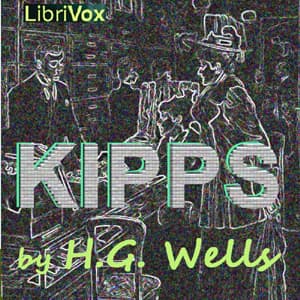

What happens when a man who can barely spell gets handed a fortune he never asked for?
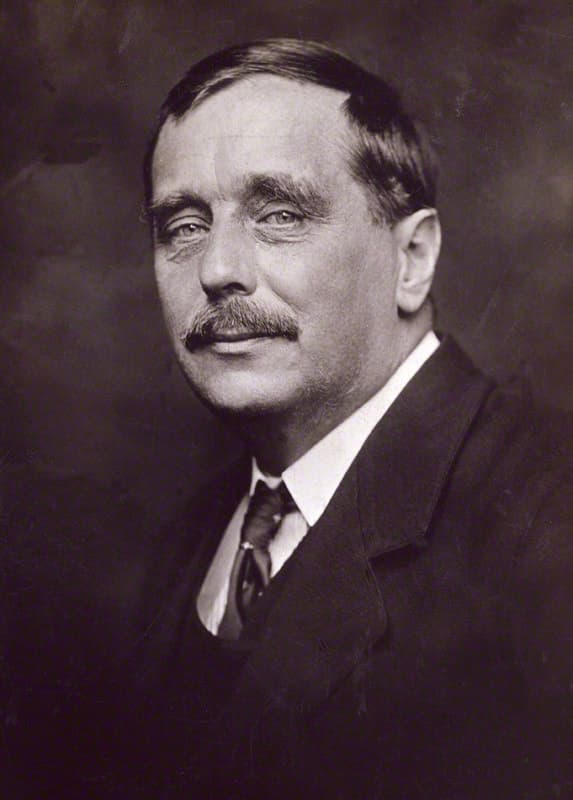
That's the engine of Kipps, and if you think H.G. Wells only wrote about Martians and time travelers, this book will rearrange your understanding of the man entirely. Wells himself called it his favorite work. Not The Time Machine. Not The War of the Worlds. This quiet, biting, deeply funny social comedy about a draper's apprentice stumbling through Edwardian class anxiety. That alone should tell you something.
I started this one during a Saturday lakefront walk with Denise, and twelve hours later I was finishing it alone at the kitchen table at midnight, grading forgotten, red pen untouched. That doesn't happen often anymore.
The Most Dangerous Inheritance Isn't Money — It's Aspiration
Arthur Kipps is one of those characters who makes you laugh and then immediately feel guilty about it. He's an orphan raised by an aunt and uncle, working the counter at a draper's shop in Folkestone, and then — bang — a surprise inheritance drops him into a world he has absolutely no equipment to navigate. But here's what Wells does that separates this from a simple rags-to-riches farce: he makes Kipps aware of his own inadequacy. Kipps knows he doesn't know which fork to use. He knows his grammar is wrong. He knows the wealthy people around him are quietly cataloging his failures. And that awareness — that burning, stomach-churning self-consciousness — is what makes the comedy sting rather than just tickle.
This reminds me of what Hemingway said about prose being an iceberg, most of the meaning below the surface. Wells writes Kipps's social blunders as comedy, but underneath every awkward dinner party and botched attempt at "cultured" conversation, there's real class rage simmering. The scene where Kipps tries to host a dinner party and can't figure out the proper way to seat his guests — it's excruciating in the best way. You're laughing, but you're also watching a man being slowly crushed by a system that was never designed to include him.
And then there's Ann. His childhood sweetheart from the working class, the one he left behind when the money arrived and he started chasing Helen Walshingham, the "proper" woman who could teach him to be respectable. When Kipps eventually circles back to Ann, Wells doesn't let him off the hook. The return to simplicity isn't simple at all. Money has already changed the geometry of every relationship he has.
Anthony Ogus and the Art of Gentle Mockery
Here's where I have to be honest: the research on Ogus's narration is thin. Some listeners loved him, one found him just okay, and nobody gave me much to work with in terms of specific vocal choices. So I'll tell you what I heard.
Ogus reads Wells with a warmth that keeps the satire from turning cruel. That matters enormously with this material. A narrator who leaned too hard into mockery would turn Kipps into a clown, and a narrator who played it too straight would miss the comedy entirely. Ogus threads that needle — you can hear affection in the way he handles Kipps's mangled aspirations, his "I dessay" and fumbling attempts at polite conversation. The prose deserves to be savored, and Ogus gives it room to breathe.
Is it the most dynamic performance I've ever heard? No. There were stretches — particularly in the middle section where Wells gets into some extended commentary on Edwardian society — where the narration settles into a comfortable register that doesn't quite lift the denser passages off the page. At nearly twelve hours, you feel those moments. But when the emotional beats land, particularly the scenes between Kipps and Ann in the final third, Ogus earns his keep.
I listened at 1.0x. Because the author chose those words. And Wells's prose here has a rhythmic, almost musical quality that rewards patience — long sentences that unspool into unexpected emotional corners, then snap shut with a dry observation that makes you bark out a laugh in public. (Denise has learned to ignore this.)
Who Gets Invited to This Dinner Party
If you loved Dickens's class comedies but wished they were tighter and angrier, Kipps is the spiritual successor you didn't know existed. If you've read Tono-Bungay and liked it, this is Wells operating in the same register but with a sharper focus. My students would hate this. I love it.
Skip it if you're coming to Wells expecting science fiction. There are no aliens here. Just the quiet violence of English social hierarchy, which — let's be honest — is scarier than most aliens. That same machinery of social control, the way systems grind individuals down, is something Orwell took to its logical extreme in 1984 — different century, different genre, but the suffocation feels eerily similar.
Worth Pausing the Faculty Meeting For
This is Wells at his most human, writing about the one subject that never stops being relevant: what money does to people who weren't raised to expect it. Ogus delivers it with steady warmth, even if he doesn't set the world on fire. At twelve hours, it's a real commitment, but Kipps himself — confused, yearning, painfully decent — stayed with me long after I finally picked up that red pen.
Principal Martinez's next budget meeting doesn't stand a chance.