
The Setup
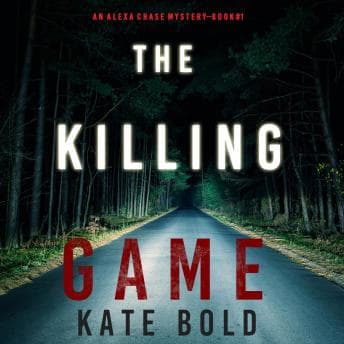
I was about four miles into my morning jog through Cambridge when Alexa Chase started profiling her first escaped serial killer, and I found myself slowing down to actually think about what I was hearing. Which, for the record, is not ideal when you're trying to maintain a decent pace. But here's the thing - Kate Bold's debut in this series does something I genuinely appreciate: it takes the "burned-out FBI profiler" trope and gives it actual psychological weight. Alexa didn't just leave the BAU because she was "haunted" in some vague, cinematic way. She left because she understood something fundamental about herself - that immersing in darkness has a cost, and she was running out of currency.
The protagonist exhibits classic avoidance behavior, which is honestly refreshing. Most thriller writers want their profilers to be tortured geniuses who can't help but chase killers. Alexa actively doesn't want to do this anymore. She chose the Marshals specifically to not get inside heads. And then, of course, the plot drags her right back in. Psychologically, this tracks. The universe has a way of not letting us escape our patterns.
Justin Price: Steady Hand or Too Steady?
Okay, so. Justin Price. Let me be honest here - I had mixed feelings, and I think you might too depending on what you're looking for in a thriller narrator.
Price has a clear, straightforward delivery that's easy to follow during cardio (important for me, less so for bedtime listeners). He doesn't overact, which I actually appreciated because nothing pulls me out of a story faster than a narrator doing a dramatic "serial killer voice" that sounds like a community theater Hannibal Lecter. He keeps things grounded. Professional.
But - and this is a real but - there's a flatness that sometimes works against the tension. When Alexa realizes she might be the killer's next target, I wanted more urgency in the delivery. More... something. Instead, it felt like Price was reading a particularly engaging grocery list. The words said "danger," the voice said "neutral." A fascinating case study in how narration can simultaneously serve and undermine a story. The restraint that keeps character voices from becoming cartoonish also dampens the suspense.
Some listeners will find this refreshing. Others will find it wooden. I landed somewhere in the middle - grateful he wasn't chewing scenery, but occasionally wishing for a little more emotional investment.
Alexa Chase: Self-Aware and Self-Destructive
Alexa Chase is competent without being insufferable, which is harder to write than it sounds. Bold gives her genuine expertise without making her a Mary Sue who solves everything instantly. The tension between Alexa and her new partner felt realistic - territorial behavior between agencies is well-documented in organizational psychology, and it's nice to see it portrayed as something more than just manufactured drama.
What makes her compelling is her self-awareness. She knows entering a killer's mind is bad for her mental health. She does it anyway because lives are at stake. That's not stupidity - that's the kind of self-sacrifice that actually happens in high-stakes professions. My therapist would have thoughts about this character, specifically about how Alexa's coping mechanism (avoidance) was never going to be sustainable.
The killer himself? Look, he's fine. Diabolical in the standard thriller way. The cat-and-mouse elements work, the clues unfold at a reasonable pace. But I found myself asking: why does this particular killer really do what he does? The psychology felt a bit surface-level. Bold is clearly more interested in Alexa's internal journey than in making the antagonist a fully realized character study. That's a valid choice, but if you're coming to this for Criminal Minds-level psychological depth on the villain side, you might be slightly disappointed.
The Pacing Problem (And It's Not What You Think)
The book is about six and a half hours, which is pretty standard for this genre. But there were stretches - particularly in the middle - where I felt like we were treading water. Some scenes that could've been tightened, some investigative dead ends that went on longer than they needed to. I bumped up to 1.25x speed around hour three and honestly, it helped. The story benefited from a slightly faster clip.
That said, when the tension ramps up in the final third, it ramps. I finished the last hour while cooking dinner and nearly burned my dal because I wasn't paying attention to the stove. (Don't tell my mother. She'd be more upset about the dal than the near-fire.)
Who Should Listen (And Who Should Skip)
This is a solid entry point for anyone who enjoys procedural thrillers with strong female leads. If you liked the early Alex Cross books or the Kay Scarpetta series, you'll probably find something to enjoy here. Girl Before scratches a similar itch if you're drawn to psychological complexity in your thrillers, though it leans more domestic than procedural. It's well-constructed, moves at a decent pace once it gets going, and Alexa is someone worth spending six hours with.
Skip if you need your thriller narrators to bring high drama - Price's understated approach is a feature for some, a bug for others. Also skip if you're looking for deep psychological complexity in your villains. This one's more about the hunter than the hunted.
Research actually shows that readers who enjoy series tend to be more forgiving of first-book setup, and this definitely feels like setup. Bold is clearly building toward something with Alexa's character arc, and I'm curious enough to continue. Kate Bold does similar character work in Let Me Go, her other series starter featuring a female lead with complex trauma responses.
Final Verdict
A competent, engaging thriller with a psychologically interesting protagonist and narration that's professional if not particularly dynamic. Perfect for commutes and workouts where you want something absorbing but not so intense you'll miss your exit. Not groundbreaking, but a solid listen that does what it promises on the tin.
I'll probably grab book two. After I finish my research papers. (They still won't write themselves.)