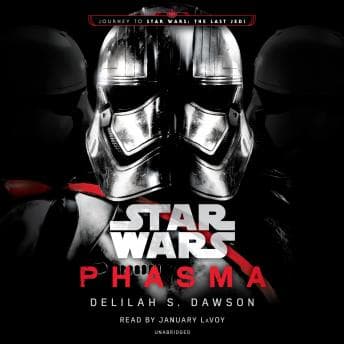
"I wasn't born to be a stormtrooper. I was born to survive."
That line hit me somewhere around hour three, and I had to pause my thesis procrastination (read: Stardew Valley session) to just sit with it. Because here's the thing about Phasma that I wasn't expecting: it's basically Mad Max: Fury Road crashed into Star Wars, and somehow Delilah S. Dawson made it work.
The World-Building Is Chef's Kiss
Okay, so Phasma's home planet Parnassos? It's a post-apocalyptic nightmare. We're talking irradiated wastelands, warring tribes, scarce resources - the whole survival-of-the-fittest package. And Dawson doesn't just sketch this world, she builds it with the kind of obsessive detail that would make Brandon Sanderson nod approvingly. That same meticulous approach to building a dark, morally complex world shows up in Star Wars Legends: Darth Plagueis, though Luceno takes it in a more political direction. The Scyre clan, the Claw, the beetles they eat (yes, beetles) - it all feels lived-in and brutal.
This is where the book shines brightest. Phasma isn't just some faceless chrome villain anymore. She's a product of a world where mercy gets you killed and loyalty is a luxury nobody can afford. You start to understand - not sympathize with, but understand - why she became the ruthless officer we see in the films. The progression from desperate survivor to First Order captain is satisfying in that dark, uncomfortable way.
Why January LaVoy Works
Look, I've listened to a lot of Star Wars audiobooks. Some narrators phone it in. January LaVoy? She absolutely does not.
The frame story structure - a Resistance spy telling Phasma's history to a rival stormtrooper named Cardinal - could have been confusing with a lesser narrator. But LaVoy keeps the voices distinct enough that I never lost track of who was speaking. Her Phasma voice apparently channels Gwendoline Christie, which I can't fully verify but definitely believe based on the cold, measured delivery she uses.
The pacing is hypnotic. LaVoy draws you into the story like she's telling it around a campfire on some forsaken planet. The production includes some subtle sound effects too - nothing overwhelming, just enough to remind you this is Star Wars without pulling you out of the narrative.
The Catch (Because There's Always a Catch)
Here's where I have to be honest with you: if you're expecting deep emotional character development, you might leave disappointed. Phasma herself is almost too competent, too calculating. She's fascinating to watch but hard to connect with. That's kind of the point - she's meant to be inscrutable - but it does create some distance.
And the frame story structure, while clever, occasionally slows things down. Cardinal's interrogation scenes can feel like interruptions when you just want to get back to the wasteland survival stuff. My D&D group would probably call this "too much exposition delivered through dialogue" and they wouldn't be entirely wrong.
Also - and this is minor - the book doesn't really connect to The Last Jedi in any meaningful way. It's marketed as a "Journey to" novel, but it's more of a standalone origin story. Which is fine! Just don't expect it to enhance your viewing of the films much.
Who's This For (And Who Should Skip)
If you're a Star Wars completionist who wants to understand every character's backstory, this is essential listening. If you love survival fiction with that Fury Road energy, you'll dig the Parnassos sections. If you appreciate solid world-building and don't mind a protagonist who's more interesting than likeable, queue it up.
Skip it if you're looking for something that hits the emotional highs of Lost Stars or the character depth of Claudia Gray's best work. This is a different beast - colder, more clinical, more focused on the how than the why of Phasma's villainy.
Roll for Initiative on This One
At 12 hours, it's a solid commute companion. I burned through most of it during my walks to campus (the walks I take instead of writing my thesis, don't @ me). LaVoy's narration makes the time fly, even during the slower interrogation scenes.
Would I listen again? Probably not - it's not that kind of book. But I'm glad I listened once. Phasma deserved an origin story, and Dawson delivered one that's dark, gripping, and way more interesting than the character's actual screen time suggested.