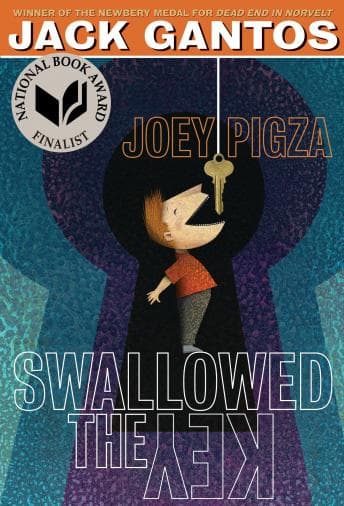

I need to talk about the pencil sharpener scene. Because I was making dal at 10pm—the kind my mother taught me, the kind that takes forever and requires actual attention—and I nearly dropped my wooden spoon when Joey Pigza decides to stick his finger into a pencil sharpener to give himself "Dracula nails."
This is a fascinating case study in impulse control, wrapped in a children's book that made me simultaneously laugh and want to cry into my lentils.
The Mind That Can't Stop Moving
Jack Gantos gets it. The protagonist exhibits classic ADHD patterns—not the Hollywood version where kids are just "quirky" and "energetic," but the real, messy, heartbreaking reality where Joey genuinely cannot help himself. The research actually shows that children with ADHD often describe their thoughts as a runaway train, and Gantos captures this perfectly. That same inability to quiet the mind—though in a completely different context—is what makes Essentialism: The Disciplined Pursuit of Less so compelling for those of us who struggle with mental clutter. Joey's internal monologue jumps and spirals and doubles back on itself in ways that feel clinically accurate.
What makes this character compelling is that Joey knows he's a good kid. He knows it. And watching him try so hard to do the right thing while his brain sabotages him at every turn? That's not comedy. That's tragedy wearing a funny hat.
The key-swallowing incident—where Joey literally swallows his house key and later pulls it back up "with food souvenirs" (Gantos's words, not mine, and I'm grateful for that specificity)—isn't played for gross-out humor. It's played as another moment where Joey's impulses win and he's left dealing with the consequences. My therapist would have thoughts about this character, specifically about how his grandmother and father share his struggles, creating a generational pattern of dysregulation that nobody in his family has the tools to address.
When Authors Narrate Their Own Work
Here's the thing about author-narrated audiobooks: they're either transcendent or terrible. No middle ground. Gantos lands firmly in transcendent territory.
He reads Joey in first person with this breathless, youthful energy that never feels performed. It feels like Joey is actually telling you his story—interrupting himself, getting distracted, circling back. The emotional pitch is perfect. When Joey is spiraling, Gantos's voice spirals. When Joey has a moment of clarity and self-awareness, there's this brief stillness in the narration that hit me harder than any dramatic pause should.
At just under three hours, this is a quick listen. I finished it in one cooking session plus my morning jog the next day. The brevity works—it mirrors Joey's inability to sustain focus on anything for too long. Smart structural choice, intentional or not.
The Uncomfortable Mirror
I found myself asking: why does this book, marketed to children, work so well for adults?
Because we all know a Joey. Or we were Joey. Or we're raising Joey. Gantos understands that children with behavioral issues aren't villains or burdens. They're kids who need help and aren't getting it.
The content warnings are real, by the way. Child abuse, alcoholism, the whole generational trauma package. This isn't a sanitized after-school special. It's an honest portrayal of what happens when a kid with genuine neurological differences grows up in a family that doesn't have the resources or knowledge to support him. The teachers threatening to send him to "the special-ed center downtown" like it's a punishment rather than a resource? Psychologically, this tracks perfectly for the era and sadly for many schools today.
Who Should Press Play (And Who Shouldn't)
If you work with kids—teachers, counselors, pediatricians—this should be required listening. It's a crash course in perspective-taking. If you have ADHD yourself, you might find it validating or you might find it triggering. Probably both.
Parents of neurotypical kids? This builds empathy. Parents of kids like Joey? This might make you cry. (Not a criticism. Sometimes we need that.)
Skip this if you're looking for a light, funny children's book to play in the background while you do something else. It demands attention. Which is ironic, given its subject matter.
My Professional Opinion (Take It Or Leave It)
This is a National Book Award finalist for good reason. Gantos wrote something that functions as both children's literature and a psychological case study. His narration elevates already strong material into something genuinely moving.
I listened to a kid describe putting his finger in a pencil sharpener while I was chopping onions, and I honestly couldn't tell you which one made my eyes water. That's the kind of book this is.