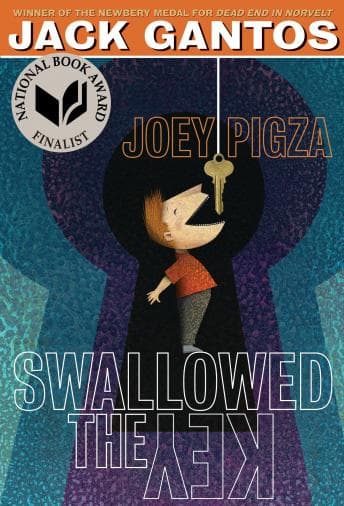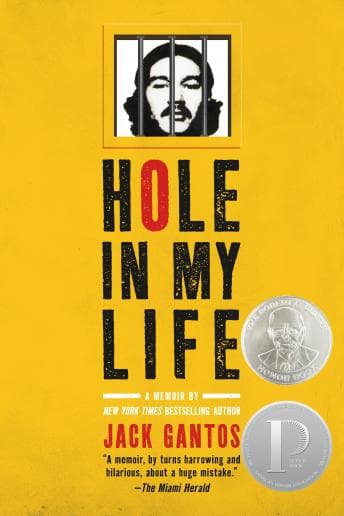

Okay so I have a bone to pick with Jack Gantos. Sir. You cannot just casually narrate your own memoir about smuggling hashish on a yacht and going to federal prison and then make me feel like I'm losing a friend when the audiobook ends. That's RUDE. I was not prepared.
I started this one at 2 AM because I couldn't sleep — Frida had knocked my water glass off the nightstand (again) and I was already awake and annoyed, so I figured a short listen would settle me down. Four hours and twenty minutes later the sun was coming up through my blinds, Diego was yelling for breakfast, and I was sitting in bed with my hand over my mouth like my abuela watching the telenovela climax.
A Twenty-Year-Old Kid With a Death Wish and a Notebook
Here's what got me: this isn't some glorified bad-boy-turned-good redemption arc. Gantos is painfully honest about the fact that he wasn't some desperate kid with no options. He was bored. He was impatient. He wanted to be a writer and thought he needed to live dangerously to have something to write about, which — as someone who dropped out of art school because I thought rules were for boring people — hit me right in the chest. That specific flavor of young, dumb confidence? I know her well.
The way he describes his final year of high school, drifting through classes while mentally already gone, already somewhere else — it's not dramatic. It's quiet. And that quiet is what makes the drug smuggling feel so inevitable. He doesn't build it up like some thriller. It's more like watching someone sleepwalk toward a cliff. You want to shake him. You can't.
And then prison. The yellow walls of his cell. The way he talks about filling notebooks as a survival mechanism, not because he had some grand artistic awakening but because writing was literally the only thing keeping his mind from eating itself alive. That distinction matters. This isn't "prison saved me" — it's "I saved myself in prison, barely, by the skin of my teeth, one sentence at a time."
When the Author IS the Narrator and It Actually Works
I'll be honest — I'm usually skeptical when authors narrate their own stuff. Most of them sound like they're reading a grocery list at a podium. But Gantos? His delivery is so conversational it feels like he's sitting across from you at a kitchen table, coffee going cold, just... telling you. No performance. No dramatic pauses for effect. Just this guy, in his own voice, owning every stupid decision and every terrifying consequence.
There's this dry humor running underneath even the darkest moments — like he's shaking his head at his younger self while he narrates. It's not detached, though. You can hear when his voice tightens, when the humor drops away and something real and raw surfaces. The moments in prison especially. He doesn't milk them. He states them. And somehow that restraint hits harder than any dramatic reading would've.
At 4 hours and 20 minutes, this is a lean listen. No fat on it. Every scene earns its place. And at my stubborn 1.0x speed, it felt like exactly the right length — long enough to sit with the weight of what happened, short enough that it doesn't wallow.
Who This Is For (and Who Should Know What They're Getting Into)
This is technically categorized as kids and family, which — okay, sure, it won a Printz Award and a Sibert Medal, so yes, it's aimed at young adults. But listen. There's drug use, prison violence, the kind of casual despair that comes from being twenty and realizing you've destroyed your own life. If you're handing this to a teenager, have a conversation ready. (Abuela would've had OPINIONS about this one. She would've tsked through the whole smuggling section and then cried at the end and pretended she wasn't crying.)
This book felt like finding someone's journal in a used bookstore — intimate and a little uncomfortable and impossible to put down. That same raw, unvarnished quality is something I chased in Memories of Childhood's Slavery Days — another first-person account where the author refuses to soften the edges of a life that demanded everything just to survive. If you love memoirs where the author doesn't let themselves off the hook, where the "lesson" isn't wrapped in a bow but earned through actual suffering and slow, unglamorous growth? This is yours.
If you need action sequences and dramatic narrator voices? Skip it. This isn't that. This is one man telling the truth in a quiet room.
The Part Where I Tell You to Just Listen to It
I didn't cry at this one — not the ugly-cry, anyway. But I sat in the silence after it ended for a long time. Sometimes that's the thing that wrecks you most. Not the tears but the stillness after. My heart. MY HEART. Gantos turned his worst years into something honest and useful and deeply human, and he reads it like he's still a little amazed he survived it. Four and a half hours of my life I'd spend again in a heartbeat.