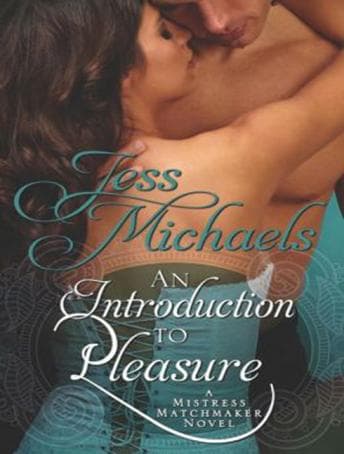

Can grief and desire coexist in the same heart? That's the question I kept turning over during nap time last Tuesday, folding laundry while Carmen Rose's voice painted a picture of two broken people finding their way to each other in Regency England.
Look, I'll admit it—the mistress-in-training trope is absolutely my comfort food. Give me a heroine with her back against the wall and a brooding hero who's forgotten how to feel, and I'm sold. Secret Garden gave me that exact combination, and I devoured it just as fast. But what makes Introduction to Pleasure work isn't just the familiar setup. It's the execution, and honestly, it's Carmen Rose making me feel things while I'm matching tiny socks.
Lysandra Keates isn't playing at desperation. Her father's dead, her mother's sick, and every respectable job opportunity has evaporated. When she approaches the courtesan Vivien Manning for help finding a protector, it's not rebellion—it's survival. I appreciated that Jess Michaels doesn't soften this reality. Lysandra's fear is real, but so is her spine. Rose captures both without tipping into melodrama, which is harder than it sounds.
And then there's Andrew Callis, our Viscount who's been essentially torturing himself on his country estate since losing his wife and baby. Years of physical labor and emotional shutdown have turned him into something closed-off and hard. When he's asked to train Lysandra in the arts of being a mistress, you can hear his resistance in Rose's delivery—but also that first crack in the armor. That involuntary response to something he thought he'd killed in himself.
Where the Heat Meets the Heart
Here's where I have to give Rose serious credit. The power dynamics in this setup could go sideways fast. "Training" someone in seduction has inherent complications, and lesser narrators might lean into the uncomfortable aspects. Instead, Rose emphasizes the growing mutuality between these two. The instruction scenes are definitely explicit—content warnings exist for good reason—but they're also surprisingly gentle. I found myself pausing the laundry more than once because I needed to actually pay attention to what was happening emotionally, not just physically.
The pacing hit a sweet spot for me. At eight and a half hours, it's long enough to earn the emotional payoff without dragging through unnecessary subplots. Rose never rushes the quiet moments, which matters when you're tracking Andrew's walls coming down brick by brick. There's this gradual softening in how she voices him—subtle shifts that reward close listening. By the midpoint, I was genuinely invested in whether this man could let himself love again.
Michaels writes the Regency setting with enough detail that it feels lived-in rather than costume-y. The social constraints trapping Lysandra aren't just background noise; they're the engine driving her impossible choices. Rose navigates the period dialogue without sounding stiff, giving the characters distinct voices that never veer into caricature. Her theatrical background shows in the best way—there's drama without melodrama, if that makes sense.
Who's This For (And Who Should Skip)
The sexual content is explicit and frequent. If that's not your preference, this isn't going to work for you regardless of how good the narration is. Same goes for historical romance skeptics—the Regency trappings are integral, not optional. But for those of us who want emotional depth with our heat? This delivers.
Watching Andrew move from grief-hardened isolation to genuine vulnerability hit me harder than expected. Maybe it's because Michaels doesn't rush his healing or make it feel easy. And Lysandra's journey from desperate survivor to a woman who understands her own worth—that arc is satisfying in a way that lingers.
The production itself is clean, no audio hiccups to pull you out of the story. I've noticed that kind of invisible-tech quality in Bend in the Road too—when the technical side just disappears, you know you're in good hands. Rose's Earphones Award makes sense after listening; she brings professional polish that elevates already solid material. Her range impresses—moving from heated passion to quiet devastation without losing the thread of either character.
My Laundry Room Verdict
What I keep coming back to is how Rose made these characters feel real to me during mundane moments. Folding laundry, wiping down counters, waiting in the school pickup line—Andrew and Lysandra were right there with me, working through their damage. That's what good audiobook narration does. It transforms a story into company.
For fans of historical romance who want genuine emotional stakes alongside generous spice, Introduction to Pleasure in audio format is worth your time. Carmen Rose doesn't just read the book—she inhabits it, and the difference shows.