
The Setup
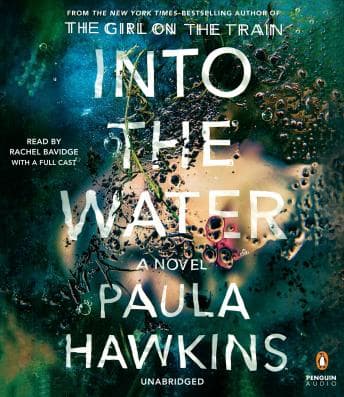
Okay, so I picked this one up because I loved The Girl on the Train - like, genuinely loved it, ugly-cried on my couch while Frida judged me from the armchair. (I wrote about that whole emotional experience in my Girl on the Train review, spreadsheet entry #23.). Paula Hawkins knows how to write women who are messy and complicated and real. So when I saw Into the Water had a full cast? Five narrators? I was like, yes, give me all the voices, let's do this.
I was wrong. Well - not completely wrong. But definitely more wrong than right.
I listened to this over three days while working on a rebrand for a local bakery (lots of pastels, very soothing, complete opposite of this book's energy). And honestly? By hour six I was pausing constantly to Google "Into the Water character list" because I genuinely could not keep track of who was talking and why I should care.
Too Many Voices, Not Enough Heart
Here's the thing about multi-narrator audiobooks - when they work, they're magic. You get inside each character's head in this intimate way that a single narrator just can't replicate. The Paris Apartment nailed this exact format—multiple POVs that actually enhanced the mystery instead of muddying it. I've listened to full-cast productions that made me feel like I was eavesdropping on real people's lives.
This isn't that.
The cast is talented - like, genuinely talented. Rachel Bavidge handles Nel's sections with this kind of haunted quality that works really well for a dead woman's voice. Sophie Aldred as Jules brings this brittle defensiveness that feels authentic. And Laura Aikman as Lena? She nails teenage grief-rage in a way that actually made me pause my work a few times.
But here's where it falls apart: there are SO many perspectives that you never get to sink into any of them. Just when I'd start to feel something for Jules - this woman dragged back to a town that traumatized her, now responsible for her dead sister's kid - we'd switch to Sean or Josh or Erin, and I'd lose that emotional thread. It's like trying to have a deep conversation at a party where someone keeps interrupting every three minutes.
And the voices themselves? Sometimes I genuinely couldn't tell who was speaking. Daniel Weyman does both Sean and Josh, which makes sense casting-wise, but in practice I'd be five minutes into a chapter before realizing we'd switched characters. That's not his fault - the writing doesn't always make it clear whose head we're in.
What Paula Hawkins Does Right (When You Can Follow It)
Look, the bones of this story are good. A river that keeps claiming women. A town with ugly secrets. The way trauma echoes through generations. Hawkins writes about female pain and female rage in ways that feel true - messy and contradictory and real. There's this thread about how women's stories get twisted and rewritten by the people around them, and when it lands, it lands.
The relationship between Jules and Lena is the emotional core, and honestly? That's where I felt the most. Jules is terrified of this kid, terrified of the water, terrified of her own memories. Lena is furious and grieving and determined to find out what happened to her mom. When these two finally start to see each other as actual people instead of obstacles - my heart. MY HEART.
But you have to wade through so much other stuff to get there. Sean's investigation. Erin's perspective. The historical women who died in the river. Josh's guilt. It's not that any of these are bad, it's that there's no room to breathe. No space to really sit with anyone's pain.
The Listening Experience (Honestly)
I'm gonna be real with you: I almost switched to the print version halfway through. And I never do that. I'm an audiobook loyalist. But I kept getting lost, having to rewind, losing the plot threads.
If you're listening while doing something else - designing, driving, cooking - this is going to be rough. You need to pay attention, and even then the character switching can throw you. This is not a chores book. This is not a commute book. This is a "sitting still with your eyes closed" book, and even then... maybe have a character list handy.
The audio quality is clean, no complaints there. The pacing of the narration itself is fine. It's just that the structure of the book fights against the audiobook format in a way that made me frustrated more often than moved.
Who Should Listen (And Who Should Skip)
If you loved The Girl on the Train specifically for the unreliable narrator and the slow-burn reveal, you might click with this. The mystery does come together in a satisfying way - the ending genuinely surprised me in a few places.
But if you're like me and you listen for the emotional experience? If you want to really feel these characters? This format is going to get in your way. I cried once - ONCE - during this whole eleven-hour book, and it was in the last hour when Jules and Lena finally have their moment. That's not enough for me. That's not why I listen.
Abuela would have been so frustrated with this one. She liked her stories with clear heroes and villains, with emotions you could sink your teeth into. This is murky in a way that's sometimes interesting and sometimes just... murky.
The Feels
I wanted to love this. I really did. Paula Hawkins writes women's pain beautifully, and the cast is clearly giving their all. But the multi-narrator format that should have made this immersive instead made it confusing, and I spent more time trying to track who was speaking than actually feeling anything.
Read this one instead. Or if you insist on audio, listen at home, with nothing else going on, and maybe take notes. I'm not even kidding about the notes.