
The "Just One More Chapter" Trap
I started this at 10 PM.
(Mistake number one.)
I told myself I'd just listen to the setup while I did the dishes. You know, ease into the horror. Three hours later, the dishes were done, the water was cold, and I was sitting on my kitchen floor staring at a grout line, absolutely paralyzed by the idea of a black SUV pulling up outside my apartment building.
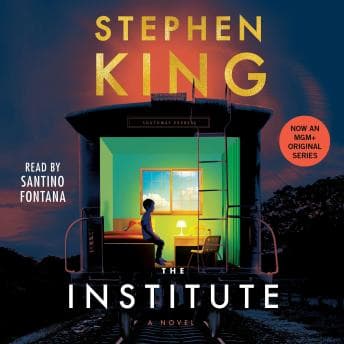
Shirley (the cat, not the author, though the vibes were present) was judging me from her perch on the fridge. She hates it when I get jumpy. But look—Stephen King knows how to dismantle your sense of safety in the suburbs, and The Institute is basically him flexing that muscle for nineteen hours straight.
So, yeah. I didn't sleep much.
Santino Fontana: Acting vs. Reading
Here's the thing about audiobooks that drives me crazy: narrators who think they just need to read the words clearly.
Boring.
Horror requires a performance. It requires acting. And Santino Fontana? The guy commits. I looked him up later—he's a Broadway actor (and yes, the guy from Frozen, which is hilarious considering how dark this book gets). It makes sense. He doesn't just read Luke Ellis; he inhabits him.
The voices are distinct. Like, startlingly distinct. You have Mrs. Sigsby (pure administrative evil, chills instantly) and then you have the kids.
Okay, we need to talk about the kids.
There's a character, Avery—super young, super tragic. Fontana gives him this lisping, "baby talk" voice. I've seen the reviews. I know some people wanted to throw their phones across the room because of it. And honestly? I get it. It's grating. But—and stick with me here—it's supposed to be. These are traumatized children in a cage. It's not supposed to sound like a polished podcast. It's supposed to sound uncomfortable.
Fontana makes you sit in that discomfort. He doesn't smooth the edges. (Though, fair warning: if high-pitched voices trigger your misophonia, you might struggle here.)
The "Back Half" Dread
The story itself? It's classic King, but stripped of the gothic ghosts. King's been doing this human-monster thing for decades, and The Stand proved he could make a thousand-page epic out of it. No haunted hotels here. Just people.
Which is way worse.
The concept of the "Back Half"—the place in the Institute where kids go when they're used up—is the kind of existential dread that sticks to your ribs. It's the "roach motel" concept: you check in, you don't check out.
The pacing is a slow burn. It's 19 hours, people. There are moments in the middle where you're just watching kids eat vending machine snacks and get slapped around by guards, and you might think, "Okay, Steve, let's move it along."
But that boredom is part of the trap. You get used to the routine of the abuse, just like the characters do. And then—bam. The escape sequence kicks in, and my heart rate was literally concerning.
Final Vibe Check
This isn't The Haunting of Hill House. It's not subtle. It's a sledgehammer of a story about friendship and government evil. King does something similar in Billy Summers—another story where the real horror is just people being monstrous to each other.
If you're looking for jump scares, this isn't it. This is the kind of horror that makes you look at missing child posters a little differently. It's the kind of story that makes you wonder what's happening in that nondescript building on the edge of town.
Fontana elevates it. He takes a long, winding road of a book and keeps the energy up even when the plot meanders. He won an Audie for this, and frankly, he earned it just for the stamina required to keep all those kid voices straight.
Who should listen: Anyone who wants slow-burn psychological horror about institutional evil and kids fighting back. Who should skip: If you can't handle bad things happening to children, or if high-pitched kid voices make you want to scream, steer clear.
My advice? Listen to it. But maybe not while you're alone in the house.
(Shirley eventually came down from the fridge, by the way. She demanded treats. She has no empathy for fictional psychic children. Typical.)