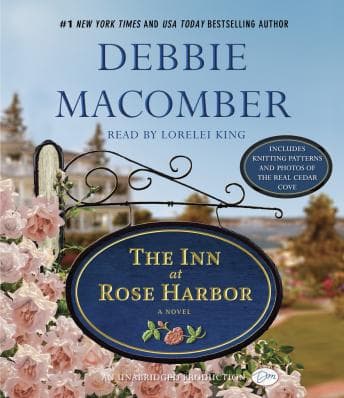

I was three hours into a logo redesign for a local bakery — the kind of project where you're staring at font pairings until your eyes cross — when Jo Marie Rose started talking about buying the inn after losing her husband. And I just... stopped designing. Set my stylus down. Diego jumped onto my lap like he knew something was coming, and honestly? He was right.
Debbie Macomber does this thing where the grief isn't dramatic. It's not cinematic. It's Tuesday-morning grief. The kind where you reach for someone's coffee mug and remember they're gone. Jo Marie moving to Cedar Cove and pouring herself into this bed-and-breakfast felt so achingly familiar to me — my abuela did something similar after my abuelo passed, throwing herself into reorganizing her entire kitchen like rearranging spice racks could fix the hole in her chest. That quiet channeling of loss into something tangible. Abuela would have loved this one. She would have nodded through the whole thing.
The Inn Smells Like Clean Sheets and Unshed Tears
Here's what works: the structure. Three storylines braided together — Jo Marie processing her husband's death, Joshua Weaver trying to make peace with a stepfather he's basically been at war with his whole life, and Abby Kincaid returning to Cedar Cove for her brother's wedding with twenty years of baggage stuffed into her suitcase. Each guest at the inn is carrying something heavy, and Macomber lets you sit with that weight instead of rushing to fix it.
The Joshua and stepfather thread hit me hardest. There's this slow, reluctant softening between them that doesn't feel forced — it's not a Hallmark movie resolution where everyone hugs at the 90-minute mark (even though, yes, Macomber IS the Hallmark queen, I know). The reconciliation earns itself. Barely. And that "barely" is what makes it real.
Abby's storyline is more uneven. Her painful memories of Cedar Cove get teased out so slowly that by the time I understood what she was actually running from, I'd spent a lot of listening time feeling like I was being held at arm's length. The backstory pacing there drags — like watching someone slowly peel a Band-Aid when you just want them to rip it off already.
Lorelei King's Voice Is a Warm Kitchen, But I Keep Smelling Someone Else's Cooking
Okay, so. Lorelei King. Her voice IS warm. It fits this book the way a flannel blanket fits a reading nook — perfectly cozy. She handles Jo Marie's quieter emotional moments with genuine tenderness, and her pacing during the grief passages lets the silences breathe. I appreciated that.
But here's my hang-up, and it's a weird one: I've listened to her narrate the Stephanie Plum books. And some of her character voices here — particularly when she's doing dialogue for the male characters — kept pulling me back to Trenton, New Jersey instead of Cedar Cove, Washington. It's like hearing your favorite song covered by someone you associate with a completely different genre. The performance is solid, but my brain kept doing double-takes. If you're coming in fresh to Lorelei King, this probably won't bother you at all. If you've spent hours with her as Stephanie Plum? You might need an adjustment period.
She's not Julia Whelan (nobody is, let's be honest), but she's good. Reliable. The kind of narrator who won't ruin your afternoon but won't make you gasp either.
Who This Book Is Actually For (And Who Should Keep Scrolling)
This is a rainy Sunday book. Absolutely, completely, no-question-about-it a rainy Sunday book. It's for the person who wants to feel gently held, not shaken. If you need high stakes or plot twists, you will be bored. Though if you want women's fiction that does shake you — that grabs you by the collar and refuses to let go — The Seven Husbands of Evelyn Hugo is sitting right there waiting, and it wrecked me in ways this one never aimed for. I'm telling you now. This is character-driven comfort fiction — the literary equivalent of soup from scratch.
It's perfect if you love women's fiction with a romance backbone, if you've already been through the Cedar Cove series and want more of that world, or if you're in a reading slump and need something that won't demand too much but will still make you feel. I cried once — just once, during Jo Marie's internal monologue about learning to sleep alone — which by my standards is practically stoic. But that one cry was earned. It was quiet and real and it caught me off guard while I was adjusting kerning on a letter "A," and suddenly I was just... sitting there with tears on my face and Diego purring against my chest.
The character development stays surface-level in places, especially with Abby. And at 9 and a half hours, there are stretches where the pacing sags like a middle chapter that needed a tighter edit. But the emotional core — grief as a doorway to something new rather than an ending — that part is genuine.
Frida Knocked This Off My Desk Twice and I Still Finished It
Not every book needs to wreck you. Sometimes you need the one that puts a warm hand on your shoulder and says "hey, it's going to be okay." That's this book. It's gentle and imperfect and a little too slow in spots, but it knows exactly what it wants to be. And for a first book in a series, it made me curious enough to come back to Rose Harbor — which is really all a series opener needs to do.