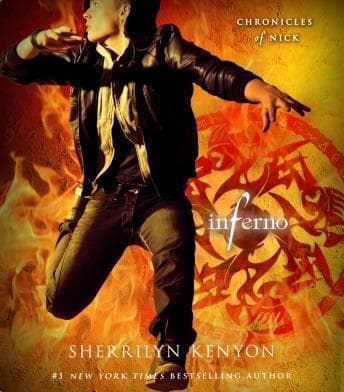

So here's the thing about being awake at 5:47 AM on a Saturday because your pager went off for a false alarm and now you can't fall back asleep: you end up rage-listening to YA urban fantasy while making pour-over coffee in the dark so you don't wake Kevin. And honestly? That's how Inferno got me.
I should preface this - I'm not the target demo for Chronicles of Nick. I'm a 30-something engineer who mostly listens to hard sci-fi and optimization podcasts. But I'd burned through my queue during a particularly brutal on-call week, and Kevin's sister had been pushing this series on me for months. I started at book one out of desperation and now here I am, four books deep, writing a review at 11 PM on a Tuesday. So.
Nick Gautier Is Basically a Sarcastic Exception Handler
Look, the plot is bonkers. Nick's sixteen, he's got his driver's license, and he's also apparently destined to become some kind of ultimate dark being while fighting off ancient forces that terrify literal gods. It's like if you took a coming-of-age story, threw in every mythology system you can think of, and then cranked the complexity knob to eleven. The worldbuilding is dense - we're talking layers of undead politics, elemental magic systems, prophecy chains, the works. And Kenyon just... keeps adding entities and power hierarchies like she's building microservices with no documentation.
But what actually works is Nick himself. The kid's internal monologue is basically what happens when you give a teenager from New Orleans the self-preservation instincts of a squirrel and the mouth of a stand-up comedian. His sarcasm isn't just comic relief - it's his coping mechanism for the fact that everyone around him might be trying to kill him, including his supposed allies. There's a genuine thread of paranoia running through this book that hit different for me. Not trusting your dependencies? Having to rely on the one component most likely to take down your whole system? Yeah, that's just Tuesday in distributed systems, but it also makes for surprisingly compelling YA fiction.
Holter Graham Doing the Lord's (and the Undead's) Work
Okay, I need to talk about Holter Graham. He's not Ray Porter - nobody is Ray Porter - but the man is doing something genuinely impressive here. The cast of characters in this book is absurd. You've got humans, demons, gods, undead creatures, and I think at least one animal, and Graham gives each of them a distinct enough voice that my sleep-deprived brain never lost track of who was talking. Nick's voice specifically - this sort of wry, slightly too-smart-for-his-own-good teenager energy - Graham nails it. Absolutely True Diary of a Part-Time Indian is the only other audiobook I can think of where a teenage narrator's voice felt that specifically, uncomfortably alive — the kind where you forget someone's performing it. The comedic timing on Nick's one-liners legitimately made me snort-laugh on the Caltrain, which earned me a Look from the guy in the next seat.
What really sells it is how Graham handles the tonal shifts. This book whips between Nick cracking jokes about his driver's license and genuinely dark moments where the kid has to consider sacrificing parts of himself. Graham doesn't oversell the emotional beats, which is exactly right for a teenage protagonist who'd rather die than admit he's scared. The AudioFile Earphones Award and Audies nomination make sense - this is skilled work.
The one caveat: at 9 hours 38 minutes, this is a moderate commitment, and the plot does get tangled. If you haven't listened to the first three books, you will be lost. This is not a standalone. Think of it as book four in a series with no API docs - you need the context from previous volumes or nothing will compile.
Who Should Queue This Up (And Who Should Hard Pass)
Perfect for: train, gym, walking the dog. The pacing is quick enough and Nick's voice is engaging enough that you won't lose the thread during moderate distractions. I finished this in about five commute legs plus that one insomniac Saturday morning.
Skip for: deep work, obviously. Also skip if you need your fantasy to have rigorous magic system rules - Kenyon's approach is more "and THEN there's this other ancient power" than Sanderson-style lawful magic. If that bugs you, it'll bug you here.
The sweet spot audience is honestly people like me who got pulled into this series sideways and now can't stop. If you liked the first three Nick books, this is apparently the strongest of the four, and I'd agree - the stakes feel higher and Nick's character growth from scared kid to someone making actual strategic decisions (bad ones, but strategic) is satisfying.
I'd also say: if you've got a YA-aged kid who likes mythology and sarcasm, this is a solid family road trip listen, though heads up on some violence and language.
The Commit Message
TL;DR: Worth your commute. It's not reinventing the wheel - it's a fun, fast YA urban fantasy with a genuinely funny protagonist and a narrator who's doing excellent work keeping a complicated mythology accessible. The ROI on this audiobook is solid if you're already invested in the series. If you're not, go start at book one. I'll wait. The last time I got pulled into a mythology-dense series this sideways was with Last Wish: Introducing the Witcher — also a case where someone handed me book one and I emerged four entries later, blinking.
I listened at 1.5x and it worked perfectly. Graham's delivery is clean enough to handle the speed bump without losing the humor or the character differentiation. At 1.75x you might miss some of the mythology drops, and trust me, you'll need those later.