
What does it cost a person to narrate their own dehumanization for an audience that might not believe them?
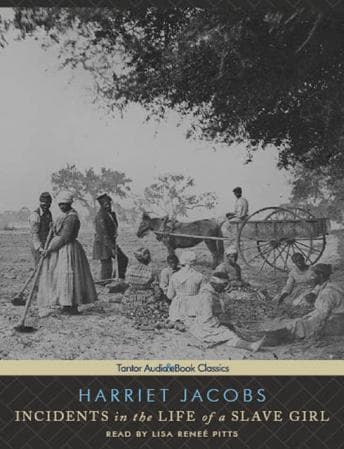
I started Harriet Jacobs's autobiography on a Saturday morning run through Cambridge, thinking I'd get through a few chapters before switching to something lighter. Nine hours later, I'd abandoned my research notes, reheated the same cup of chai three times, and sat with a weight in my chest that wouldn't lift.
The Psychology of Survival Under Impossible Conditions
What struck me immediately—and what I couldn't stop analyzing—is how Jacobs narrates her own trauma with such deliberate control. She's not writing for catharsis. She's building a case. The protagonist (and I use that term deliberately, because Jacobs understood she was constructing a narrative) exhibits classic strategic self-presentation. She anticipates her white Northern audience's objections, addresses them before they can form, and positions herself as both victim and agent simultaneously.
This is a fascinating case study in how enslaved people had to perform their own humanity for audiences who questioned whether they possessed any. Jacobs spends considerable time establishing her grandmother's respectability, her own education, her family's moral standing—all to preemptively counter the racist assumption that enslaved people were somehow complicit in their degradation. The research shows this was a common rhetorical strategy in slave narratives, but Jacobs does it with particular psychological sophistication.
And then there's Dr. Flint. My therapist would have thoughts about this man—though "character" feels wrong for someone who really did these things. Jacobs's portrayal of her enslaver is unnervingly precise. She captures the particular horror of someone who believes himself entitled not just to your body but to your desire. The psychological torture he inflicts—the constant surveillance, the jealous rages, the punishment of her family members—reads like a textbook on coercive control written 150 years before we had that language.
Lisa Reneé Pitts and the Weight of Witness
Pitts's narration is interesting. Her voice has this quality—sweet, almost gentle—that creates a strange dissonance with the brutality being described. Some listeners apparently found this "a little weird," and I understand that reaction. But psychologically, it tracks. Jacobs herself wrote with remarkable composure about unspeakable things. Pitts honors that restraint.
Where Pitts excels is accessibility. This is a 19th-century text with 19th-century sentence structures, and she makes it feel immediate, conversational even. Her diction is precise without being stiff. I found myself forgetting I was listening to something written in 1861—until Jacobs would reference some historical detail that snapped me back to the reality of what I was hearing.
The emotional delivery never felt performative. She's bearing witness, not performing tragedy. That distinction matters.
What Male Narratives Miss
I've read Frederick Douglass. Most people have, or at least they've read excerpts. But Jacobs offers something Douglass couldn't—the specific horror of being an enslaved woman. The sexual predation. The impossible position of motherhood when your children can be sold away. The way female slaves were blamed for their own assault.
Jacobs hides in a crawl space for seven years. Seven years. To be near her children while remaining hidden from Dr. Flint. The psychological toll of that—the sensory deprivation, the physical deterioration, the constant terror of discovery—she describes it with clinical precision. I kept asking myself: why does she emphasize her own agency so strongly, even when describing her most powerless moments? Because she had to. Because her audience needed to see her as a person who made choices, not just a body that things happened to.
Who Needs This (And Who Should Brace Themselves)
Essential listening for anyone who wants to understand American history beyond the sanitized version. If you teach, if you study psychology, if you care about how trauma narratives function—this belongs in your library.
But be warned: content warnings exist for a reason. Violence, abuse, sexual coercion—it's all here, described with unflinching honesty. Skip this if you need something you can half-attend while cooking dinner. This demands your full attention or none at all.
The nine-hour runtime requires commitment, but Jacobs earned that time. She survived what she describes. The least we can do is listen.
Though I'll admit, after nine hours with Jacobs, I did reach for something with a bit more narrative distance—Watership Down of all things, because apparently my brain needed allegory as a decompression chamber before I could process what I'd just witnessed.My Clinical Take: A Study in Reclaiming Narrative
I study how stories shape identity. Usually that means analyzing fiction—the safe distance of made-up people making made-up choices. Jacobs doesn't give you that distance. She forces you to sit with the reality that these were real decisions made by real people under conditions designed to strip them of personhood.
And she won. She escaped. She wrote her story. She shaped her own narrative when every system around her insisted she had no right to one.
That's not just history. That's psychology. That's human resilience documented in real time.