
When's the last time a con artist from 1904 made you rethink what passes for a "strong female character"?
I picked this one up on a whim - five and a half hours, free on LibriVox, figured it'd fill a slow afternoon while I was reorganizing the gun safe and pretending that counted as productivity. Ranger was sprawled across the doorway judging me. And honestly? This book caught me off guard in ways I didn't expect from something written 120 years ago.
Nance Olden Would've Made a Hell of an Intelligence Officer
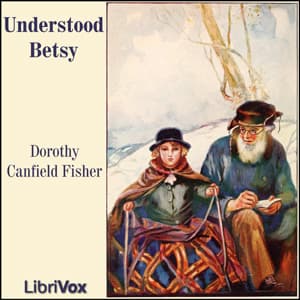
Let me cut to the chase: Nancy Olden is a liar, a thief, and completely unapologetic about it. Miriam Michelson wrote this character in 1904 - the fourth bestselling book that year according to Publishers Weekly - and I can absolutely see why it caused controversy. Nance isn't some reformed pickpocket learning the error of her ways through the love of a good man. She's running cons because she's smart, she's desperate, and she's grown up in an orphanage so brutal its inmates call it "the Cruelty." That detail alone tells you everything about her worldview.
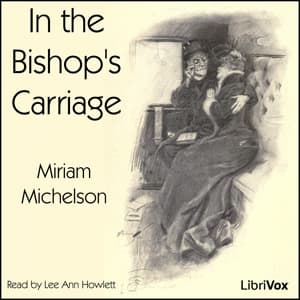
The scene where she charms the bishop and his entire family while riding in his carriage is - I've got to say - operationally impressive. She reads the room, adjusts her approach in real time, exploits social expectations about what a young woman should be. I've seen this scenario play out in real life, just with different stakes. Good intelligence work is basically social engineering, and Nance would've been a natural. The train station scene where she performs a role in the women's waiting area is the same playbook: assess, adapt, execute. She's running her own little OODA loop before Boyd ever put a name to it.
What struck me is how modern her voice feels. Michelson was a journalist before she was a novelist, and it shows. The writing is sharp, punchy, not weighed down by the Victorian stuffiness you'd expect. Nance narrates her own story with this breezy confidence that reminded me of soldiers I've known who joke about the worst moments because that's how they survive.
Lee Ann Howlett Earns Her Keep
This is a LibriVox recording, which - let's be honest - can be a dice roll. I've listened to LibriVox recordings that sound like someone reading a grocery list into a tin can. Lee Ann Howlett is not that. Her recording quality is clean and professional, and she brings genuine energy to Nance's first-person narration. You can tell she actually enjoys this character, which makes a huge difference over five-plus hours.
I don't have granular detail on how she differentiates voices across characters, but her handling of Nance's voice - that mix of street-smart cynicism and buried vulnerability - carries the audiobook. At 1.25x it clipped along perfectly for me. The pacing of the book itself helps; it's episodic, bouncing Nance from one scrape to the next, so you're never stuck in a long stretch of exposition wondering when something's going to happen.
The Part Where 1904 Shows Its Age
This is where it lost me in spots. Some of the plot mechanics rely on social conventions that just don't exist anymore - the power dynamics between men and women, the specific class signals Nance is manipulating, the weight of "respectability" as currency. You have to meet the book where it is, historically. If you can do that, there's genuine tension. If you can't, some scenes will feel quaint instead of dangerous.
And look, the morality question is actually interesting. Michelson - daughter of Polish immigrants, sister of a Nobel Prize winner in physics (Albert Michelson, if you're curious) - clearly wasn't interested in writing a cautionary tale. She liked Nance. You can feel it. The book asks whether a woman raised in brutality owes the world good behavior, and in 1904 that was apparently enough to get people very upset. In 2024 it reads as... pretty reasonable, actually.
Fun historical footnote: Mary Pickford starred in the film adaptation. The film's lost now, which is a shame. I'd have liked to see how early Hollywood handled a heroine this morally flexible.
Who Should Enlist
If you're into historical fiction with an edge, or you want to hear what a bestseller sounded like when Teddy Roosevelt was president, this is worth your time. Mystery and thriller fans looking for complex protagonists who don't play by the rules will find something here. I covered a much darker take on that same appetite for morally unmoored characters in Never: A Novel — different century, considerably higher body count. At under six hours and free through LibriVox, the commitment is minimal.
Skip it if you need modern pacing or if period-appropriate social dynamics frustrate you. And if you only read military fiction - well, this isn't that. But Nance runs operations that any Special Forces guy would recognize. Different battlefield, same principles.
Mission Debrief
Worth your time? Here's the debrief: a surprisingly modern con-artist story trapped in an Edwardian wrapper, elevated by a narrator who clearly gives a damn. It's not going to change your life, but for a free audiobook that's older than both World Wars, it punches well above its weight class. Ranger slept through most of it, but he woke up during the carriage scene. That counts.