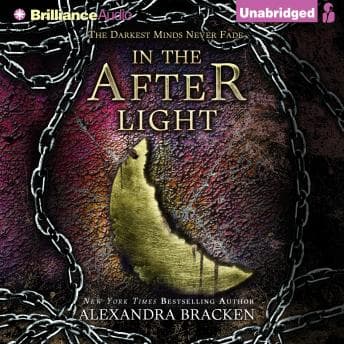

Look, I'll be honest - I started this series because someone on Hacker News compared it to X-Men but with government camps, and I'm a sucker for that kind of dystopian setup. By the time I got to In the Afterlight, I was invested enough to push through 17 hours on what turned out to be a particularly brutal on-call week. Finished it at 1:45 AM after a deployment that went sideways, which... actually matched the book's energy pretty well.
Quick Verdict: Worth your commute. Final book payoff is solid, Amy McFadden's narration carries the emotional weight, but be prepared for a protagonist who processes trauma by crying and almost fainting. A lot.
The Ruby Problem (And Why I Didn't Hate It)
So here's the thing everyone complains about: Ruby cries. Ruby nearly faints. Ruby has emotional breakdowns. I've seen the 2-star reviews, and yeah, I get it. But - and maybe this is the 2 AM exhaustion talking - I actually bought it? This is a teenager who's been through government torture camps, lost people she loves, and is now trying to lead a resistance movement while keeping a psychopath prisoner in her own head. The fact that she's NOT a stoic badass felt more realistic to me than the alternative.
That said, if you're coming to this for power fantasy escapism, recalibrate your expectations. Ruby's arc is less "chosen one saves the world" and more "traumatized kid tries not to fall apart while doing the right thing." The ROI on this audiobook depends heavily on whether that premise works for you.
McFadden's Doing the Heavy Lifting
I've listened to a lot of YA narrators (don't judge me, the genre has some genuinely good sci-fi concepts), and McFadden is legitimately good at this. Though I'll admit the bar isn't always high - I'm still recovering from the narrator who made Harry Plotter and The Chamber of Serpents sound like a middle school play. Her male voices actually sound like distinct people - Cole and Liam have different energy, different cadences. You can tell who's talking without the "he said, she said" tags.
But where she really earns her paycheck is the emotional scenes. There's this moment - won't spoil it - where Ruby's processing a major loss, and McFadden's pacing just... slows. Gets quieter. I was standing on a packed Caltrain, surrounded by people doom-scrolling LinkedIn, and I had to look out the window for a minute. That's the kind of performance that makes audiobooks worth it over just reading the text.
The one thing I wish I had more data on is whether she does anything special with Clancy Gray's scenes. He's supposed to be this manipulative presence in Ruby's head, and I feel like there was something subtle in how McFadden voiced those parts - slightly different register? - but I can't confirm if that was intentional or just my interpretation.
17 Hours Is a Commitment (Plan Accordingly)
This is basically The Hunger Games but for Psi powers - same bones of "teens vs. authoritarian government," but the resistance dynamics are more complex. Cole's volatile secret, the Children's League falling apart, competing factions with different ideas about how to free the camps. It's a lot of moving pieces.
Perfect for: train, driving. Skip for: gym (too much plot to track while doing deadlifts) or background listening (you'll miss important character beats).
I listened at 1.5x and it worked fine. The emotional scenes naturally slowed me down, and the exposition moved faster. If you're a 1.75x person for business books, stick to 1.5x here - there's enough going on that you don't want to miss the setup for the payoff.
Who This Is (And Isn't) For
If you've already listened to The Darkest Minds and Never Fade, you're finishing this. That's just how trilogies work. The payoff is satisfying, the camp liberation mission delivers, and the ending doesn't feel rushed despite the 17-hour runtime.
If you haven't started the series: start at the beginning. This is not a standalone.
If you're looking for action-heavy dystopia: temper expectations. There's action, but this is more character-driven than plot-driven. Ruby's internal state matters as much as the external mission.
If crying protagonists genuinely annoy you: maybe read the summary and move on. I'm not going to pretend the complaints are invalid - Ruby's emotional processing is a feature, not a bug, but it's definitely present throughout.
Worth the Credit?
I finished this in about 5 commutes plus that one insomniac night, and I don't regret the time. McFadden's narration elevates material that could've felt melodramatic in lesser hands. The science behind IAAN (the disease that killed most of America's kids and gave the survivors powers) actually holds up better than a lot of YA sci-fi - they don't handwave it completely.
Is it Ray Porter? No. But Amy McFadden knows what she's doing, and for YA dystopia, this is better than most. If you're already invested in the series, this is a satisfying conclusion. If you're not, this isn't where you start - but the series is worth the investment if you've got 50+ hours to spare.