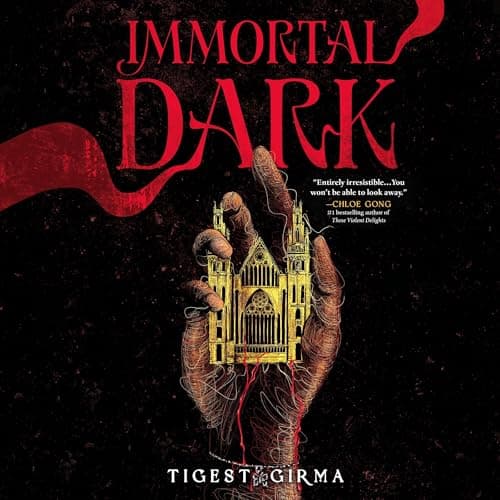

Two in the morning, lights off, Shirley curled against my ribs like she knows something I don't. I'm shelving returns at the library all day, so nighttime audiobooks are my religion. And look — I went into Immortal Dark expecting another vampire romance wearing a horror mask. The blurbs scream Cruel Prince meets Ninth House, which is a bold promise. What I got was something that actually earned about seventy percent of that comparison, which is more than most books manage.
Ethiopian Myth Dressed in Dark Academia's Best Suit
Here's what grabbed me first: this isn't your standard European vampire lineage story repainted with diverse window dressing. Tigest Girma — a debut author, by the way — is pulling from East African mythology and building a vampire companionship system that functions more like a feudal contract than the usual bite-and-bond trope. The human bloodlines gain power through their vampires. That's an inversion I haven't heard in a while, and it changes the entire power dynamic of the romance. It reminded me of the way Eldest reshapes inherited power into something the protagonist has to actively reckon with rather than simply receive — though Girma's version cuts considerably darker. Kidan Adane isn't some ingenue stumbling into a world of dangerous immortals. She walks in knowing she might have to kill the vampire bound to her family line. She's obsessive, nihilistic, and — this is what I respect — the narrative doesn't soften those edges to make her more palatable.
Susenyos Sagad, the vampire in question, does that thing where he tries to push Kidan away while clearly being drawn to her, and normally that dynamic makes me want to throw my phone across the room. But here it works because the power structure between companion and bloodline heir is genuinely threatening. There's real political consequence to their entanglement. The worldbuilding around Uxlay University — the arcane philosophy studies, the selection process for vampire companions — it's dense. Seventeen hours dense. And I mean that as both compliment and warning. This book takes its time building out the rules of its world before it lets you settle into the mystery of June's disappearance.
Shirley Jackson walked so this author could run — not because the styles are similar, but because Girma understands that the scariest thing isn't the monster. It's the protagonist's willingness to become one.
Jordan Cobb Carries Seventeen Hours on Her Back
Seventeen hours is a commitment. That's longer than most fantasy epics, and for a single narrator, it's a marathon. Jordan Cobb doesn't collapse under the weight. You can hear the warring emotions in how she handles Kidan — there's this controlled fury simmering under the surface in early chapters that gradually fractures as Kidan gets pulled deeper into Uxlay's politics. Cobb doesn't do the thing where every emotional beat gets the same breathless intensity. She modulates. Kidan's protectiveness toward June sounds different from her hostility toward Susenyos, and both sound different from the cold calculation she adopts when dealing with the four students she's forced to work alongside.
Is the performance flawless? No. At seventeen hours, there are stretches in the middle — particularly during the more exposition-heavy worldbuilding passages — where the energy dips. Not enough to kill the experience, but enough that I caught myself drifting during a couple of late-night sessions. But when the murder mirroring June's disappearance hits? Cobb locks back in. The narrator commits. That's rare.
The Dread Beneath the Romance
Here's where I'll push back on the popular consensus. People are calling this a romance with dark elements. I think it's closer to horror wearing romance's clothes. The violence isn't gratuitous, but it's present and consequential. Kidan does things she can't take back. The "dark entanglements of love" the blurb promises aren't metaphorical — there's literal blood involved, and the book doesn't flinch from the cost of Kidan's choices. This understands that horror isn't about gore — it's about dread. The dread of what Kidan might be willing to sacrifice. The dread of what Susenyos actually is beneath the cruelty-as-flirtation exterior.
The pacing across seventeen hours isn't always tight, though. The worldbuilding occasionally reads like Girma wanted to put every piece of her constructed mythology on the page, and while I respect the ambition — the companion system, the university hierarchy, the centuries-old threat lurking beneath everything — some of it could've been trimmed. The mystery of June stays compelling, but there are detours.
Who Should Listen (And Who Should Skip)
If you loved Ninth House's willingness to let its protagonist be genuinely dangerous and you want that energy transplanted into a vampire mythology that isn't recycled Slavic folklore, this is your book. If you need constant momentum and can't tolerate extended worldbuilding passages in your fantasy, seventeen hours will test your patience. Skip it if you're looking for a straightforward paranormal romance — Kidan's story is too thorny and too bleak for that shelf.
Shelving This One in the Locked Case
I listened in the dark. Mistake? Maybe. Worth it? Absolutely. Immortal Dark isn't perfect — it's overstuffed in places and the pacing sags in the middle third. But Girma's debut shows a writer who understands that the best dark fantasy makes you complicit in its protagonist's worst decisions. And Jordan Cobb's performance makes those decisions land. My podcast listeners are going to love this — it's the kind of book that sparks arguments about whether Kidan is a hero or a villain, and those are the only arguments worth having.