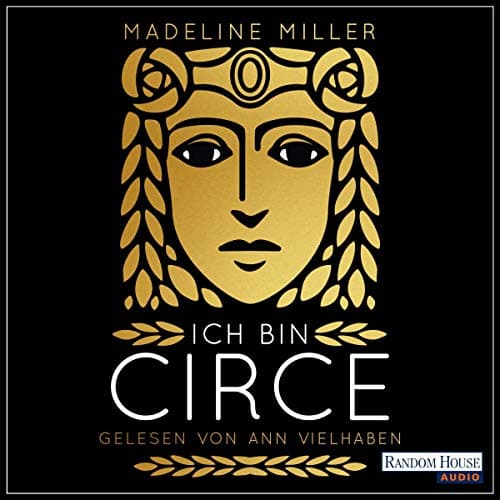

I was debugging a procedural terrain generation algorithm at 2 AM — the kind where you've been staring at Perlin noise for so long that the screen starts looking like topographic maps of places that don't exist — and I needed something to keep my brain from melting. So I threw on Ich bin Circe because, honestly, Greek myth retellings are my comfort food. I grew up rolling d20s in the back of a Georgia public library, and half my D&D campaigns were just reskinned Odyssey plots anyway. Circe turning sailors into pigs? That's a 5th-level polymorph spell with style.
So yeah. I listened to the whole thing in about three sittings. And I have thoughts.
A Witch's Progression System (Without the Stat Blocks, Unfortunately)
Here's what Miller does that most mythology retellings don't: she builds a magic system that actually makes sense. Circe's pharmakeia — her herbcraft, her potions, her slow discovery of what she can do — it's not just "she's a goddess so she can do stuff." There's a progression. She starts weak, mocked by her Titan family, and claws her way to competence through experimentation and failure. The transformation of Scylla is this gut-punch moment where you realize Circe's power has real consequences she can't undo, and it haunts the entire rest of the book. The birth of the Minotaur scene is visceral and horrifying in a way that made me pull my headphones off for a second to just... sit with it.
If you've read Sanderson, you know I love a hard magic system. This isn't that — it's softer, more intuitive — but the rules are there. Circe can't just snap her fingers. She grinds herbs, she studies, she fails. The progression is satisfying the way a good LitRPG level-up is, except instead of stat blocks you get passages about the smell of moly root and the texture of enchanted wine.
Ann Vielhaben: The Narrator Question
Okay, so this is where it gets complicated. Ann Vielhaben's performance is... fine? She captures Circe's interiority well — the loneliness, the defiance, the slow burn of a woman who's been underestimated for literally centuries. Her emotional range during the Odysseus chapters lands. But here's the thing: this is a German-language audiobook, and some listeners have pretty strong opinions about the narration. I've seen German reviews that basically say "Vorsicht vor Ann Vielhaben" — warning people away from this version entirely.
I don't think it's that bad. But I will say this: Steven Pacey walked so other narrators could run, and Vielhaben is... walking. Steadily. Competently. The character differentiation isn't dramatic — you're not getting wildly distinct voices for Hermes versus Daidalos versus Odysseus. It's more of a tonal shift, a slight change in energy. For a book that's essentially one woman's inner monologue stretched across millennia, that works okay. But if you're used to full-performance narrators who make you forget you're listening to one person, you might feel the limitation.
Compared to the English audiobook of Circe narrated by Perdita Weeks (which won Best Audiobook of the Year, for the record), this German version is a step down in vocal dynamism. That's not a controversial take — it's just the reality of different narrators with different strengths.
Miller vs. the Myth-Retelling Crowd
What sets this apart from something like Jennifer Saint's Ariadne or Natalie Haynes' A Thousand Ships is that Miller isn't interested in giving you a panoramic view of mythology. She zooms in. Hard. This is one woman's story over thousands of years, and she earns every hour of those 12:17. The pacing is slow — I won't pretend otherwise. There are stretches on Aiaia where it's just Circe and her lions and her herbs, and if you need constant plot momentum, you'll bounce off this like a spell hitting a warded door.
But the character work? This is Sanderson-level world-building applied to a single psyche instead of a continent. By the time Odysseus shows up, you've spent so long in Circe's head that his arrival feels like an earthquake. And the quieter encounters — Daidalos as a genuinely kind mortal, Athena as a cold political threat rather than a wise mentor — reframe characters you thought you knew.
My D&D group would love this as backstory material for a warlock patron, honestly. The dramatic full-cast treatment in Red Rising (Part 2 of 2) (Dramatized Adaptation) is basically the opposite end of the spectrum — where Miller trusts one voice to carry millennia, that production throws an ensemble at you and somehow it works just as hard.
Who Gets Invited to Aiaia (And Who Gets Turned Into a Pig)
If you want action-packed Greek mythology with battle scenes every chapter, this will frustrate you. If you mostly listen while doing other things and need something that grabs you by the throat — also probably not this. It rewards focused attention. But if you're the kind of person who likes sitting with a character for 12 hours and watching them become someone, and if you don't mind a narrator who's solid without being spectacular? Roll initiative and hit play. I listened to this instead of writing my thesis, and I regret nothing.
The Spell Holds, Even If the Voice Wavers
The book is genuinely great. The audiobook is good enough. That gap matters — it's the difference between a story that possesses you and a performance that merely delivers. I'd give Miller's writing a flat 5, but the narration brings the audio experience down a notch. If you speak German and love mythology, you'll still get swept up. Just know that the print version might hit different.