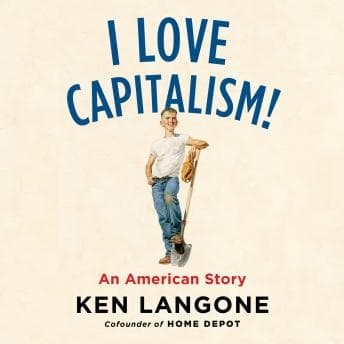

My parents never once called themselves capitalists. They pressed shirts, took in alterations, and kept a Korean-language Bible next to the cash register. But Ken Langone? He'd have loved them. And honestly, listening to this book at midnight while reviewing a startup's burn rate spreadsheet, I kept thinking about my dad's hands - cracked from dry cleaning chemicals - and how Langone's dad worked in a plumbing supply house. Different borough, same calloused knuckles.
The Uncle at Thanksgiving Who Actually Made It
Here's the thing about Langone narrating his own book: his voice genuinely takes some getting used to. It's not polished. It's not NPR-smooth. It fluctuates in volume like he's leaning toward and away from the mic depending on how excited he gets about a particular deal. And he gets VERY excited. But once you settle in - maybe 30 minutes - it clicks. This isn't a performance. It's a guy at a steakhouse dinner telling you how he built Home Depot, and he's on his second Scotch, and he doesn't care if the next table hears him.
The Home Depot origin story is genuinely good stuff. Langone and Bernie Marcus and Arthur Blank figuring out the warehouse retail model, scraping together financing when banks wouldn't touch them - that's the kind of founding story that doesn't get old because you can feel the desperation underneath the confidence. He doesn't sanitize the fear. When he talks about the early days of convincing investors to back what was essentially a giant ugly warehouse full of lumber, you believe him because his voice cracks a little with the memory of it.
But my favorite section? The Eliot Spitzer fight. Langone goes after the former New York governor with the energy of a guy who's been waiting years to tell his side. Whether you agree with his politics or not, the blow-by-blow of that legal and PR battle is fascinating business warfare. He's clearly still angry about it, and that rawness makes for better listening than any ghostwriter could manufacture.
45 Minutes of Insight, But the Padding Is Actually Fun
Look, I normally say most business books have 45 minutes of real content stretched into 8 hours. This one's different - not because every minute is pure signal, but because Langone's stories are entertaining even when they're not delivering frameworks or lessons. The Stan Druckenmiller anecdote had me actually laughing out loud at my desk. (Jenny walked in, saw my spreadsheet, heard me laughing, and assumed I'd finally lost it.)
The business lessons themselves aren't revolutionary. Evaluate businesses on fundamentals. Work harder than the person next to you. Be loyal to people who helped you. Treat your employees well. This is what my parents did instinctively. Now it has a TED talk. The gap between people who lived these lessons and people who package them is something I kept bumping into while reading How To Lie With Statistics too - a book that's similarly ruthless about the difference between genuine insight and dressed-up noise. But Langone earns the clichés because he brings receipts - actual deals, actual dollar amounts, actual failures. When he talks about learning to value businesses on Wall Street while getting his MBA at night, competing against prep school kids with pedigrees he couldn't touch, it's not motivational poster garbage. It's specific. He names the firm. He names the people. He tells you what the deal was worth.
Where it drags: Langone's philanthropy sections. Admirable? Absolutely. The $200 million to NYU's medical center is staggering generosity. But listening to a billionaire talk about his charitable giving can start to feel like a very expensive humble-brag after 20 minutes. I bumped it to 2.0x through those stretches. No regrets.
The Volume Thing Is Real
I have to mention this because it'll hit you on a commute with road noise: the audio levels genuinely fluctuate. Langone gets quiet during reflective moments and then practically shouts when he's fired up about a deal. I found myself adjusting volume more than I should for a professionally produced audiobook in 2018. Not a dealbreaker, but worth knowing if you're on earbuds in a noisy gym.
Who Gets the Credit, Who Saves It
If you grew up watching immigrant parents or working-class parents grind - really grind, not Instagram-hustle grind - this book will hit different. Langone's not pretending capitalism is perfect, but he's making a case that it gave a plumber's kid from Long Island a shot. I don't agree with every political point he makes, and his defense of Wall Street compensation will make some people's blood pressure spike. But he's earned the right to the argument.
Skip this if you want systems, frameworks, or actionable playbooks. This is a memoir, not a manual. If you want to know how one specific guy got very rich through a combination of street smarts, relationship-building, and aggressive deal-making, it's worth your time.
Bottom line: At under 8 hours with a narrator who sounds like he's talking TO you (not at you), this respects your time more than most business memoirs. It's not the most polished audiobook I've heard this year, but the authenticity compensates. My parents would've liked Ken Langone. They wouldn't have understood a word of his Wall Street deals, but they would've recognized the work ethic. That counts for something.







![Steve Jobs [unabridged audiobook] audiobook cover](/_next/image?url=https%3A%2F%2Fcovers.audiobooks.com%2Fimages%2Fcovers%2Ffull%2F9788499923406.jpg&w=1920&q=75)