
This book broke me in the best possible way.
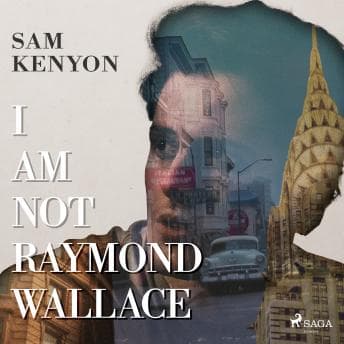
I started listening during a late-night design session—one of those 2 AM stretches where I'm tweaking kerning for the hundredth time and my cats are giving me those "go to bed, you disaster human" stares. By the time Raymond first sees Joey in that underground world of 1963 Manhattan, I had completely forgotten about the logo I was supposed to be finishing. Frida actually jumped off my lap because I gasped too loud.
Two Cities, Forty Years, One Aching Heart
Sam Kenyon does something I haven't experienced in queer fiction before—he makes the compartmentalization feel physically painful. Like, you FEEL Raymond's chest tightening every time he has to choose between who he is and who he's supposed to be. The 1963 timeline isn't just historical window dressing. It's claustrophobic in the best way. Raymond lands in the New York Times newsroom, all fresh-faced Cambridge boy, and gets assigned to help write an article about "the explosion of overt homosexuality." The irony is so sharp it could cut glass.
And then there's Joey. MY HEART.
The moment they meet—in this secret world where Raymond suddenly doesn't have to pretend—Kenyon writes it with such tenderness that I had to pause and just... breathe. This isn't a romance that happens TO the characters. It's one that transforms them. Or tries to. Because 1963 isn't kind to men like Raymond and Joey.
Alex Wingfield Understands the Assignment
Okay, so I've listened to a LOT of queer audiobooks where narrators treat gay characters like they're performing a nature documentary. "Here we observe the homosexual in his natural habitat." Wingfield does the opposite. His voice carries this quiet intimacy that makes you feel like you're reading Raymond's private diary—the one he'd never show anyone.
The sex scenes? And yes, there are sex scenes, and they're explicit enough that I wouldn't listen around my tías. But Wingfield handles them with this balance of heat and vulnerability that actually made me tear up during one of them. (Adding it to my crying spreadsheet under "unexpected categories.") He shifts between tenderness and raunch in a way that feels human and messy and real.
I will say—and this is minor—I wished for slightly more vocal distinction between the 1963 and 2003 timelines. The dual-timeline structure is gorgeous on the page, I'm sure, but in audio it occasionally took me a beat to reorient. Not a dealbreaker. Just something.
The Ricochet Effect
Here's what got me: the book doesn't pretend that Raymond's choices only affect him. The decision he makes—between conformity, courage, and compartmentalization—echoes through DECADES. When we finally land in Paris, 2003, and Raymond's son Joe meets Joey... I was designing nothing at this point. I was just sitting in my desk chair, holding Diego like an emotional support pillow, mascara situation fully compromised.
Kenyon is a composer, and you can feel it. The prose has this precision to it, almost musical in its structure. But it's never cold. It's the kind of writing that makes you feel seen even when you're not the one being described.
Abuela would have loved this one. She was complicated about queerness—raised Catholic in 1950s San Antonio, so. But she understood love stories about impossible circumstances. She understood choosing between family and self. She would've cried at the ending and then immediately asked me to find her another book "just like this one, mija."
Who Needs This Book (And Who Should Wait)
If you want a queer romance that's purely escapist and light? This isn't it. This is a rainy Sunday book, the kind where you cancel plans and let yourself feel things. It's for readers who want their love stories with weight—the kind that examines what it cost queer people to exist before we could exist openly.
Skip this one if you're not in a headspace for heavy emotional content around closeted relationships and generational trauma. There's a content warning for themes of sexual identity and intolerance, and the book earns it. But if you're like me—if you WANT to feel something, if you picked up this audiobook specifically to have your heart rearranged—this is the one.
Mascara Ruined, Heart Full, No Regrets
Gay's the Word bookshop named this one of their Best Books of 2023, and yeah. I get it. This is Kenyon's debut novel, which is honestly wild because it reads like someone who's been doing this for years. The chemistry is chef's kiss. The historical detail is sharp without being showy. And the ending—the healing that finally begins in Paris—felt earned in a way that made me cry AGAIN.
Four crying sessions total. Beach Read, you've got company. Though honestly, Last Thing He Told Me came close with its own brand of emotional devastation.
I finished this at 4 AM, design deadline blown, cats asleep, and I just sat there in the dark thinking about all the Raymonds who never got their Paris. This book felt like a love letter to them. And to us.