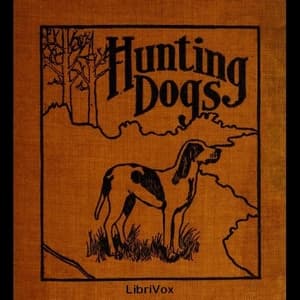

Who even listens to a 1901 dog training manual on purpose?
Apparently me, at 5:47 AM on a Tuesday, half-asleep and scrolling through LibriVox's free catalog because I'd burned through my Audible credits and refused to pay full price for anything. Hunting Dogs by Oliver Hartley caught my eye purely because it seemed absurd. A 120-year-old guide to selecting and training hunting dogs? This is either going to be fascinating or a complete waste of 4 hours.
It was... both? Kind of?
The Weirdest Time Capsule You'll Listen To This Year
Look, I debug distributed systems for a living. I appreciate documentation. And this book is basically documentation for 1901-era dog acquisition and training—complete with all the assumptions, casual opinions, and zero scientific methodology you'd expect from that era. Hartley and his contributors write with absolute confidence about things like "the proper temperament of a foxhound" and "why certain breeds are superior for night hunting," and there's something weirdly charming about it.
The content is exactly what it promises: practical advice on selecting hunting dogs, training them, maintaining their health, and utilizing them across different hunting scenarios. There are chapters on specific breeds—beagles, foxhounds, pointers—each written by different contributors who clearly have Strong Opinions. Some of these opinions contradict each other. Nobody seems to care. It's like reading a very old Reddit thread where everyone's an expert. That same confident-but-contradictory energy shows up in David and Goliath, where Gladwell presents counterintuitive arguments with absolute certainty—though at least his are backed by actual research.
LibriVox Volunteers: The Audio Equivalent of Potluck
Here's the thing about LibriVox—it's free, and you get what you pay for. Multiple volunteers read different chapters, which means the audio quality and reading styles vary wildly. One reader might be crisp and clear, the next sounds like they're recording in their bathroom. Some read with genuine enthusiasm about coonhounds, others sound like they're reading a terms of service agreement.
This isn't necessarily bad—it actually matches the book's structure, since different experts wrote different chapters anyway. But don't expect consistency. Don't expect professional production. And definitely don't expect anyone to nail the pronunciation of every archaic hunting term.
I bumped it to 1.5x and honestly, that helped smooth out some of the slower readers.
The ROI Calculation (Because I Can't Help Myself)
So here's my honest assessment: Is this useful information for modern dog training? Absolutely not. The methods are outdated, some are ethically questionable by today's standards, and the "science" is basically "my buddy Jim says this works."
But is it interesting? Actually, yes. If you're into:
- Historical curiosity about how people approached animal training pre-behavioral science
- Vintage Americana and early 20th century rural life
- The evolution of dog breeds and hunting practices
- Falling asleep on a train to something that requires zero emotional investment
Then this delivers. It's basically a podcast about 1901 dog culture, except everyone's been dead for 80+ years.
Who Gets Value Here (And Who Doesn't)
This is not a book you listen to for actionable advice. If you're actually trying to train a hunting dog, please consult literally anything written after 1950. But if you want something mildly interesting that won't stress you out, won't keep you up at night, and costs exactly zero dollars? This works.
I finished it over four commutes, mostly because I kept forgetting to switch to something else. That's not a ringing endorsement, but it's not nothing either.
Skip if: You want modern training techniques, professional narration, or anything resembling scientific rigor.
Grab it if: You're a history nerd, you've exhausted your Audible library, or you just want something unusual to fall asleep to.
System Status: Functional But Deprecated
This is a curiosity piece, not a training manual. The LibriVox production is exactly what you'd expect from volunteers—inconsistent but earnest. At 4 hours and 22 minutes, it's a low-commitment listen, and the price (free) is right.
Would I recommend spending an Audible credit on this? It's not even on Audible, so the question is moot. But as a free LibriVox download for your next boring errand run? Sure. You'll learn absolutely nothing practical about training dogs in 2024, but you'll learn a lot about what people thought they knew in 1901.
And honestly? That's kind of the point.