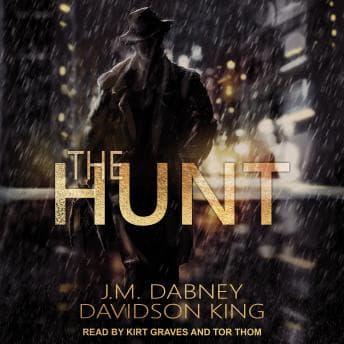

People keep telling me dual narration automatically makes an audiobook better. Two voices, two perspectives, double the immersion, right? I wanted to agree after finishing Hunt during a dead-quiet 3 AM charting session - the kind of night where the unit is so still you're afraid to breathe wrong (knock on wood). But here's the thing. Dual narration only works when both narrators show up with the same energy. And in this one, only half the team got the memo.
Kirt Graves Carried This on His Back
Let me be clear about what works. Kirt Graves voicing Andrew Shay - the server who comes home to find his roommate dead and the killer still in the apartment - is genuinely good. Andrew's fear, his spiraling after the murder, the way he exists behind a costume at work feeling like he doesn't belong anywhere? Graves sells all of it. There's this rawness in his delivery when Andrew is alone with his own thoughts that made me stop mid-chart and actually listen. Not just hear. Listen. You can feel Andrew's isolation in Graves' voice, and for a character who's scared and untethered after witnessing something horrific, that emotional weight matters.
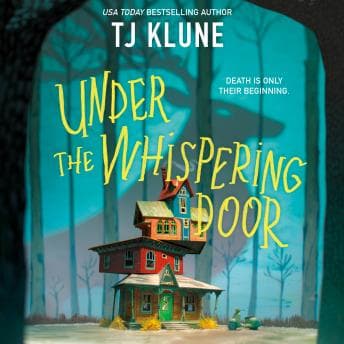
Graves brought the same depth to Under the Whispering Door, a story that left me in pieces after a particularly rough shift.Then Tor Thom steps in as Ray Clancy, the disgraced detective turned PI, and... look. I've heard people defend this as "fitting the character" - cool, calm, unexcitable detective energy. And sure, I get it conceptually. But there's a difference between portraying a stoic character and sounding like you're reading a grocery list. Ray is supposed to be haunted by an unsolved case, driven by compulsion to solve crimes even after leaving the force. That's not nothing. That's a man eaten alive by something he can't let go. And Thom reads it flat. Not quiet-intensity flat. Just... flat. The contrast between the two narrators ends up feeling less like intentional character distinction and more like one narrator cared and one was collecting a check. (Carlos would say I'm being harsh. Carlos also falls asleep during every movie, so.)
The Killer Problem
Here's where my night-shift BS detector kicked in hard. The premise is solid - Andrew's traumatized, Ray's obsessed, they're thrown together to find a killer. Classic setup, and at 5 hours and 25 minutes, you'd think it would be tight and lean. But the dialogue involving the killer felt like it was trying too hard to be menacing. You know that thing where someone writes a villain and you can practically see the author going "ooh, this is creepy, right?" instead of just letting it BE creepy? That. The actual dynamic between Andrew and Ray has more natural tension than anything the antagonist brings, which is a problem when your book is literally called Hunt and the hunt itself is the weakest thread.
For a thriller where the tension actually holds and never lets go, Silent Patient kept me guessing until the last page.The romance between Andrew and Ray works better than I expected. There's something about the protector-meets-survivor dynamic that these authors clearly know how to write, and Graves in particular makes Andrew's vulnerability feel earned rather than performative. But I wanted more from the mystery side. As someone who's actually worked a code and seen real trauma responses, Andrew's reaction to finding his roommate felt right - the shock, the dissociation, the inability to process. That rang true. The procedural stuff around Ray's investigation? Less convincing. Not terrible, just thin.
Who Gets a Pass and Who Gets Skipped
If you're into LGBTQ+ romantic suspense and you like your mysteries more character-driven than plot-driven, this scratches an itch. Graves' narration alone makes Andrew's storyline worth hearing. But if you're coming for a tight thriller with a satisfying cat-and-mouse chase, you'll feel the seams. The 5-and-a-half-hour runtime means it doesn't overstay its welcome, which honestly saves it - a longer version of this book with the same pacing issues would've lost me.
At full credit price? I'd say wait. Stream it, borrow it, catch it on sale. It's a decent listen for when you need something short and emotionally engaging but don't want to commit your whole week. Perfect for that post-shift decompression when your brain is too fried for anything demanding but you're not ready to sleep yet.
Charting This One as Stable, Not Critical
I didn't yell at my dashboard during this one. Didn't cry in the car either. What I did was finish it, think "huh, that was fine," and then spend way too long wondering what this book could've been if Tor Thom had matched Graves' energy. Half a great audiobook is still only half.