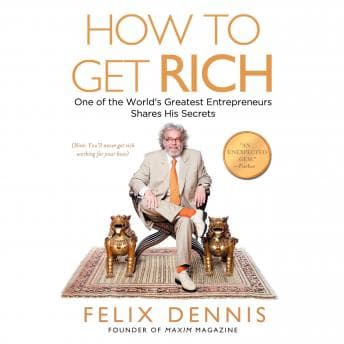

"A regular paycheck is like crack cocaine." Felix Dennis drops that line with the casual confidence of a man who hasn't needed a paycheck in thirty years, and Roy McMillan delivers it in a British accent so perfectly suited to the material that I actually rewound it. Not because I missed anything. Just because it landed.
I was on the treadmill at 6 AM when I started this one - Jenny had already claimed the living room for her Saturday morning thing, and I needed somewhere to put my brain. Nine hours and fifty-four minutes. I ran the first hour, stretched through the second, and stood in the kitchen eating cold rice while McMillan read me Dennis's thoughts on why most people who want to be rich will never be rich. By the end of the weekend, I was done. That's the pace this book earns.
The Man Actually Paid His Tuition
Here's what separates Dennis from the usual business book crowd: he's not a professor who studied entrepreneurs. He's not a journalist who interviewed them. He built a publishing empire from nothing - founded Maxim, ran Dennis Publishing, made himself one of the wealthiest people in Britain - and apparently spent the rest of his time writing poetry performed by the Royal Shakespeare Company, which is either the most British thing I've ever heard or proof that getting rich actually does buy freedom.
The key argument is simple and brutal: ownership is everything. Not ideas. Not talent. Not hustle in the abstract. Equity. The piece of the thing that you actually own. Dennis is almost aggressive about this - he says great ideas are "vastly overrated" and I wanted to stand up and applaud because I have sat in approximately four hundred startup meetings where someone treated their idea like it was the asset. The idea is not the asset. The ownership is the asset.
This is what my parents did instinctively. Now it has a TED talk.
They owned the dry cleaning business. Not the building, not the equipment free and clear - but the business. Fourteen-hour days, yes. But every dollar stayed in the family. Dennis would've approved. He probably would've told them to hire faster and delegate more, but the instinct was right.
He also has this unflinching section on the personal cost of wealth-building - the relationships you'll damage, the health you'll ignore, the moments you'll miss - and he doesn't dress it up. He's not selling you a lifestyle. He's telling you the actual price. I've seen too many business books skip this part entirely, or bury it in an appendix called "Work-Life Balance" that nobody reads. Dennis puts it front and center. Take it or leave it, but don't say you weren't warned. Phil Robertson does something similar in unPHILtered — different world entirely, but the same refusal to sand down the uncomfortable parts for a general audience.
McMillan Is Doing Real Work Here
The narration question for a book like this is whether the voice matches the attitude. Dennis wrote this the way a slightly drunk, extremely successful man talks at a dinner party - confident, digressive, occasionally profane, genuinely funny. McMillan's British accent isn't just appropriate, it's load-bearing. The wit in Dennis's prose needs that dry delivery or it tips into arrogance. McMillan keeps it on the right side of the line.
The Earphones Award makes sense. This is a clean, well-paced performance that respects the source material without overselling it. No theatrical nonsense. Just a man reading another man's hard-won opinions at the right speed.
I listened at 2.0x. It held up. That's my actual benchmark.
Who This Is For (And Who Should Skip It)
If you've spent serious time in entrepreneurship - built something, sold something, lost something - some of this will feel like confirmation of things you already learned the expensive way. That's not a flaw, exactly. Sometimes you need someone successful to say the thing out loud so you stop second-guessing yourself. Dennis does that.
If you're earlier in the journey - still in a corporate job, still thinking about the leap, still treating your idea like it's the whole game - this book might actually change how you think. The ownership argument alone is worth the runtime.
If you're looking for tactics, financial instruments, or a step-by-step plan: wrong book. Dennis is selling philosophy, not playbook. He's explicit about this, which I respect.
The "verbose" complaints I've seen online are not wrong. Dennis does repeat himself. The book could've been seven hours. At 2.0x, this is less of a problem than it sounds.
Bottom line: this is the rare business memoir where the author has actually done the thing, tells you the real cost, and doesn't pretend the path is cleaner than it is. The key takeaway is worth the listen. The other three hours? Mostly Dennis enjoying the sound of his own voice. Which, honestly, with McMillan delivering it, isn't the worst way to spend a Saturday morning.