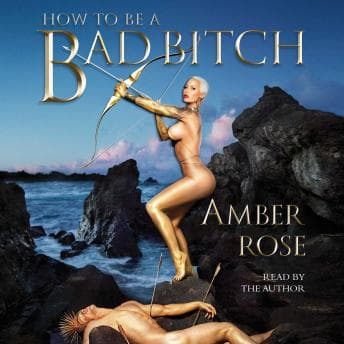

This is not the book it thinks it is.
I want to be upfront about that. I was chopping onions for a chana masala on a Saturday afternoon — the kind of lazy cooking session where you need something playing that doesn't require full attention — and I figured a 4.5-hour self-help listen from Amber Rose would be breezy enough. And it was. Maybe too breezy. But let me break this down the way I'd analyze any text that promises to teach you about identity.
The "Bad Bitch" as Psychological Construct
Here's what's interesting from a narrative psychology standpoint: Amber Rose is essentially trying to redefine a label. She takes "bad bitch" — a phrase loaded with gendered aggression and sexual objectification — and reframes it as a marker of self-possession. Body, mind, finances, attitude. That's her taxonomy. And I found myself asking: why does this particular reclamation project feel both empowering and incomplete?
Because the framework she sets up is genuinely solid. The research actually shows that identity narratives — the stories we tell about who we are — shape behavior more than abstract goals do. When Rose defines "bad bitch" as a woman who has her life together and demands respect, she's constructing an aspirational identity narrative. That's real psychology. She's not wrong.
But — and this is where it gets thin — the advice that fills that framework is pretty surface-level. Finance sections that amount to "save money and invest." Career guidance that boils down to "work hard and know your worth." Beauty and fashion chapters that feel like they belong in a different, much more casual book. If you've read even two other self-help books, or honestly just scrolled through enough motivational Instagram accounts, you're not getting much new here. One listener literally said they discovered they were "already a bad bitch" because there was no new information. Harsh. But I get it.
Amber Reading Amber
The saving grace — and I mean this genuinely — is Amber Rose narrating her own book. The protagonist exhibits classic authenticity markers: she doesn't sound like she's performing a script, she sounds like she's talking to you on a couch. There's a sincerity in her delivery that a professional narrator couldn't have manufactured. When she shares personal anecdotes about growing up in South Philly, about navigating the music industry, about the specific kind of scrutiny that comes with being a woman who refuses to apologize for her sexuality — you believe her. She's lived this.
The problem is she doesn't let us in far enough. The personal stories feel curated, almost careful. For someone who built a brand on radical honesty and founded a SlutWalk, the book keeps you at arm's length when it could've been devastating. My therapist would have thoughts about this — there's a protective mechanism at work, and I respect it on a human level, but on a literary level it leaves you wanting.
Her voice itself is warm and conversational. Not polished, not trained, and that's fine. At 4.5 hours, it doesn't overstay its welcome. But there's a flatness to the energy across chapters — the finance section sounds pretty much identical in tone to the love and relationships section — and for an audiobook, that monotony matters more than it would on paper.
The Gap Between "Who" and "How"
This is a fascinating case study in the difference between identity prescription and actionable psychology. Rose is excellent at the "who" — who you should aspire to be, what confidence looks like from the inside, why self-respect isn't negotiable. She's less equipped for the "how." How do you actually build financial literacy from nothing? How do you leave a relationship that's eroding your sense of self? How do you handle the cognitive dissonance of embracing your sexuality in a world that will punish you for it?
Compare this to, say, Shonda Rhimes' Year of Yes, which similarly uses personal narrative to frame self-improvement but goes deeper into the psychological mechanics of change — the fear, the resistance, the ugly middle part. Rose gives you the destination without much of the map.
That said. I don't think every book has to be for me. If you're twenty-two and this is your first encounter with the idea that you're allowed to prioritize yourself — that your body is yours, your money is your business, and you don't owe anyone a performance of modesty — then this book could genuinely shift something. The message isn't wrong. It's just not new for anyone who's already done some of this work. Arnold Bennett was wrestling with a similar problem in How to Live on Twenty-Four Hours a Day — same confident "who you should be" energy, same frustrating thinness on the actual mechanics of getting there, and yet somehow that one has aged into a minor classic while this one will probably not.
Who Gets Something Out of This (And Who Won't)
Listen if: you're young, early in your self-discovery arc, and want a quick motivational hit from someone who's unapologetically herself. Also if you're already a fan of Amber Rose and want to hear her perspective in her own voice — that authenticity is real.
Skip if: you want depth, research-backed strategies, or anything that challenges you beyond affirmation. Psychologically, the book doesn't track as a guide so much as a pep talk. A decent pep talk. But still.
My Prescription
At 4.5 hours, it's the psychological equivalent of a vitamin supplement — not harmful, probably fine, but don't mistake it for a meal. Amber Rose's sincerity carries what the content can't quite support on its own. I finished it, my chana masala turned out great, and I moved on. Sometimes that's enough.









